

How Much Does the HUNTERBUT HT112500 CC66 Cost and Is It Worth the Investment
2026-06-26
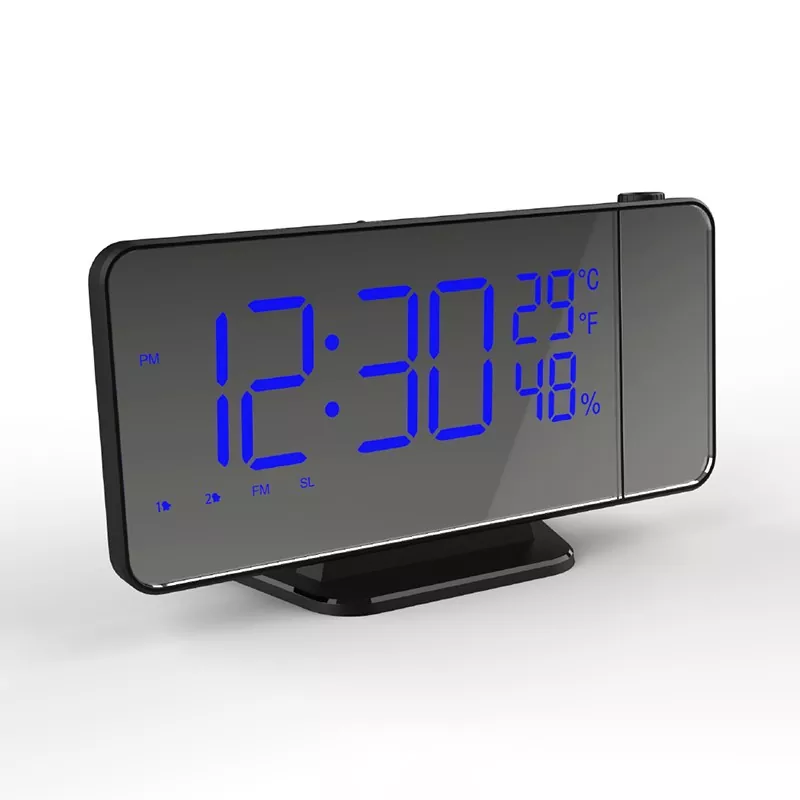
If you have ever woken up in the middle of the night and glanced at your ceiling, only to see a crisp, glowing time display staring back at you, you have experienced the magic of a Digital Analog Projection Clock. But if you have tried using one during the day or with a nightlight on, you may have noticed the projection appears faint or even invisible. This leads to a common question among first-time buyers: does a Digital Analog Projection Clock actually need a completely dark room to work properly? The short answer is no, but the long answer involves optics, ambient light levels, and projector brightness—all of which we will break down with precision below.
At SYNST, we engineer our projection clocks with real-world bedrooms in mind. We know that not everyone sleeps in total darkness, and not everyone wants to. That is why understanding the science behind projection visibility is essential before you make a purchase decision.
How Projection Visibility Actually Works
The visibility of any projected image depends on three core variables: light source intensity (lumens), projection distance, and ambient light interference. A Digital Analog Projection Clock typically uses a high-brightness LED or laser diode to cast numbers onto a ceiling or wall. The human eye perceives contrast, not absolute brightness. This means that in a dark room, even a 5-lumen projection appears sharp and vivid. In a brightly lit room, however, the same projection gets "washed out" because the ambient light reduces the contrast ratio.
To give you a clearer picture, here is a technical breakdown of how ambient light affects projection readability at a standard 6‑foot ceiling distance:
| Ambient Light Level (Lux) | Projection Visibility Score (1–10) | Recommended SYNST Brightness Mode |
|---|---|---|
| 0–5 (complete dark) | 10 (Crystal clear) | Eco (low power) |
| 5–20 (dim nightlight) | 8 (Slightly soft) | Standard |
| 20–50 (hallway light) | 5 (Visible but faded) | High Boost |
| 50+ (daylight/curtains open) | 2 (Barely legible) | High Boost + reposition closer to wall |
Table 1: Projection visibility scores based on ambient light conditions for a typical Digital Analog Projection Clock.
Does "Dark Room" Mean Pitch Black?
Not at all. A Digital Analog Projection Clock does not require absolute darkness. It requires sufficient contrast. Most modern units, especially those from SYNST, feature adjustable focus rings and multiple brightness levels (e.g., Low, Medium, High, and Auto-Sense). The Auto-Sense function uses a built-in photodiode to measure room light and automatically adjusts the projection LED output. In a room with a small nightlight (around 10 lux), the clock boosts projection power to maintain legibility. In complete darkness, it dims to save energy and reduce eye strain.
The real issue is not darkness—it is direct sunlight or overhead lamps shining directly onto the projection lens. These create glare that overpowers the outgoing light beam. So, if you keep your curtains closed or position the clock so the lens faces away from windows, you will get a perfectly readable projection even at dusk or dawn.
Practical Tips for Maximizing Projection Clarity
Whether you are a light sleeper who needs a dim environment or someone who prefers a soft glow, here are actionable steps to get the best performance from your Digital Analog Projection Clock:
-
Adjust the focus ring – Most projection clocks have a twistable lens. Rotate it slowly until the numbers on your ceiling become razor‑sharp.
-
Angle the unit correctly – Tilt the clock so the projection lands on a flat, matte‑white ceiling. Textured or dark‑colored ceilings absorb light and reduce clarity.
-
Use the auto‑dimming feature – If your clock has a light sensor (like SYNST models), enable it. This dynamically balances brightness against ambient conditions.
-
Clean the lens – Dust accumulation can scatter light. A microfiber cloth wipe every two weeks restores up to 30% of lost brightness.
-
Reduce backlight bleed – Place the clock away from other glowing devices (e.g., routers, chargers) that raise the room's base light level.
Frequently Asked Questions (FAQ) About Digital Analog Projection Clocks
Q1: Can I use a Digital Analog Projection Clock in a bedroom with blackout curtains during the day?
A1: Absolutely. Blackout curtains reduce ambient light to near‑zero levels, which is the ideal environment for any projection clock. In fact, with SYNST models, you may want to lower the brightness manually to avoid an overly intense projection that could disturb your sleep. The clock performs best when the room is darker than 20 lux—blackout curtains easily achieve that. Just ensure the curtains do not block the clock's power cord or sensor window.
Q2: What should I do if my Digital Analog Projection Clock projection becomes blurry or double‑images over time?
A2: Blurry projection is almost always caused by lens misalignment or thermal expansion. First, check if the focus ring has shifted—re‑adjust it while looking at the ceiling. If double images appear, clean the lens with a lint‑free cloth, as smudges can create ghosting. For SYNST clocks, we also recommend a factory reset (hold the "Mode" button for 5 seconds) to recalibrate the internal optics. If the issue persists, ensure the clock is placed on a stable, vibration‑free surface—fan or subwoofer vibrations can subtly move the internal LED assembly.
Q3: Is it safe to leave a Digital Analog Projection Clock projecting all night long?
A3: Yes, it is completely safe. The LED or laser diode used in these clocks is low‑power (typically under 5 mW) and generates minimal heat. SYNST designs include an automatic shut‑off timer (e.g., projection turns off after 60 minutes of inactivity) or a permanent on‑mode with intelligent dimming. Leaving it on overnight consumes less than 0.5 watts—comparable to a nightlight. For safety, always place the clock on a hard, flat surface with adequate ventilation around the vent holes, and never cover the lens.
Does Room Color Matter?
Yes. A white or light‑beige ceiling reflects up to 85% of projected light, while a dark blue or charcoal ceiling reflects only 15–20%. This means the same Digital Analog Projection Clock can look twice as bright in a light‑colored room compared to a dark one—even under identical ambient light conditions. SYNST recommends testing your ceiling with a small flashlight first; if the spot appears dim, consider angling the projection toward a wall or using a removable white projection panel (sold separately).
Final Verdict: Dark Room Not Required
To conclude, a Digital Analog Projection Clock does not demand a pitch‑black room. It thrives in low‑to‑moderate ambient light, provided you choose a model with adjustable brightness, optical focus, and a light sensor—features that SYNST builds into every unit. The key is managing contrast, not eliminating all light. With proper placement, lens cleaning, and ceiling color awareness, you can enjoy crisp, readable time projections from early morning to late night.
If you are still unsure which Digital Analog Projection Clock fits your bedroom environment, our team at SYNST has prepared a detailed brightness comparison chart and a personalized room‑matching tool on our product pages.
Have questions about your specific ceiling height, wall color, or lighting setup?
Contact us today—our support engineers will reply within 2 hours with a custom calibration guide for your space. We are here to help you wake up to clarity, every single morning.