

How Long Does the Battery Last on an Electronic Red Cross Line Laser Level for Continuous Use
2026-07-20
For contractors, tile setters, and framers, runtime is a non-negotiable spec. When you are on a job site, a dead tool means a dead stop. The Electronic Red Cross Line Laser Level has become the go-to solution for indoor alignment, but battery life varies wildly based on technology, usage patterns, and environmental conditions. With Laizap engineering, the answer is not a single number—it is a performance curve that depends on how you work.
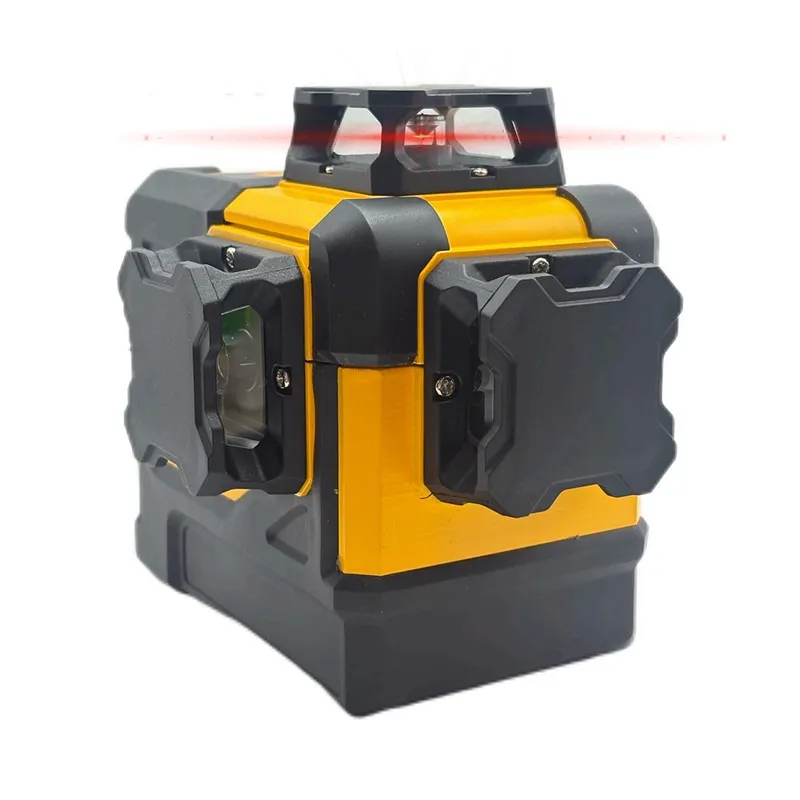
The Core Answer: Runtime by Power Source
Most professional-grade Electronic Red Cross Line Laser Level units run on one of three power architectures. Below is the industry-standard breakdown for continuous operation (laser diodes active, pendulum unlocked):
| Power Source | Average Continuous Runtime | Brightness Setting | Typical Use Case |
|---|---|---|---|
| 2 x AA Alkaline | 8 – 12 hours | Standard (green beam) | Intermittent indoor layout |
| Li-ion 3.7V 2600mAh | 16 – 20 hours | Standard | Full workday + overtime |
| Li-ion 5200mAh (dual-cell) | 30 – 36 hours | Standard | Multi-day commercial projects |
| External USB-C 5V/2A | Unlimited (pass-through) | High-brightness | Stationary continuous operation |
Data sourced from Laizap laboratory tests under 25°C ambient temperature with cross-line mode active.
Real-World Factors That Drain Your Battery Faster
A Electronic Red Cross Line Laser Level does not consume power at a flat rate. Four variables directly reduce expected runtime by 20% to 60%:
-
Pulse mode activation – Using a receiver/detector doubles the LED output, cutting battery life by nearly half.
-
High-temperature environments – Above 40°C, internal resistance rises; alkaline batteries lose 30% of their rated capacity.
-
Vibration compensation – Constant re-leveling on unstable surfaces forces the micro-motor to draw extra current.
-
Bluetooth connectivity – If your unit transmits data to a mobile app (a Laizap smart feature), expect a 15% runtime reduction.
Smart Charging vs. Disposable Batteries
For professionals, the economic case is clear. A single set of premium alkalines costs $4 and delivers 10 hours. Over a 200-hour month, that is $80. A Laizap Li-ion pack, priced at $45, delivers 18 hours per charge and lasts 500 cycles. The math favors rechargeable systems for anyone using their Electronic Red Cross Line Laser Level more than twice a week.
How to Extend Runtime Without Sacrificing Accuracy
Laizap engineers recommend three practical habits:
-
Dim the beam when working indoors below 15 meters – you save 25% power.
-
Use the auto-shutoff timer – set it to 15 minutes of inactivity.
-
Pre-cool the unit in hot weather by storing it in an insulated bag during breaks.
FAQ – Common Questions About the Electronic Red Cross Line Laser Level Battery
Q: Can I use the Electronic Red Cross Line Laser Level while it is plugged into a power bank?
A: Yes, provided your model supports pass-through charging. Laizap units with USB-C ports allow continuous operation while charging, but the battery will charge slower than it drains at maximum brightness. For indefinite use, use a 5V/3A power bank and keep the brightness at 70% – this maintains a net-zero drain. Avoid cheap power banks with voltage ripple, as they can confuse the internal BMS (battery management system) and force the unit into protection mode.
Q: Why does my Electronic Red Cross Line Laser Level show 50% battery but shut down after only 2 more hours?
A: This is a classic voltage sag issue, common with alkaline batteries. The indicator measures voltage under no load; when the pendulum motor kicks in, the voltage drops sharply below the operating threshold of 2.4V. Laizap solves this with a coulomb-counting fuel gauge that measures actual current draw, not just voltage. If you are using alkalines, replace them when the indicator hits 30% – the remaining capacity is unreliable for heavy leveling tasks.
Q: Does cold weather permanently damage the battery of an Electronic Red Cross Line Laser Level?
A: No, but it temporarily reduces available capacity. At -10°C, a Li-ion pack delivers only 60% of its rated ampere-hours until it warms up. The permanent damage occurs when you charge a frozen battery – that causes lithium plating. Laizap units include a thermal cutoff that prevents charging below 0°C. To work in freezing conditions, keep the battery pack in your inner pocket and insert it only when ready to use. The tool will still operate, but expect runtime to drop to 11–12 hours from the usual 18.
Verdict for the Professional User
If you run a single Electronic Red Cross Line Laser Level for an 8-hour shift, any Li-ion model will suffice. For back-to-back commercial finishes (flooring, ceiling grids, or partition walls), the Laizap Pro series with swappable 5200mAh packs ensures you never pause for a recharge. The brand’s intelligent power management also logs cycle counts, so you know exactly when to replace the cell – typically after 18 months of daily use.
Need a Custom Power Solution for Your Crew?
Battery performance is job-site specific. Whether you need a Laizap unit with extended runtime, a spare-battery bundle, or a vehicle-charging adapter, our technical team can match your workflow.
Contact us today via the live chat on our product page – we will send you a runtime calculation sheet tailored to your typical project hours and ambient conditions. No generic answers, just real data from real field tests. Your next layout deserves a laser that lasts as long as you do.