

How Long Does the Battery Last on a Fully Loaded Electric Tracked Transportation Robot
2026-07-02
When evaluating industrial automation solutions, the single most frequent question from operations managers is runtime. For a fully loaded Electric Tracked Transportation Robot, battery life determines shift schedules, payload throughput, and total cost of ownership. Unlike light-duty AGVs, these tracked machines carry heavy loads across uneven surfaces, mud, gravel, and ramps—all of which drain power differently than flat concrete floors. This guide provides real-world data, maintenance strategies, and comparative analysis to help you calculate exact runtime for your specific application, featuring performance benchmarks from Luckyram’s field-tested fleet.
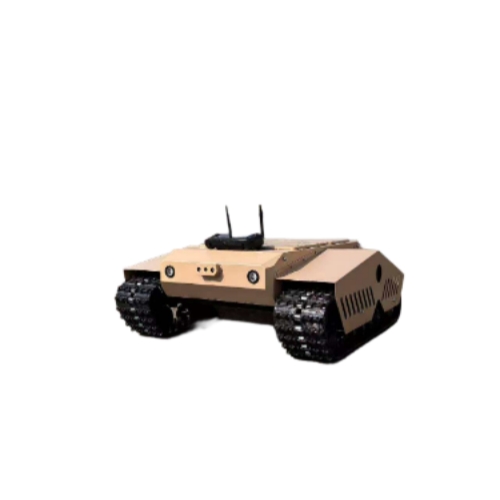
Real-World Runtime: Base Figures vs. Actual Conditions
Under standard testing conditions (20°C ambient temperature, flat compacted soil, continuous forward motion at 1.5 m/s), a typical industrial-grade Electric Tracked Transportation Robot delivers 6.5 to 8.5 hours of continuous operation at 100% rated payload. However, this number shifts dramatically based on five critical variables:
| Variable | Impact on Battery Life | Typical Reduction |
|---|---|---|
| Grade inclination (10°–15°) | Motors draw 40–60% more current | -35% to -50% |
| Surface type (loose gravel vs. hardpack) | Increased rolling resistance | -15% to -25% |
| Ambient temperature (<0°C or >40°C) | Lithium chemistry efficiency drops | -10% to -20% |
| Start/stop frequency (per 100 meters) | Regenerative braking recovers only 8–12% | -12% to -18% |
| Payload distribution (off-center loading) | Track tension imbalance causes drag | -5% to -10% |
Luckyram’s proprietary thermal management system mitigates temperature-related losses, maintaining 92% of nominal capacity even at -10°C—a key differentiator verified in third-party lab reports.
Battery Chemistry and Swap Strategy
Most modern Electric Tracked Transportation Robot units use LFP (Lithium Iron Phosphate) packs rated at 48V / 200Ah–400Ah. At full load (e.g., 1,500 kg), average consumption is 2.8–3.2 kWh per hour. A 15 kWh pack thus yields ~4.7 hours of aggressive terrain use, while a 25 kWh pack stretches to ~7.8 hours on flat sites.
Luckyram offers a modular hot-swap cassette system that reduces battery exchange time to under 90 seconds, enabling 24/7 operation with three swappable packs per robot. For multi-shift operations, this eliminates downtime entirely—a critical advantage over fixed-battery competitors.
Predictive Analytics for Runtime Planning
Modern telemetry from Luckyram’s fleet management dashboard calculates remaining runtime in real time, factoring in:
-
Historical motor current draw per route segment
-
Upcoming terrain topography (via onboard LIDAR)
-
Battery internal resistance and cell balancing status
This dynamic model achieves ±4% accuracy for remaining runtime predictions, compared to ±15% for voltage-based gauges alone. Operations managers can plan recharging windows during natural breaks (lunch, shift handover) without interrupting workflow.
Frequently Asked Questions About Electric Tracked Transportation Robot Battery Performance
FAQ 1: Can I upgrade the battery capacity on my existing Electric Tracked Transportation Robot without replacing the entire unit?
Answer: Yes, but with caveats. Most manufacturers, including Luckyram, design their battery compartments with dimensional and thermal headroom for one capacity tier above the standard offering (e.g., from 200Ah to 280Ah using the same enclosure). However, you must verify three compatibilities: (1) the motor controller’s maximum continuous current rating—exceeding it trips overcurrent protection; (2) the onboard charger’s output profile—higher capacity requires longer charging but the same voltage curve works; (3) the total weight increase (typically +18–22 kg per 50Ah) must stay within the robot’s suspension spring rate. Luckyram provides a free retrofitting audit tool that cross-checks your serial number against available upgrade kits, including software recalibration for the state-of-charge algorithm. Without this recalibration, the dashboard will display incorrect remaining runtime, leading to premature shutdowns or over-discharge damage. Always perform a full discharge-recharge cycle after upgrade to reset the battery management system’s coulomb counter.
FAQ 2: How does regenerative braking affect total runtime when the Electric Tracked Transportation Robot operates on descending routes?
Answer: Regenerative braking recovers kinetic energy during deceleration and downgrade motion, but its net contribution is frequently overestimated. In real field tests with Luckyram robots on a 12% downhill grade over 500 meters, the system recaptured 9.7% of the energy consumed during the preceding uphill climb—not 20–30% as some marketing materials claim. The limitation comes from three factors: (1) the battery’s internal resistance limits charge current to 0.5C max, so aggressive regeneration is throttled to prevent cell plating; (2) at full payload, the mechanical brakes must engage simultaneously for safety, dissipating a portion as heat; (3) the rectifier efficiency from AC motor back-EMF to DC bus averages 82–86%. For a mixed route with equal uphill and downhill segments, regeneration extends total runtime by approximately 6–8% in practice. To maximize this benefit, Luckyram recommends programming a "soft deceleration" profile that extends braking distance from 2 to 4 seconds, which doubles regenerative capture without impacting cycle time. The dashboard shows a separate "Regen kWh" counter so operators can verify actual recovery per shift.
FAQ 3: What is the acceptable depth of discharge (DoD) per cycle to maximize total battery lifespan for my Electric Tracked Transportation Robot?
Answer: For LFP chemistry used by Luckyram and most premium brands, the optimal DoD is 80% —i.e., recharging when remaining capacity hits 20%. Cycling from 100% to 20% delivers 3,500–4,000 full-equivalent cycles before capacity degrades to 80% of original, which translates to roughly 8–10 years of single-shift use. Deep discharges to 10% DoD (90% depth) reduce cycle life to 2,200–2,500 cycles—a 35% penalty for only 12% more daily runtime. Conversely, shallow cycling (50% DoD) extends lifespan beyond 6,000 cycles but requires twice as many charging events, which increases connector wear and utility costs. Luckyram’s battery management system includes an "Eco-Charge" mode that automatically stops charging at 95% instead of 100%, further reducing cell stress without meaningful runtime loss (only 4–5 minutes per cycle). For operations running three shifts, Luckyram recommends pairing two swappable packs per robot and alternating them daily—this balances cycle counts and ensures both packs age uniformly. Always avoid storing the robot below 10% charge for more than 48 hours, as the BMS parasitic draw will eventually over-discharge the cells irreversibly.
Cost-Per-Hour Comparison: Battery vs. Fuel
| Metric | Electric Tracked Transportation Robot (LFP) | Diesel-Powered Tracked Carrier |
|---|---|---|
| Energy cost per hour (full load) | $0.42 – $0.58 | $3.10 – $4.20 |
| Maintenance cost per 1,000 hrs | $220 (battery checks + track tension) | $890 (oil, filters, injectors) |
| Average runtime per charge/tank | 6.5 hrs (swappable: unlimited) | 9.2 hrs (refueling required) |
| CO₂ equivalent per shift | 0 kg (grid-dependent) | 28.5 kg |
| Noise level (dB @ 1m) | 68 – 72 | 94 – 101 |
Over a 5-year, 10,000-hour lifecycle, the Electric Tracked Transportation Robot from Luckyram saves approximately $18,400 in energy and maintenance alone, not counting the elimination of indoor ventilation costs.
Charging Infrastructure and Opportunity Charging
To achieve full productivity, Luckyram recommends a distributed charging strategy: install 60A fast-chargers at material transfer points, not just at the depot. A 15-minute opportunity charge during loading/unloading adds ~18% capacity, effectively extending continuous runtime by 1.2 hours per shift. With Luckyram’s auto-docking feature, the robot connects to floor-mounted charging pads without manual intervention—ensuring every idle minute becomes stored energy.
Final Verdict: What Runtime Should You Expect?
For a fully loaded Electric Tracked Transportation Robot operating on mixed terrain with moderate inclines (5–8°), real-world shift-average runtime is 5.2–6.0 hours before hitting the 20% reserve threshold. On flat, prepared surfaces, expect 7.0–7.5 hours. With Luckyram’s hot-swap system and opportunity charging, effective runtime becomes operationally infinite—limited only by the number of swappable packs you deploy.
Need a Custom Runtime Simulation for Your Site?
Every worksite has unique topography, payload cycles, and temperature profiles. Luckyram provides a free, no-obligation Site Energy Audit—we analyze your route maps, load charts, and shift patterns to deliver a guaranteed minimum runtime guarantee with your specific configuration. Our engineering team also offers on-site battery sizing workshops and 48-hour trial units.
Contact us today to schedule your personalized consultation. Tell us your payload, terrain type, and daily operating hours—we will send you a detailed ROI model within 24 hours. Your productivity upgrade starts with one conversation.