

How Long Can a Smart Water Meter Antenna Cable Be Without Losing Signal
2026-10-30
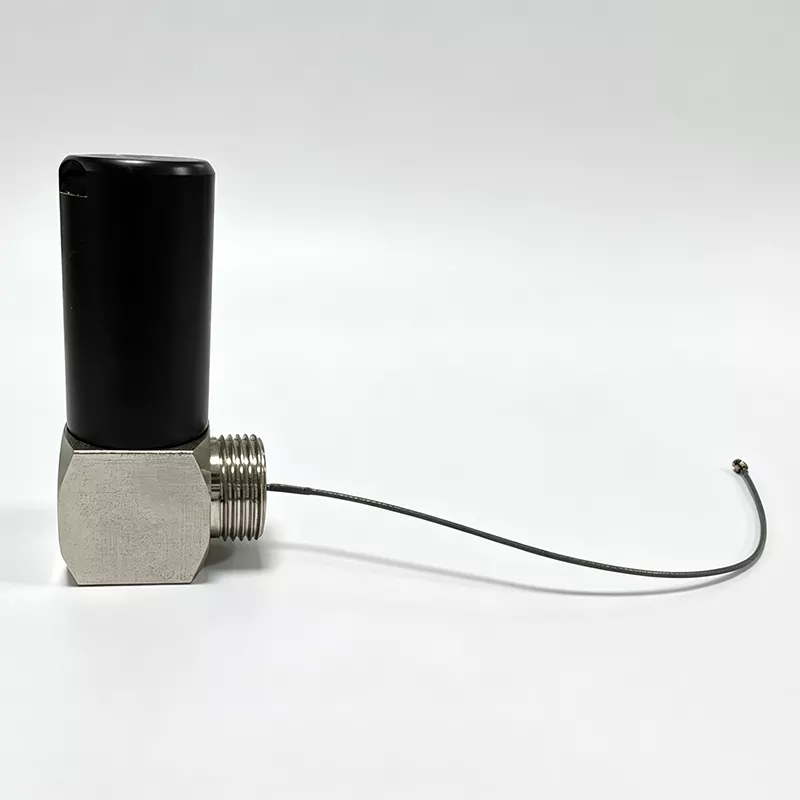
Cable length is one of the most misunderstood variables in AMI deployments, and it directly affects whether a Smart Water Meter Antenna performs to specification. At Qianmu, we regularly test coaxial runs across LoRaWAN, NB-IoT, and Wireless M-Bus installations, and the practical answer depends on frequency, cable type, and connector quality rather than a single fixed number. This guide breaks down the engineering limits so you can specify a run that preserves link budget instead of quietly consuming it.
Why Cable Length Matters More Than Most Installers Expect
Every meter of coax introduces insertion loss, and that loss rises with frequency. A run that is perfectly acceptable at 169 MHz can be marginal at 915 MHz. The loss reduces both transmit power reaching the Smart Water Meter Antenna and the weak uplink signal arriving at the receiver, which shrinks uplink and downlink margins simultaneously.
Insertion Loss by Cable Type and Frequency
The table below shows typical insertion loss in dB per 10 meters. Values are representative and should be verified against the specific datasheet for your cable batch.
| Cable Type | Diameter | 169 MHz | 433 MHz | 868 MHz | 915 MHz |
|---|---|---|---|---|---|
| RG-174 | 2.8 mm | 3.5 dB | 6.0 dB | 8.5 dB | 9.0 dB |
| RG-58 | 5.0 mm | 2.0 dB | 3.5 dB | 5.0 dB | 5.5 dB |
| LMR-200 | 5.0 mm | 1.6 dB | 2.8 dB | 4.2 dB | 4.5 dB |
| LMR-400 | 10.3 mm | 0.8 dB | 1.4 dB | 2.1 dB | 2.3 dB |
| Heliax 1/2" | 12.7 mm | 0.5 dB | 0.9 dB | 1.4 dB | 1.5 dB |
Practical Length Limits by Application
| Scenario | Recommended Max Run | Rationale |
|---|---|---|
| Pit lid mounting, RG-58 | 2–3 m | Keeps loss under 2 dB at 868/915 MHz |
| Remote pole mount, LMR-200 | 5–8 m | Balances flexibility and loss |
| Building penetration, LMR-400 | 15–20 m | Low loss supports longer routing |
| High-gain directional, Heliax | 30 m+ | Acceptable only with gain compensation |
Rules of Thumb for Specifying a Run
-
Keep total insertion loss below 3 dB wherever the link budget is tight.
-
Prefer a higher-gain Smart Water Meter Antenna over a longer cable when possible.
-
Use LMR-400 or better for any run exceeding 10 meters at 868/915 MHz.
-
Minimize connector count; each pair of connectors can add 0.1–0.3 dB.
-
Avoid coiling excess cable tightly, which can detune the Smart Water Meter Antenna.
-
Account for cable loss in the RF budget before selecting transmit power.
Smart Water Meter Antenna FAQ
Q: Can I extend a smart water meter antenna cable to 20 meters without signal loss?
A: You cannot eliminate loss, but you can keep it acceptable. At 20 meters, RG-58 at 915 MHz loses roughly 11 dB, which is usually too much. Switching to LMR-400 reduces that to about 4.6 dB, and pairing it with a higher-gain Smart Water Meter Antenna restores margin. Always calculate total loss including connectors.
Q: Does cable length affect battery life in a smart water meter?
A: Yes, indirectly. Higher insertion loss forces the radio to transmit at higher power or retry more often, both of which drain the battery faster. Reducing cable loss with a shorter run or lower-loss coax protects the expected 10–15 year battery life and keeps the Smart Water Meter Antenna system efficient.
Q: What cable impedance should a smart water meter antenna use?
A: Use 50-ohm coaxial cable throughout. A mismatch, such as 75-ohm cable, causes reflections that raise VSWR and reduce radiated power. Confirm that connectors, surge protectors, and the Smart Water Meter Antenna itself are all rated at 50 ohms before installation.
Q: How do I verify signal loss after installation?
A: Measure RSSI or RSRP at the meter and compare it against the design prediction. A deviation greater than 3 dB usually indicates a connector problem, water ingress, or a damaged Smart Water Meter Antenna. Document baseline readings so future troubleshooting is straightforward.
Conclusion
Cable length is a design decision, not an afterthought. By matching coax type to frequency, keeping insertion loss under control, and selecting the right Smart Water Meter Antenna, deployments avoid the silent performance drain that long, thin cables create. Qianmu supports utilities and OEMs with antenna selection, loss budgeting, and field validation.
Contact us today to review your cable and Smart Water Meter Antenna configuration with the Qianmu engineering team and receive a loss budget tailored to your network.