

How IPC Module Board Enhances Industrial Computing Performance?
2026-04-03
Abstract
In modern industrial environments, reliability, scalability, and processing efficiency are critical requirements. The IPC Module Board has emerged as a compact yet powerful solution for embedded and industrial computing applications. This article explores how IPC module boards improve operational performance, address common customer pain points, and provide flexible deployment options across industries. Whether you are dealing with limited space, high power consumption, or integration complexity, understanding the advantages of IPC module boards can significantly optimize your system design.
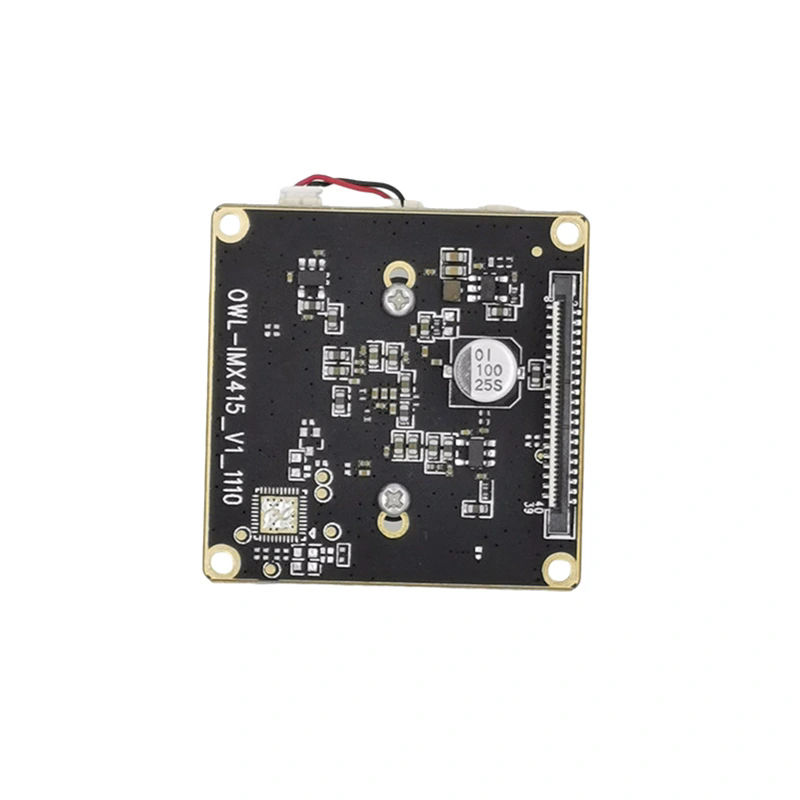
Table of Contents
- 1. What Is an IPC Module Board?
- 2. Common Challenges in Industrial Computing
- 3. How IPC Module Board Improves System Efficiency
- 4. Key Features and Technical Advantages
- 5. Application Scenarios
- 6. Comparison Table: IPC Module Board vs Traditional IPC
- 7. How to Choose the Right IPC Module Board
- 8. Integration and Deployment Tips
- 9. FAQ
1. What Is an IPC Module Board?
An IPC Module Board is a compact embedded computing solution designed specifically for industrial environments. Unlike traditional industrial PCs, these boards integrate CPU, memory, storage, and I/O interfaces into a modular structure, enabling flexible customization and easier system integration.
Manufacturers like Thinkcore Technology Co., Ltd. have developed high-performance IPC module boards tailored for demanding use cases such as automation, robotics, smart manufacturing, and edge computing.
2. Common Challenges in Industrial Computing
Before understanding the benefits, it's important to identify the typical issues customers face:
- Limited installation space in industrial cabinets
- High power consumption of traditional IPC systems
- Complex wiring and integration
- Difficulty in upgrading hardware
- Poor scalability for future expansion
- Harsh environmental conditions affecting stability
These pain points often result in increased costs, downtime, and maintenance challenges.
3. How IPC Module Board Improves System Efficiency
IPC module boards are engineered to directly solve the above problems through innovative design and architecture.
- Compact Design: Saves space while maintaining high performance
- Low Power Consumption: Optimized processors reduce energy usage
- Modular Expansion: Easy to upgrade or replace components
- High Integration: Reduces external wiring and improves reliability
- Fast Deployment: Plug-and-play architecture speeds up system setup
By adopting these boards, businesses can significantly improve operational efficiency while lowering total cost of ownership.
4. Key Features and Technical Advantages
- Advanced CPU Architecture: Supports ARM or x86 platforms for diverse applications
- Rich Interfaces: Includes USB, HDMI, LAN, GPIO, UART, and more
- Wide Temperature Range: Designed for harsh industrial environments
- High Stability: Long lifecycle and industrial-grade components
- Flexible OS Support: Compatible with Linux, Android, and other systems
These features make IPC module boards a preferred choice for engineers seeking both performance and reliability.
5. Application Scenarios
IPC module boards are widely used across multiple industries:
- Industrial automation systems
- Smart manufacturing equipment
- Machine vision systems
- Self-service terminals
- Medical devices
- Transportation and logistics systems
- Energy monitoring solutions
Their adaptability allows seamless integration into both new and existing infrastructures.
6. Comparison Table: IPC Module Board vs Traditional IPC
| Feature | IPC Module Board | Traditional IPC |
|---|---|---|
| Size | Compact | Bulky |
| Power Consumption | Low | High |
| Scalability | Flexible modular design | Limited |
| Integration | High | Complex wiring |
| Maintenance | Easy | Difficult |
| Cost Efficiency | High | Moderate |
7. How to Choose the Right IPC Module Board
Selecting the right IPC module board requires evaluating several technical factors:
- Processor Performance: Match CPU capability with workload requirements
- Memory and Storage: Ensure sufficient capacity for applications
- I/O Requirements: Check compatibility with peripherals
- Operating Environment: Consider temperature and humidity conditions
- Software Compatibility: Verify OS and application support
Thinkcore Technology Co., Ltd. offers a wide range of IPC module boards designed to meet diverse industrial needs, making it easier to find a suitable solution.
8. Integration and Deployment Tips
- Use standardized connectors to simplify installation
- Ensure proper heat dissipation design
- Implement surge protection for stable operation
- Plan for future scalability during initial design
- Test compatibility with existing systems before deployment
Following these practices ensures optimal performance and long-term reliability.
9. FAQ
Q1: What industries benefit most from IPC module boards?
Industries such as manufacturing, healthcare, transportation, and automation benefit greatly due to their need for reliable and compact computing solutions.
Q2: Are IPC module boards suitable for harsh environments?
Yes, most IPC module boards are designed with industrial-grade components and support wide temperature ranges.
Q3: Can I upgrade an IPC module board easily?
Absolutely. The modular design allows for convenient upgrades and replacements.
Q4: What operating systems are supported?
Common options include Linux, Android, and customized embedded systems.
Conclusion
IPC module boards represent a significant advancement in industrial computing, offering unmatched flexibility, efficiency, and scalability. By addressing common pain points such as space constraints, power consumption, and integration complexity, they provide a future-proof solution for modern industries.
If you are looking for reliable and high-performance IPC module boards, Thinkcore Technology Co., Ltd. is your trusted partner. Their expertise and product range can help you build smarter, more efficient systems.
Contact us today to find the perfect IPC module board solution for your business and take your industrial applications to the next level.