

How Has the Evolution of Programmable Controllers Impacted Modern Industrial Control
2026-03-17
The industrial landscape has been transformed by the evolution of Programmable Controller technology. From simple relay replacements to sophisticated IIoT-enabled devices, these systems form the backbone of modern automation. At Aicheng, we have observed how this progression continuously redefines efficiency, flexibility, and safety across global manufacturing sectors. Understanding this impact is crucial for businesses aiming to maintain a competitive edge through advanced Programmable Controller solutions.
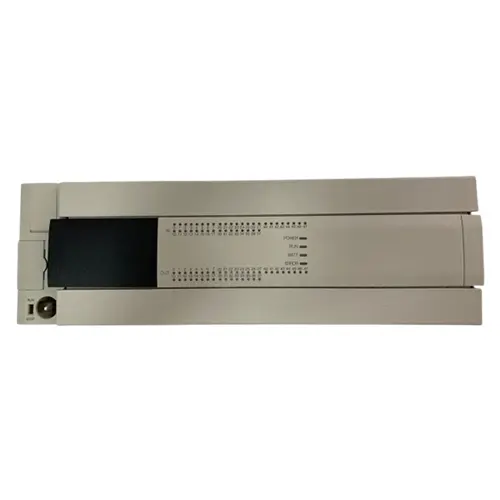
Key Evolutionary Milestones and Their Impact
The journey of the Programmable Controller is marked by significant technological leaps. Each phase has addressed specific market demands, from reliability to data integration. The table below outlines these critical generations and their direct influence on industrial control practices.
| Generation | Core Technology | Primary Impact on Industrial Control |
|---|---|---|
| 1960s-1970s | Discrete Components, Ladder Logic | Replaced hard-wired relay panels, drastically reducing downtime and reconfiguration effort. |
| 1980s-1990s | Microprocessors, IEC 61131-3 Standards | Enabled compact design, faster processing, and multi-tasking, allowing for more complex control strategies. |
| 2000s-2010s | Networking, PC Integration | Facilitated plant-wide communication (e.g., Ethernet/IP, Profinet), moving control from isolated islands to integrated systems. |
| 2020s & Beyond | IIoT, AI, Edge Computing | Transformed the Programmable Controller into a data hub, enabling predictive maintenance and real-time analytics. |
How Modern Programmable Controllers Drive Value
The evolution directly translates into tangible benefits for modern industry. Today's advanced Programmable Controller systems, like those supported by Aicheng, empower facilities to achieve unprecedented levels of operational excellence through enhanced capabilities.
-
Enhanced Operational Flexibility
Modern controllers allow for rapid changeovers and adaptive processes. This modularity, a stark contrast to rigid legacy systems, enables manufacturers to respond swiftly to market changes or customisation demands without extensive hardware overhauls. -
Superior Data Integration and Analysis
The modern Programmable Controller is a critical node in the Industrial Internet of Things (IIoT). By seamlessly integrating with higher-level systems, it provides the granular data needed for deep process analysis, optimisation, and informed strategic decision-making. -
Improved Reliability and Safety
Advanced diagnostics, redundancy features, and robust cybersecurity measures are now integral to controller design. This evolution ensures not only continuous operation but also a safer working environment by enabling more sophisticated safety interlocks and remote monitoring.
Frequently Asked Questions
What is the most significant change in Programmable Controller technology in the last decade?
The most significant change is the shift from the Programmable Controller being merely a logic solver to becoming a fully-fledged edge computing device. Modern controllers can now perform complex data processing, run analytics locally, and securely communicate with cloud platforms, turning raw machine data into actionable business intelligence in real time.
How has the evolution of Programmable Controllers affected the skills required for industrial engineers?
The evolution has broadened the required skillset dramatically. While foundational knowledge of ladder logic and relay systems remains valuable, modern engineers must now be proficient in IT networking, cybersecurity protocols, data analytics, and higher-level programming languages like Structured Text. The role has evolved from an electrician-focused task to a multidisciplinary engineering function.
Can a modern Programmable Controller integrate with older, legacy equipment on a factory floor?
Yes, this is a critical capability of modern systems. Most contemporary Programmable Controller platforms are designed with backward compatibility and extensive communication protocol support in mind. They can act as bridges, using protocol converters or specialised communication modules to interface with legacy fieldbus systems or even hardwired I/O, thereby extending the life of existing assets while bringing them into the digital age.
Optimise Your Operations with Aicheng
The trajectory of the Programmable Controller is clear: it is the central pillar of the smart factory. Leveraging this evolution is key to unlocking greater productivity, agility, and insight within your operations. Aicheng is dedicated to providing cutting-edge automation solutions that harness the full power of modern control technology.
Ready to discuss how advanced Programmable Controller systems can transform your specific industrial processes? Contact us today to speak with one of our automation experts.