

How Does Weather Impact the Reliability of a 4G Outdoor CPE WiFi Router Connection
2026-05-26
When installing a 4G Outdoor CPE Wifi Router like YaoJin, one of the most overlooked variables is the weather. Unlike indoor routers protected by walls and roofs, an outdoor unit is directly exposed to the elements. Understanding this relationship is essential for maintaining stable internet in homes, RVs, or remote worksites.
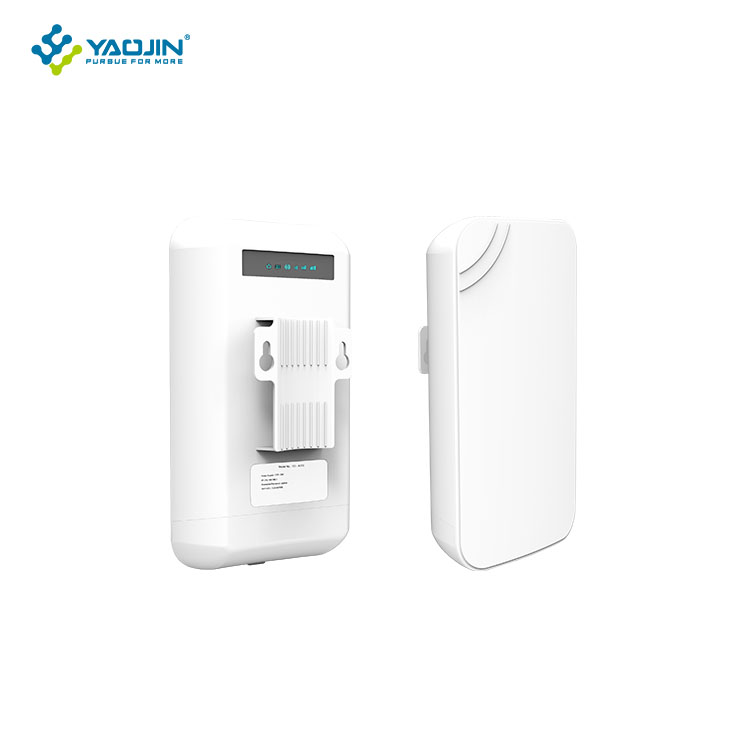
Direct Weather Effects on Signal Reliability
Weather events alter how radio waves travel between cell towers and your 4G Outdoor CPE Wifi Router. Below is a breakdown of common conditions and their technical impact.
| Weather Condition | Primary Effect | Expected Reliability Change |
|---|---|---|
| Heavy Rain | Signal attenuation (rain fade) | 10-30% drop in throughput |
| Snow/Ice | Physical obstruction + moisture on antennas | Intermittent packet loss |
| Fog/Mist | Water vapor absorption of high frequencies | Minor latency increase |
| High Winds | Micro-misalignment of directional antennas | Sudden disconnections |
| Extreme Heat | Amplifier noise floor elevation | Reduced SNR (Signal-to-Noise Ratio) |
Why YaoJin Models Maintain Better Stability
Professional-grade units from YaoJin integrate weather-resistant components such as IP67 enclosures and automatic gain control. This does not eliminate atmospheric effects, but it significantly reduces weather-induced downtime compared to consumer devices.
Key Technical Mechanisms
-
Rain Fade Compensation – Modern 4G Outdoor CPE Wifi Router units adjust modulation schemes dynamically. When rain weakens the signal, the router drops to a lower but more robust modulation (e.g., from 64QAM to QPSK), maintaining connection rather than dropping it.
-
Thermal Management – In high heat, internal amplifiers generate more noise. YaoJin routers use passive aluminum heatsinks to keep the noise floor low, preserving uplink stability.
-
Ice Buildup Prevention – Slight internal heating around antenna ports prevents ice from creating a dielectric barrier that blocks RF transmission.
4G Outdoor CPE Wifi Router FAQ – Common Questions
Question 1: Can a 4G Outdoor CPE Wifi Router work at all during a thunderstorm with heavy rain?
Answer 1: Yes, a quality 4G Outdoor CPE Wifi Router like YaoJin continues working during most thunderstorms, though speeds may temporarily decrease. Heavy rain causes rain fade, primarily affecting higher frequency bands (Band 7 at 2600MHz more than Band 20 at 800MHz). The router will automatically fall back to lower bands or adjust its error correction. Complete failure only occurs during extreme downpours exceeding 50mm per hour, which is rare. Lightning protection circuitry inside YaoJin models also prevents surge damage.
Question 2: Does snow accumulating on the router housing completely block the WiFi signal?
Answer 2: Snow does not block the cellular signal directly, but wet snow can affect antenna performance. The 4G Outdoor CPE Wifi Router communicates through radio waves, which penetrate dry snow easily. However, when snow melts and refreezes as ice on the antenna connectors, it creates a layer with a high dielectric constant that reflects RF energy. YaoJin recommends mounting the router with a slight downward tilt so that snow slides off naturally. If ice forms, the connection may see packet loss until the ice melts or is removed.
Question 3: How much slower will my 4G Outdoor CPE Wifi Router become during a hot summer day with high humidity?
Answer 3: On a hot, humid day (35°C / 95°F with 80% humidity), you may see a 5-15% reduction in download speed compared to a cool, dry day. Humidity adds water vapor to the air, which slightly absorbs microwave energy. More importantly, heat raises the noise figure of the router's internal amplifier. A YaoJin 4G Outdoor CPE Wifi Router handles this better thanks to its larger heat dissipation area. Users typically notice latency increasing from 30ms to 40-50ms, but video calls and streaming remain functional. Speeds return to normal when temperatures drop in the evening.
Best Practices for Weather-Resilient Setup
-
Install the 4G Outdoor CPE Wifi Router under a small eave when possible, while keeping a clear tower line-of-sight.
-
Use YaoJin recommended low-loss coax cables if extending the antenna remotely.
-
Check signal statistics (RSRP, SINR) during different weather conditions once a month to establish baselines.
Contact Us
If you need help selecting a weather-hardy 4G Outdoor CPE Wifi Router or troubleshooting your current outdoor setup, reach out to the YaoJin technical team. We provide site surveys, installation guides, and real-time support. Contact us today via the form on our website to get a personalized recommendation for your climate and coverage area.