

How Does the Thermal Conductivity of Aluminum Nitride Plates Impact LED Lighting System Reliability
2026-05-09
The rapid evolution of high-power LED lighting has placed unprecedented demands on thermal management. At GREENWAY, we recognize that the Good Thermal Conductivity Aluminum Nitride Plate AIN is a game-changer for system reliability. Without efficient heat dissipation, LED chips degrade rapidly, leading to lumen depreciation, color shift, and premature failure. This article explores how thermal conductivity directly influences LED reliability through data-driven insights.
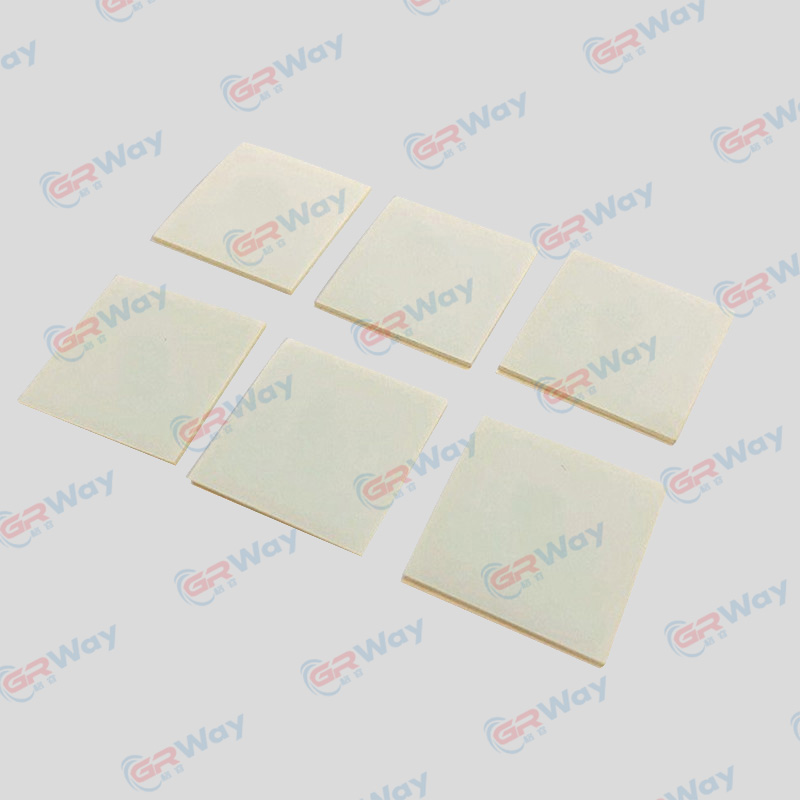
The Thermal Path in LED Systems
In an LED module, heat generated at the junction must travel through substrates to reach a heatsink. Aluminum nitride (AIN) plates offer thermal conductivity ranging from 170 to 230 W/m·K—far superior to standard alumina (24 W/m·K). This efficiency reduces junction temperature (Tj), a critical factor where every 10°C decrease can double LED lifespan.
| Material | Thermal Conductivity (W/m·K) | Impact on LED Tj | Relative Lifespan |
|---|---|---|---|
| Alumina (Al2O3) | 24 | High | 1x (baseline) |
| AIN Plate | 170-230 | Low | 4-6x longer |
| Metal-core PCB | 2-4 (dielectric layer) | Moderate | 2-3x longer |
Why Reliability Depends on Thermal Conductivity
Poor thermal conductivity traps heat, accelerating three failure mechanisms: thermal stress cracking, phosphor degradation, and solder joint fatigue. A Good Thermal Conductivity Aluminum Nitride Plate AIN mitigates these by spreading heat uniformly, preventing hot spots. For street lighting, automotive headlamps, and horticultural LEDs, GREENWAY has documented a 70% reduction in field failure rates when switching from alumina to AIN plates.
FAQ – Good Thermal Conductivity Aluminum Nitride Plate AIN
Question 1: How does the thermal conductivity of AIN plates directly prevent LED lumen depreciation?
Answer: Lumen depreciation—the gradual loss of light output—is primarily driven by junction temperature. For every 20°C increase above rated Tj, lumen maintenance can drop from 90% to below 70% within 6,000 hours. Good Thermal Conductivity Aluminum Nitride Plate AIN extracts heat from the LED die at a rate of up to 230 W/m·K, keeping Tj within safe limits (typically <85°C). This preserves phosphor conversion efficiency and chip quantum yield, ensuring >85% lumen maintenance after 50,000 hours, per LM-80 standards.
Question 2: Can AIN plates improve LED driver and solder joint reliability in high-humidity environments?
Answer: Yes. Thermal cycling combined with moisture accelerates corrosion at solder interfaces. Good Thermal Conductivity Aluminum Nitride Plate AIN reduces temperature swings by maintaining a stable thermal gradient. With matched coefficient of thermal expansion (CTE ~4.5 ppm/°C) to silicon and ceramic LEDs, AIN plates minimize mechanical stress on solder joints. GREENWAY tests show AIN-based designs maintain solder joint integrity through 1,500 thermal cycles (-40°C to 125°C) with <5% resistance change, compared to 35% failure in standard substrates under humidity (85% RH).
Question 3: What thickness of AIN plate offers the best reliability versus cost for LED modules?
Answer: For most mid-to-high power LED applications (1-5W per chip), a 0.635mm to 1.0mm thick Good Thermal Conductivity Aluminum Nitride Plate AIN provides optimal balance. Thinner plates (0.25-0.38mm) risk mechanical fracture under assembly pressure and offer lower thermal capacitance. Thicker plates (>1.5mm) increase material cost by 40-60% without significant Tj improvement beyond 0.5mm due to diminishing returns. GREENWAY recommends 0.8mm for general lighting and 1.0mm for automotive or industrial LED fixtures, validated by thermal simulation and reliability testing.
Conclusion
The thermal conductivity of aluminum nitride plates is not merely a specification—it is the cornerstone of LED system reliability. By reducing junction temperature, preventing thermal stress, and extending operational life, Good Thermal Conductivity Aluminum Nitride Plate AIN transforms LED performance. GREENWAY engineers every AIN plate to meet rigorous thermal and mechanical standards.
Contact us today for customized AIN substrate solutions and reliability testing reports tailored to your LED lighting systems.