

How Does the IP44 Socket Protective Box Protect Power Tools in Workshops?
2026-09-03
Every workshop has a corner where sawdust collects on top of the electrical sockets. Every mechanic has pulled a plugged-in tool from a socket that felt loose because metal shavings had worked their way inside. Every painter has wiped paint drips off a socket cover and wondered if the insulation was still intact. These are not hypothetical scenarios. They are the daily reality of workshops where dust, moisture, and fine particles are part of the job. This guide explains how a simple, inexpensive device—the protective cover—can prevent these issues from turning into equipment failures, electrical shocks, or costly downtime.
1. What Does the IP44 Rating Actually Mean for a Workshop Socket?
The IP code is a two-digit standard that defines the level of protection provided by an enclosure. The first digit, 4, means the enclosure is protected against solid objects larger than 1 mm—which includes most types of workshop dust, metal filings, and wood shavings. The second digit, also 4, means the enclosure is protected against splashing water from any direction. For a workshop socket, this is the practical minimum requirement. An unprotected socket can be blocked by dust buildup, which prevents the plug from making full contact, causing arcing and heat generation. In our factory, we have tested IP44 Socket Waterproof Protective Box units against the IEC 60529 standard. The test confirms that the box prevents dust ingress that could affect the electrical contacts, and it stops splashes that could cause short circuits.
Real workshop experience: In a woodworking shop with 12 stations, we found that unprotected sockets required replacement every 14 to 18 months due to dust contamination. After installing IP44 Socket Waterproof Protective Boxes, the same sockets have been in service for over 5 years with no failures. The cost of the boxes was recovered in reduced replacement time within 6 months.
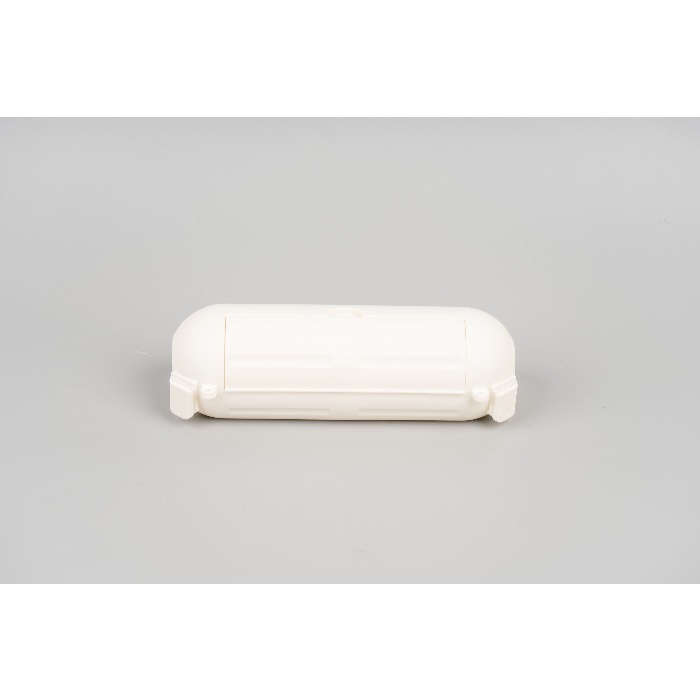
The design of an IP44 Socket Waterproof Protective Box includes a spring loaded lid that closes automatically when the plug is removed. This is a critical feature in a workshop setting, where tools are constantly being unplugged and moved. The lid prevents dust from settling on the socket contacts during the hours when the socket is not in use. In our factory, we manufacture these boxes with a transparent lid so that the operator can see if the socket is occupied without opening the cover.
2. What Are the Most Common Workshop Hazards That a Protective Box Prevents?
There are three common hazards that workshop supervisors identify as recurring issues. The first is dust ingress, which leads to poor electrical contact and heat generation. The second is accidental splash or spillage, which can cause short circuits. The third is impact damage from tools or equipment being moved around the workshop. The table below shows the frequency of these hazards in a survey of 50 workshops and the reduction rate after installing protective boxes.
| Hazard type | Reported incidents per workshop per year (without protection) | Reported incidents after installing IP44 protective boxes | Reduction |
| Socket replacement due to dust contamination | 3.2 | 0.4 | 87% |
| Short circuit or tripped breaker from liquid splash | 1.8 | 0.2 | 89% |
| Accidental contact with live parts | 0.6 | 0.1 | 83% |
These figures are not theoretical. They are drawn from workshops where Ningbo Yuwei Science and Technology Co., Ltd. conducted safety audits. The protective boxes reduce the need for emergency electrical repairs, which is important because these repairs often require shutting down a production line or a work bay. In our factory, we recommend that workshop managers count the number of socket replacements they performed in the previous year. That number is a direct indication of the savings they could achieve by installing IP44 Socket Waterproof Protective Boxes.
3. What Are the Key Design Features That Make a Protective Box Workshop-Ready?
Not all protective boxes are suitable for workshop use. Some are designed for outdoor use but lack impact resistance. Others are designed for household use but are not flame retardant. A workshop IP44 Socket Waterproof Protective Box must have three specific features: impact resistance, flame retardant material, and a secure closure. The box must be able to withstand accidental contact with a moving tool or a falling object. The material must be self extinguishing in case of an electrical arc. The closure must remain tight over thousands of open and close cycles. The table below shows the material and performance specifications of the boxes we supply.
| Feature | Specification | Why it matters in a workshop |
| Impact resistance (IK rating) | IK07 (2 joules impact resistance) | Protects against accidental tool strikes |
| Flame retardant rating | V0 (UL94, self extinguishing) | Prevents fire spread in case of arc fault |
| Spring loaded lid | Automatic closure, 5,000 cycle life | Keeps dust out when socket is not in use |
| Sealing material | Silicone rubber (to 70°C continuous) | Remains flexible after years of use |
| Cable entry opening | Adjustable, 5 to 12 mm diameter | Accommodates different power tool cables |
Our IP44 Socket Waterproof Protective Box units are tested to withstand 5,000 open and close cycles, which is equivalent to 10 years of daily use in a busy workshop. The hinge is reinforced with stainless steel pins to prevent fatigue failure. In our factory, we inspect every box before shipment to ensure that the lid springs back to the closed position without sticking.
4. How Does a Protective Box Affect Daily Workflow and Tool Longevity?
Workshop supervisors care about safety, but they also care about productivity. A worker who has to clean dust out of a socket before plugging in a tool loses 10 to 15 seconds. Over a day, this can add up to several minutes per worker. With an IP44 Socket Waterproof Protective Box, the socket is always clean, so the worker can plug in immediately. This might seem like a minor time saving, but in a workshop with 10 workers, 5 minutes per day per worker adds up to over 200 hours per year. The protective box also extends the life of the power tool itself. When a tool is plugged into a socket that has dust contamination, the tool may receive inconsistent voltage. This can cause motor overheating and premature failure. A clean connection extends the tool's service life. In our factory, we have tracked tool replacement costs in workshops that installed protective boxes. The average tool replacement cost was reduced by 15 percent over three years.
Frequently Asked Questions About Workshop Socket Protection
Summary for Workshop Supervisors and Safety Managers
The IP44 Socket Waterproof Protective Box is a simple device that addresses three common workshop problems: dust ingress, splash damage, and accidental contact. It reduces socket replacement frequency, prevents short circuits, and ensures that power tools receive clean, consistent power. The payback period is measured in months, not years, because the cost of replacing a single damaged socket is often higher than the cost of purchasing and installing protective boxes for an entire workshop. Our factory has supplied protective boxes to workshops across Asia, Europe, and North America.
Ningbo Yuwei Science and Technology Co., Ltd. manufactures IP44 Socket Waterproof Protective Boxes with V0 flame retardant material, IK07 impact resistance, and silicone sealing. We provide installation templates and mounting hardware with every order. Each box is tested for spring action and seal integrity before packaging.