

How Does the Allen Bradley 1784-PCIC Compare to the 1784-PCICS and 1784-PCICR
2026-11-12
When specifying a ControlNet interface for a PC-based control system, engineers frequently weigh the Allen Bradley 1784-PCIC against its sibling modules, the 1784-PCICS and 1784-PCICR. Each card serves the same fundamental purpose—connecting a host computer to a ControlNet network—yet they differ in bus architecture, channel count, and media support. Selecting the wrong variant can lead to compatibility issues, unnecessary cost, or reduced network flexibility. At Feimu, we supply and support all three modules, and this comparison distills the technical distinctions that matter most during specification and procurement.
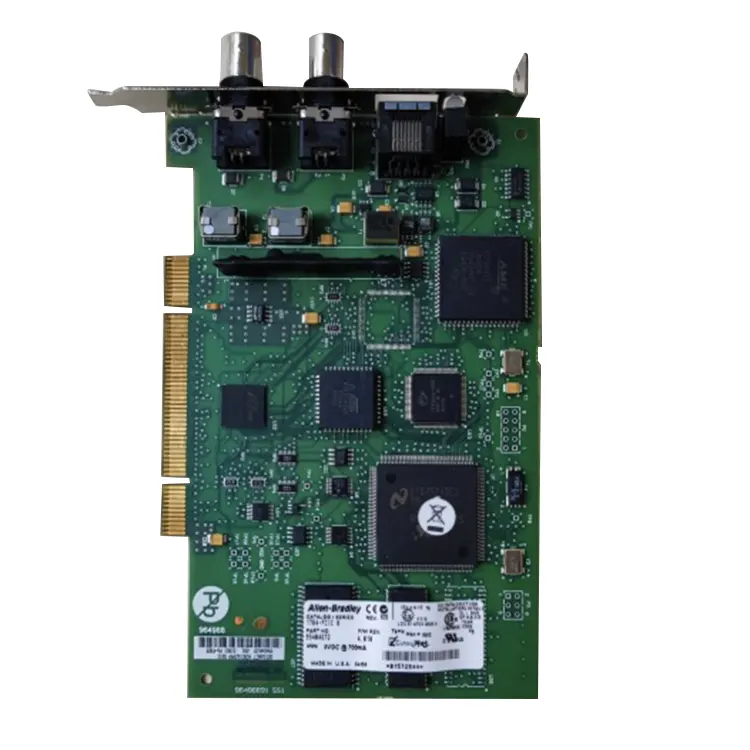
Quick Comparison at a Glance
| Feature | Allen Bradley 1784-PCIC | 1784-PCICS | 1784-PCICR |
|---|---|---|---|
| Host Bus | PCI | PCI | PCI |
| ControlNet Channels | 1 | 2 | 1 |
| Media Support | Coax (RG-6) | Coax (RG-6) | Coax and Fiber |
| Redundancy Support | No | No | Yes (media redundancy) |
| Typical Use Case | Single-network PC node | Dual-network monitoring | Redundant or long-distance links |
| Software Driver | 1784-PCIC driver | Shared ControlNet driver set | Shared ControlNet driver set |
Key Technical Differences
-
Channel Count: The Allen Bradley 1784-PCIC provides a single ControlNet channel, making it ideal for straightforward PC-to-network connections. The 1784-PCICS adds a second channel, allowing one host to monitor or bridge two independent ControlNet segments.
-
Media Flexibility: The 1784-PCICR introduces fiber-optic capability alongside coaxial support, which extends segment distance and improves noise immunity in electrically harsh plants.
-
Redundancy: Only the 1784-PCICR supports media redundancy, a decisive factor in processes where network interruption is unacceptable.
-
Driver and Software: All three rely on the same ControlNet driver family, so migration between variants rarely requires application-level changes—an important consideration for legacy system upgrades.
Selection Guidance
-
Choose the Allen Bradley 1784-PCIC for single-segment PC nodes where cost and simplicity dominate.
-
Specify the 1784-PCICS when a single workstation must access two ControlNet networks simultaneously.
-
Deploy the 1784-PCICR for fiber runs, long distances, or redundant media architectures.
Allen Bradley 1784-PCIC FAQ
Q: Can the Allen Bradley 1784-PCIC be installed in a modern PCI slot?
A: Yes, provided the motherboard offers a legacy 32-bit PCI slot; the card is not compatible with PCI Express, so a PCIe-to-PCI bridge or an older industrial PC is required.
Q: Does the Allen Bradley 1784-PCIC support Windows 10?
A: Official driver support centers on older Windows versions; for Windows 10 deployments, confirm driver compatibility with the ControlNet software stack or use a supported virtualized environment.
Q: What is the maximum number of nodes the Allen Bradley 1784-PCIC can address on a ControlNet segment?
A: A standard ControlNet segment supports up to 99 nodes, and the card can operate as one node within that limit, subject to media and repeater constraints.
Q: How does the Allen Bradley 1784-PCIC differ from the 1784-PCICR in cabling?
A: The Allen Bradley 1784-PCIC uses coaxial cable only, while the 1784-PCICR accepts fiber media for longer, noise-immune runs.
Q: Is the Allen Bradley 1784-PCIC still available through Feimu?
A: Feimu maintains stock and sourcing channels for the Allen Bradley 1784-PCIC and related ControlNet modules, including tested refurbished units.
Contact Us
Ready to specify the right ControlNet interface for your application? Contact Feimu today for pricing, availability, and technical guidance on the Allen Bradley 1784-PCIC, 1784-PCICS, and 1784-PCICR—our team will help you match the module to your network architecture and budget.