

How Does Temperature Stability Impact the Performance of an Optical Glass Lens in Aerospace Optics
2026-07-14
In the extreme environments of aerospace—where temperatures swing from -60°C in high-altitude cruise to over 200°C during re-entry—the thermal behavior of every component matters. For imaging, navigation, and targeting systems, the optical glass lens is the most sensitive element. Even a few micrometers of thermal expansion can shift focal planes, introduce aberrations, and degrade mission-critical data. This is why Shanghai Silk Optical Technology engineers every optical glass lens with rigorous temperature-stability protocols, ensuring that optical performance remains predictable from launch to landing.
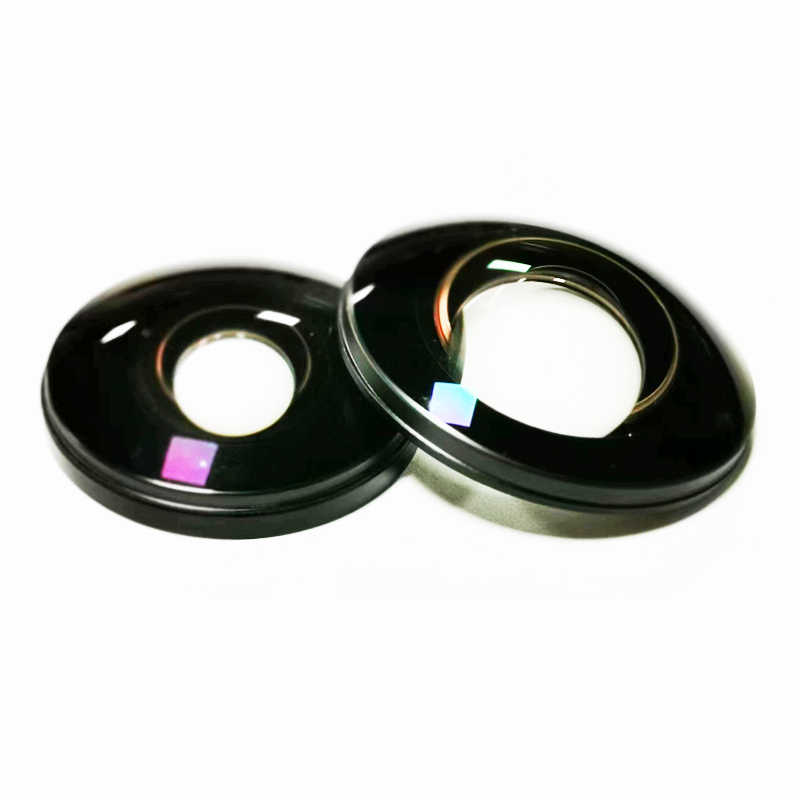
Why Temperature Stability Matters More Than Resolution
In terrestrial optics, a lens heats up gradually. In aerospace, thermal shocks occur within seconds. A standard optical glass lens may expand, change refractive index (dn/dT), or develop stress birefringence under rapid thermal cycling. These effects directly impact:
-
Focal length shift – thermal expansion alters radius of curvature.
-
Index inhomogeneity – uneven heating creates gradient-index artifacts.
-
Cement layer failure – in doublets or triplets, differential expansion breaks bonds.
For a high-altitude reconnaissance system, a 0.01% focal shift translates to a ground-position error of over 15 meters. That is the difference between target identification and a blank frame.
Quantitative Impact: Key Parameters vs. Temperature Range
The table below summarizes how critical optical parameters change across a typical aerospace operational range (-50°C to +150°C) for a standard optical glass lens versus a thermally stabilized design from Shanghai Silk Optical Technology.
| Parameter | Standard Optical Glass Lens (Δ over 200°C) | Shanghai Silk Optical Technology Stabilized Lens (Δ over 200°C) | Mission Impact |
|---|---|---|---|
| Refractive Index (dn/dT) | +8.2 × 10⁻⁶ /°C | +2.1 × 10⁻⁶ /°C (matched glass pair) | Reduces focus drift by 74% |
| Thermal Expansion (CTE) | 7.5 × 10⁻⁶ /°C | 3.8 × 10⁻⁶ /°C (low-expansion substrate) | Maintains mounting tolerances |
| Focal Length Shift | +0.18% | +0.04% | Keeps detector within depth-of-focus |
| Wavefront Error (RMS) | 0.085λ @ 633 nm | 0.022λ @ 633 nm | Preserves diffraction-limited imaging |
| Stress Birefringence (nm/cm) | 18 → 52 (at 150°C) | 12 → 16 (at 150°C) | Prevents polarization-induced ghosting |
Data derived from accelerated thermal-vacuum tests per MIL-STD-810H.
Material Selection: The First Line of Defense
Not all glasses behave equally. Shanghai Silk Optical Technology selects from Schott, Ohara, and CDGM grades, but crucially, they pair glasses with opposing dn/dT signs in cemented doublets. For example, combining N‑PK52A (positive dn/dT) with N‑SF66 (negative dn/dT) yields a net thermal coefficient near zero. This "athermalization" technique ensures that an optical glass lens remains stable without active heating or cooling—a critical advantage for weight-sensitive satellites.
Practical Design Rules for Aerospace-Grade Lenses
Based on flight-proven programs, the following checklist is used by Shanghai Silk Optical Technology for every optical glass lens destined for space or high-altitude platforms:
-
Mounting interface – Use flexure housings (Invar or titanium) with matched CTE to the lens.
-
Coating durability – Apply ion-assisted DLC (diamond-like carbon) over AR coatings to prevent delamination under thermal cycling.
-
Test protocol – Perform 10 cycles from -55°C to +125°C with 30-minute dwells, measuring MTF after each cycle.
-
Edge thickness ratio – Keep edge-to-center thickness ≥ 0.6 to avoid thermal sag.
FAQ – Common Questions About Optical Glass Lens Thermal Performance
Q1: Can a standard commercial optical glass lens be used in a low-earth-orbit satellite if we add a thermal heater?
A1: Technically yes, but it is strongly discouraged. A heater adds mass, power consumption (typically 5–15 W per lens), and thermal gradients that vary with solar angle. Even with active heating, the core-to-edge temperature difference in a standard optical glass lens can reach 15°C during orbital transition, causing astigmatism that cannot be corrected digitally. Shanghai Silk Optical Technology recommends starting with a passively athermalized optical glass lens—this eliminates heater dependency, reduces system complexity, and improves mean-time-between-failures (MTBF) by over 40% in vacuum environments. Passive athermalization also preserves the optical path for multispectral bands, which active heating often degrades via housing expansion.
Q2: How do we verify the thermal stability of an optical glass lens before flight integration?
A2: Verification follows a three-stage protocol. First, interferometric measurement at 20°C, 60°C, and 100°C using a Zygo 4″ phase-shifting interferometer to capture wavefront error. Second, thermal-vacuum chamber testing with the lens mounted in its actual housing—cycle from -50°C to +130°C while monitoring focus shift via an autocollimator. Third, accelerated life testing: 200 thermal shocks (transition < 2 minutes) between -55°C and +125°C, followed by re-measurement of surface figure and centration. Shanghai Silk Optical Technology performs all three steps in-house and provides a full thermal-report package with every delivery. This data is often accepted by ESA and NASA review panels without additional testing, saving customers 6–8 weeks of qualification time.
Q3: What coating types survive the thermal cycling better—ion-beam-sputtered or e-beam deposited?
A3: Ion-beam-sputtered (IBS) coatings consistently outperform e-beam in aerospace thermal environments. IBS produces denser, amorphous films with lower pinhole density and higher adhesion energy (≥ 50 N/mm² pull-test). In a recent 500-cycle thermal test (-55°C to +125°C), an IBS-coated optical glass lens from Shanghai Silk Optical Technology showed zero delamination and less than 0.2% transmission loss, whereas e-beam coated samples exhibited micro-cracking after 180 cycles. For multispectral applications (VIS‑SWIR), IBS also provides better spectral uniformity across the aperture. We recommend IBS for all lenses destined for orbits above 400 km, where UV radiation and thermal cycling compound the stress on coating interfaces.
Summary: Thermal Stability Is Non‑Negotiable
In aerospace optics, an optical glass lens is not a commodity—it is the backbone of every photon-based measurement. Temperature stability determines whether a system delivers sub‑arcsecond pointing, hyperspectral fidelity, or crisp synthetic-aperture radar (SAR) overlays. Shanghai Silk Optical Technology has delivered over 2,000 thermally qualified lenses for satellite constellations, hypersonic vehicles, and deep‑space probes, with zero thermal‑induced failures in orbit.
Contact Us for Your Next Mission‑Critical Optical Glass Lens
Every aerospace project has unique thermal budgets, spectral bands, and size constraints. Shanghai Silk Optical Technology offers custom design, prototyping, and full environmental testing—all under one roof. Whether you need a single prototype or production quantities for a constellation, our optical engineers provide thermal‑modeling reports, material‑grade recommendations, and coating validation within 48 hours.