

How Does Rigid-Flex PCB Improve Reliability in Complex Electronic Designs?
2026-01-30
Article Summary
Rigid-Flex PCB technology integrates rigid boards and flexible circuits into a single interconnected structure. This hybrid approach addresses common challenges such as signal instability, connector failures, limited space, and assembly complexity. By reducing interconnect points and enabling three-dimensional design freedom, Rigid-Flex PCB solutions deliver higher reliability and long-term performance for demanding applications such as medical devices, aerospace systems, industrial controls, and high-end consumer electronics.
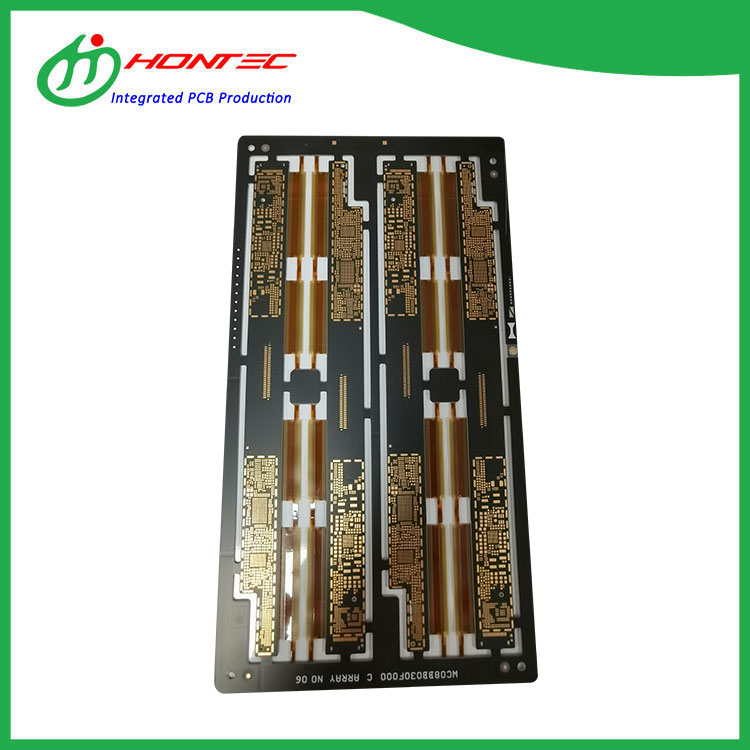
Table of Contents
- Introduction to Rigid-Flex PCB Technology
- Key Customer Pain Points in Traditional PCB Designs
- How Rigid-Flex PCB Works in Real-World Applications
- Technical Structure and Product Parameters
- Advantages of Rigid-Flex PCB Over Conventional Solutions
- Typical Application Scenarios
- Frequently Asked Questions About Rigid-Flex PCB
- Conclusion and Contact Us
Introduction to Rigid-Flex PCB Technology
Rigid-Flex PCB is an advanced circuit board solution that combines rigid printed circuit boards with flexible circuit layers into a unified structure. Unlike traditional assemblies that rely on connectors or cables to link separate boards, Rigid-Flex PCB uses integrated flexible sections to establish electrical connections between rigid areas.
This design approach enables compact layouts, enhanced mechanical stability, and improved electrical performance. As electronic products continue to evolve toward smaller sizes and higher functional density, Rigid-Flex PCB has become a critical technology for manufacturers seeking durable and space-efficient solutions without compromising reliability.
Key Customer Pain Points in Traditional PCB Designs
Conventional PCB assemblies often struggle to meet modern design and reliability requirements. Several recurring issues drive the need for alternative solutions:
- Frequent connector failures caused by vibration, shock, or thermal cycling
- Signal integrity degradation due to long interconnection paths
- Limited design flexibility in compact or irregular enclosures
- High assembly complexity and increased production costs
- Reduced long-term reliability in harsh operating environments
Rigid-Flex PCB directly addresses these challenges by eliminating many mechanical interconnects and enabling integrated, foldable circuit architectures.
How Rigid-Flex PCB Works in Real-World Applications
A Rigid-Flex PCB consists of multiple rigid sections connected by flexible polyimide layers. These flexible areas allow the board to bend, fold, or twist during installation, while the rigid sections provide structural support for components.
During operation, the flexible interconnections replace traditional wiring harnesses or board-to-board connectors. This significantly reduces points of mechanical failure and improves electrical continuity. The result is a more stable circuit system capable of maintaining performance under dynamic stress conditions.
Technical Structure and Product Parameters
Rigid-Flex PCB designs vary based on application requirements, but they typically share common structural elements and performance characteristics.
| Parameter | Typical Specification |
|---|---|
| Rigid Material | FR-4, High-Tg FR-4 |
| Flexible Material | Polyimide (PI) |
| Layer Count | 4–20 layers (rigid + flex combined) |
| Copper Thickness | 1/3 oz to 2 oz |
| Minimum Line Width/Spacing | 3/3 mil |
| Bending Cycles | Up to 100,000 cycles (dynamic flex areas) |
| Surface Finish | ENIG, OSP, Immersion Silver |
Advantages of Rigid-Flex PCB Over Conventional Solutions
Rigid-Flex PCB offers a range of advantages that directly translate into improved product performance and lifecycle stability:
- Enhanced reliability by reducing connectors and solder joints
- Improved signal integrity due to shorter electrical paths
- Optimized space utilization through three-dimensional layouts
- Lower overall system weight compared to cable-based assemblies
- Simplified assembly process and reduced part count
These benefits make Rigid-Flex PCB especially suitable for mission-critical applications where failure is not an option.
Typical Application Scenarios
Rigid-Flex PCB technology is widely adopted across industries that demand compact design and high reliability:
- Medical equipment such as imaging systems and wearable diagnostics
- Aerospace and avionics control modules
- Industrial automation and robotics
- Automotive electronics and advanced driver systems
- High-end consumer electronics and smart devices
In each of these fields, Rigid-Flex PCB supports long-term performance while accommodating complex mechanical constraints.
Frequently Asked Questions About Rigid-Flex PCB
What makes Rigid-Flex PCB more reliable than standard PCB assemblies?
Rigid-Flex PCB reduces the number of connectors and cables, which are common failure points. The integrated structure maintains stable electrical connections even under vibration, bending, or thermal stress.
Is Rigid-Flex PCB suitable for high-volume production?
Yes. With proper design and manufacturing control, Rigid-Flex PCB can be produced at scale. The reduction in assembly steps often offsets the initial fabrication complexity.
Can Rigid-Flex PCB support high-speed signal transmission?
Rigid-Flex PCB is well-suited for high-speed and high-frequency signals. Shorter trace lengths and controlled impedance design contribute to improved signal integrity and reduced electromagnetic interference.
Conclusion and Contact Us
Rigid-Flex PCB has become an essential solution for modern electronic systems that require compact design, mechanical resilience, and long-term reliability. By integrating rigid and flexible circuits into a single structure, this technology enables innovative product designs while minimizing common failure risks.
HONTEC specializes in advanced Rigid-Flex PCB manufacturing with strict quality control and engineering support tailored to complex applications. For project consultation, technical evaluation, or customized solutions, contact us today to discuss how Rigid-Flex PCB can enhance your next electronic design.