

How Does Pitch Size Affect Your Choice of Female Header
2025-12-03
When selecting the right Female Header for your electronic project, one of the most critical yet sometimes overlooked specifications is the pitch size. At JYE, we understand that this single parameter fundamentally dictates compatibility, board space efficiency, and overall assembly reliability. Simply put, the pitch—the distance from the center of one pin to the center of the next—is the key to a perfect connection. Choosing incorrectly can lead to a faulty prototype or a product that fails in the field.
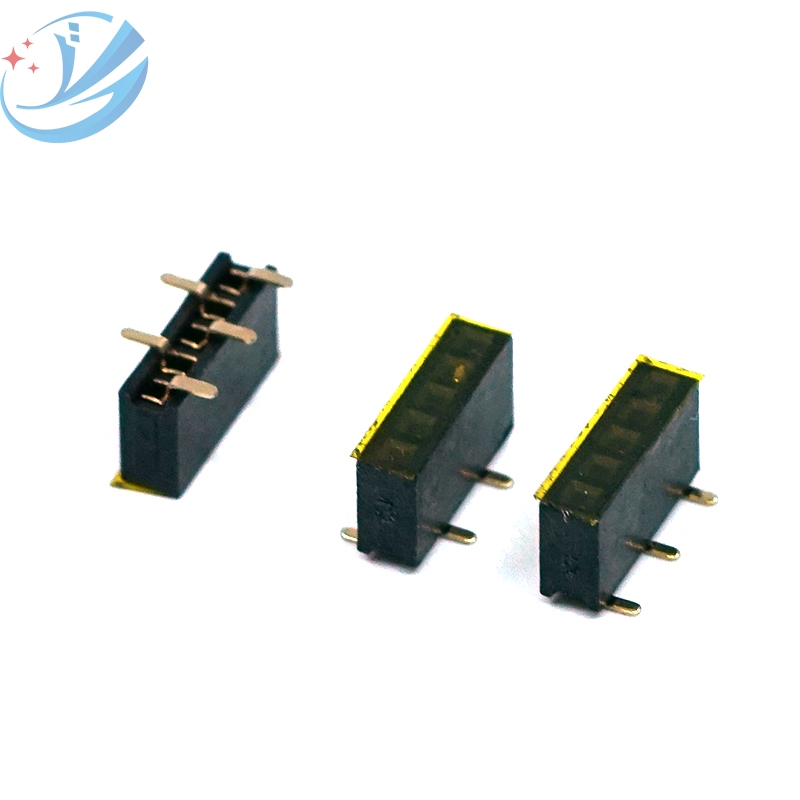
Why Pitch Size Is Your Primary Decision Factor
The pitch size of a Female Header directly determines which male pins or connectors it can mate with and how it integrates into your PCB design. The industry-standard pitches are:
-
2.54mm (0.1 inch): The most common and versatile pitch. Ideal for general-purpose prototyping, development boards (like Arduino or Raspberry Pi), and through-hole applications where board space is not a major constraint.
-
2.00mm (0.079 inch): A popular choice for modern consumer electronics and compact devices. It offers a good balance between reduced size and ease of handling.
-
1.27mm (0.05 inch): Used in high-density applications where saving PCB real estate is paramount, such as in networking hardware, advanced telecommunications, and miniaturized wearables.
JYE Female Header Product Specifications
To help you make an informed choice, here is a comparison of our core JYE Female Header product lines based on pitch:
| Feature / Specification | JYE Standard Series (2.54mm Pitch) | JYE Compact Series (2.00mm Pitch) | JYE High-Density Series (1.27mm Pitch) |
|---|---|---|---|
| Typical Application | Breadboarding, Prototyping, Educational Kits | Consumer Electronics, IoT Devices, Drones | Servers, Routers, Enterprise Hardware |
| Pin Count Options | 1xN: 2-40 pins; 2xN: 4-80 pins | 1xN: 2-30 pins; 2xN: 4-60 pins | 1xN: 2-20 pins; 2xN: 4-40 pins |
| Current Rating | 3A | 2A | 1.5A |
| Termination Type | Through-Hole (THT) | Through-Hole (THT) & Surface Mount (SMT) | Primarily Surface Mount (SMT) |
| Key Advantage | Robustness & Easy Hand-Soldering | Space Saving & Good Mechanical Strength | Maximum Connection Density |
Female Header FAQ
What is the difference between a straight and a right-angle female header?
Straight (vertical) headers are used when the connecting board is parallel to the main PCB, while right-angle headers allow the connecting board (like a Raspberry Pi HAT) to sit perpendicularly, saving vertical space. JYE offers both configurations across all pitch sizes for maximum design flexibility.
Are all female headers with the same pitch compatible with each other?
While the same pitch ensures physical fit, compatibility also depends on the pin length, plastic housing dimensions, and plating material. For a guaranteed secure and reliable connection, it is recommended to use mating headers from the same manufacturer and product series, such as the fully interoperable JYE header family.
Can I solder a surface-mount (SMT) female header by hand?
Yes, with proper technique. Use a fine-tip soldering iron, apply flux, and carefully tack one end pin first to align the header before soldering the remaining pins. However, for high-density Female Headers like our 1.27mm pitch series, we strongly recommend using reflow oven processes to ensure perfect alignment and avoid bridging.
Choosing the correct pitch is the foundation of a successful design. Whether you are compacting a consumer device or building a robust industrial system, JYE provides the precise and reliable Female Header solutions you need.
Contact us today with your project specifications, and our engineering support team will help you select the optimal JYE Female Header for your application.