

How Does Nvidia Jetson Xavier NX Power Next-Generation Edge AI Computing?
2025-09-28
In the evolving landscape of artificial intelligence, real-time computing has shifted closer to the edge. Businesses across robotics, healthcare, logistics, and smart cities increasingly demand solutions that can analyze data locally with precision and speed. The Nvidia Jetson Xavier NX represents a leap forward in this space, offering a compact yet powerful platform designed specifically for edge AI.
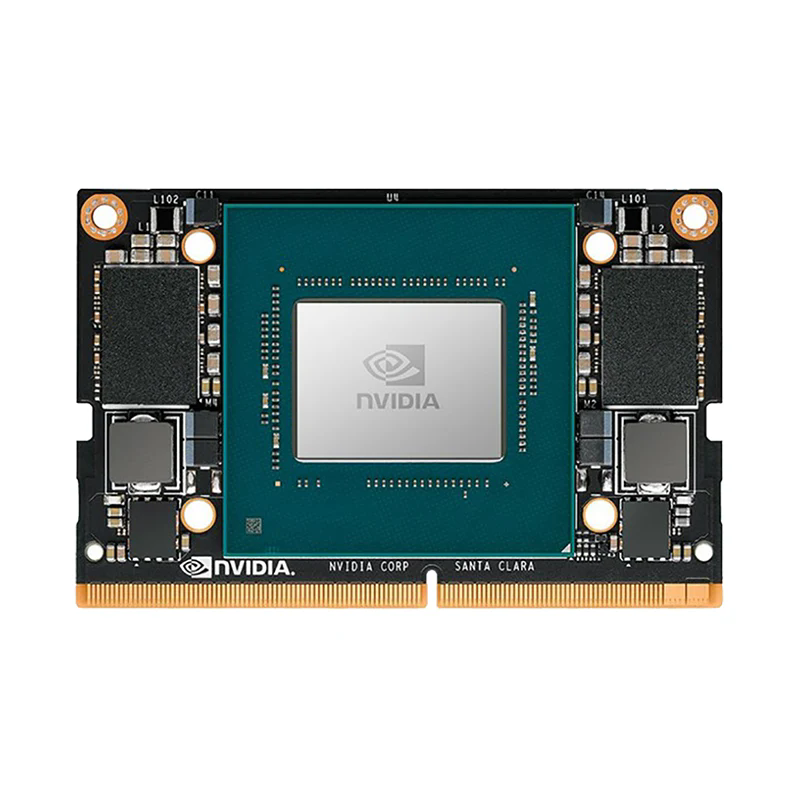
Unlike traditional servers or cloud-dependent systems, the Jetson Xavier NX provides on-device computing, reducing latency, improving security, and lowering bandwidth costs. What makes it stand out is its ability to deliver 21 TOPS (Tera Operations Per Second) of AI performance in a module small enough to fit into the palm of your hand. This balance of size, power, and efficiency means developers no longer need to compromise between portability and computational muscle.
The rise of autonomous machines and intelligent IoT devices demonstrates why high-performance embedded platforms are no longer optional but necessary. The Jetson Xavier NX allows engineers and organizations to push the boundaries of computer vision, natural language processing, sensor fusion, and machine learning—without the physical or energy limitations of bulky alternatives.
What Are the Key Technical Specifications of Nvidia Jetson Xavier NX?
When evaluating any computing platform, raw specifications provide clarity on real-world potential. Nvidia has equipped the Jetson Xavier NX with a combination of GPU, CPU, memory, and interfaces that rival desktop-class machines while consuming a fraction of the power.
Here is a detailed breakdown of its technical specifications:
| Category | Details |
|---|---|
| GPU | 384-core NVIDIA Volta GPU with 48 Tensor Cores |
| CPU | 6-core NVIDIA Carmel ARM v8.2 64-bit CPU |
| AI Performance | Up to 21 TOPS (INT8) |
| Memory | 8GB 128-bit LPDDR4x @ 51.2GB/s |
| Storage | 16GB eMMC 5.1 |
| Video Encode | 2x 4Kp60, 4x 1080p60, 8x 1080p30 (H.265/H.264) |
| Video Decode | 2x 4Kp60, 4x 1080p60, 8x 1080p30 (H.265/H.264) |
| Connectivity | Gigabit Ethernet, PCIe, I2C, I2S, SPI, GPIO |
| Camera Support | Up to 6 CSI-2 lanes (2 x 4-lane or 1 x 6-lane, 1.5Gbps each) |
| Operating System | Linux (NVIDIA JetPack SDK support) |
| Power Consumption | Configurable between 10W and 15W |
| Form Factor | 70mm x 45mm module |
These specifications highlight why the Jetson Xavier NX has become a go-to solution for engineers needing powerful edge inference without data center dependency. Its Volta GPU with Tensor Cores accelerates deep learning workloads, while the Carmel ARM CPU ensures smooth system control and multitasking.
Applications range from autonomous drones that need ultra-low latency vision processing, to industrial robotics requiring sensor fusion, to medical imaging devices demanding local AI-based diagnostics. The balance of compute density and energy efficiency makes this module particularly valuable for industries where mobility and durability are essential.
How Can Industries Implement Nvidia Jetson Xavier NX for Real-World Solutions?
The true value of any hardware lies not in raw performance alone but in how it enables industries to innovate. Nvidia Jetson Xavier NX has already proven itself across diverse sectors, helping organizations meet challenges in automation, safety, and intelligent decision-making.
a) Robotics and Autonomous Machines
Robotics companies leverage the Jetson Xavier NX to deliver smarter, faster, and safer robots. With its GPU-accelerated AI, robots can recognize objects, avoid collisions, and interact intelligently with their environment. Autonomous delivery robots, for example, process video feeds in real time, allowing them to navigate crowded urban landscapes.
b) Smart Cities
Municipal governments and technology integrators use the Jetson Xavier NX for traffic monitoring, surveillance, and public safety systems. AI algorithms running locally on the device reduce latency in detecting unusual activity or managing traffic flows, minimizing reliance on cloud networks that might introduce delay.
c) Healthcare Innovations
In healthcare, edge AI reduces diagnostic time. Portable ultrasound machines or AI-assisted imaging systems integrate Xavier NX to provide point-of-care insights, even in areas with limited internet access. This capability not only improves patient outcomes but also broadens accessibility.
d) Logistics and Retail
Warehousing systems deploy Xavier NX to streamline inventory tracking, automated sorting, and predictive demand analysis. Retail environments utilize computer vision for customer analytics, improving both security and user experience.
e) Drones and UAVs
The compact size and low power consumption of the Jetson Xavier NX make it ideal for drones. Real-time AI allows drones to execute complex missions like agriculture monitoring, infrastructure inspection, and search-and-rescue operations with high efficiency.
By enabling localized intelligence, businesses gain resilience against network interruptions, maintain data privacy, and reduce costs linked to cloud computation. This edge-first approach is critical in mission-critical environments where milliseconds matter.
Why Nvidia Jetson Xavier NX is a Strategic Choice for the Future
Choosing a platform like the Jetson Xavier NX is not just about meeting today’s demands but preparing for tomorrow’s challenges. AI models continue to grow in complexity, and industries require platforms capable of scaling alongside these advancements.
The Nvidia Jetson Xavier NX excels because:
-
It provides desktop-class AI performance in an embedded module.
-
It allows flexible power modes, making it suitable for both mobile devices and stationary equipment.
-
It is backed by Nvidia’s JetPack SDK, ensuring compatibility with the latest AI frameworks and developer tools.
-
It offers a wide ecosystem of partners and community support, enabling quicker prototyping and deployment.
This forward-looking capacity ensures that investment in Xavier NX remains valuable as applications evolve. Whether it’s deep learning inference at the edge, sensor fusion for autonomous machines, or AI-powered medical tools, the platform delivers.
Frequently Asked Questions (FAQ)
Q1: How does Nvidia Jetson Xavier NX compare to Jetson Nano?
A: The Jetson Nano is designed for entry-level AI projects with lower power and performance requirements, offering up to 0.5 TOPS of AI performance. In contrast, the Xavier NX delivers up to 21 TOPS, making it vastly more powerful and suitable for advanced robotics, autonomous systems, and demanding industrial applications.
Q2: How can developers optimize applications for Nvidia Jetson Xavier NX?
A: Developers can use Nvidia’s JetPack SDK, which integrates CUDA, cuDNN, and TensorRT libraries. These tools allow optimization of deep learning models for maximum efficiency. By leveraging hardware acceleration and Tensor Cores, developers can ensure applications run smoothly while maintaining low power consumption.
The Nvidia Jetson Xavier NX stands at the forefront of edge AI computing, offering unmatched performance in a compact form factor. Its versatility empowers industries from robotics to healthcare, creating smarter and more efficient systems that operate independently of cloud limitations.
As global demand for intelligent, real-time solutions increases, organizations must invest in platforms that combine power, efficiency, and scalability. Telefly recognizes this need and integrates the Jetson Xavier NX into solutions designed for the future of automation and edge intelligence.
For businesses seeking to unlock the potential of AI at the edge, the next step is clear—contact us today to explore how Telefly can tailor Jetson Xavier NX solutions to your unique requirements.