

How Does M.2 NVME SSD Improve Storage Performance for Modern Devices?
2026-08-21
Article Summary
With the rapid growth of high-resolution content, artificial intelligence applications, gaming environments, and professional workloads, traditional storage solutions often struggle to provide the speed and responsiveness users need. M.2 NVME SSD technology has become one of the most effective solutions for improving system performance through faster data transfer, lower latency, compact design, and reliable storage capability. This article explains how M.2 NVME SSD works, why it is becoming a preferred storage choice, and how businesses and individuals can select the right solution for their applications.
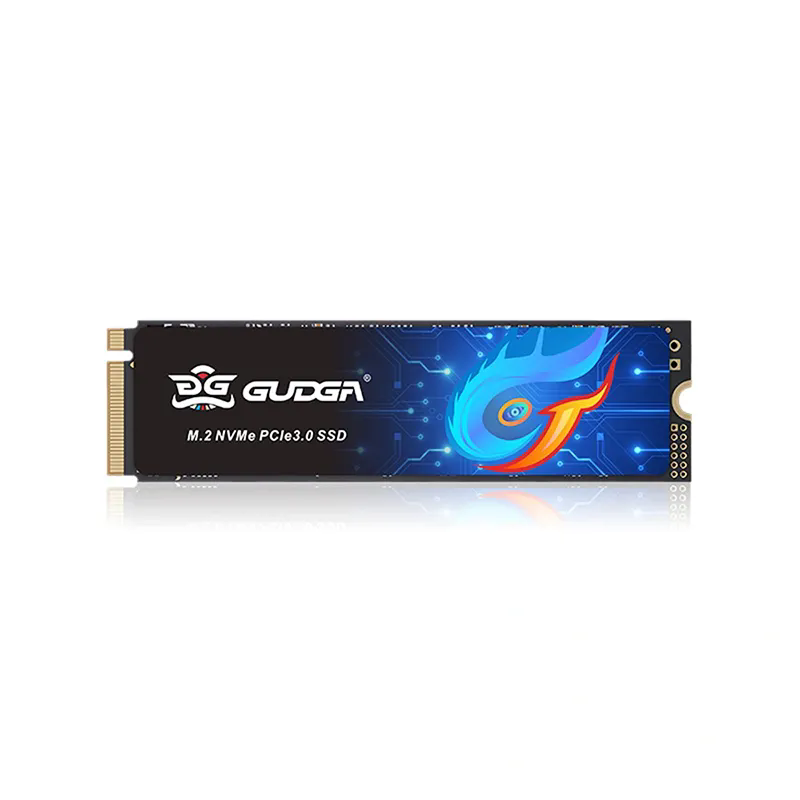
Table of Contents
- 1. What Is M.2 NVME SSD?
- 2. How Does M.2 NVME SSD Work?
- 3. Why Choose M.2 NVME SSD Instead of Traditional Storage?
- 4. What Problems Can M.2 NVME SSD Solve?
- 5. Key Factors When Selecting an M.2 NVME SSD
- 6. Applications of M.2 NVME SSD
- 7. Why Choose GUDGA M.2 NVME SSD Solutions?
- 8. Frequently Asked Questions
1. What Is M.2 NVME SSD?
M.2 NVME SSD is a high-performance solid-state storage device that combines the compact M.2 form factor with the NVME communication protocol. Unlike traditional hard disk drives that rely on mechanical components, SSDs use NAND flash memory to store and access data electronically, resulting in faster response times and improved durability.
The term "M.2" describes the physical design and connection format of the storage device, while "NVME" refers to the communication protocol optimized specifically for PCIe-based solid-state storage. When these two technologies work together, they provide a powerful storage solution suitable for laptops, desktops, workstations, industrial computers, and enterprise systems.
Many users confuse M.2 and NVME as the same technology, but they represent different aspects of storage design. M.2 defines the hardware size and interface structure, while NVME determines how efficiently data moves between the SSD and the computer system.
| Technology | Main Function | Benefit |
|---|---|---|
| M.2 | Defines SSD physical form factor | Compact size and flexible installation |
| NVME | Defines data communication protocol | Higher speed and lower latency |
| NAND Flash | Stores digital information | Reliable and non-volatile storage |
2. How Does M.2 NVME SSD Work?
The working principle of an M.2 NVME SSD is based on efficient communication between flash memory, the SSD controller, and the computer processor. When a user opens a file, launches software, or transfers data, the NVME controller manages these operations and sends information through the PCIe interface.
Traditional SATA storage was originally developed for mechanical hard drives. Although SATA SSDs improved storage speed compared with HDDs, the interface can limit the potential performance of modern flash memory. NVME was designed specifically for SSD technology, allowing storage devices to communicate more directly with system processors.
An M.2 NVME SSD typically uses PCIe lanes to achieve significantly higher bandwidth. The advanced command structure allows multiple data requests to be processed efficiently, reducing waiting time during intensive workloads.
| Feature | M.2 NVME SSD | Traditional HDD |
|---|---|---|
| Data Access | Electronic flash memory | Mechanical disk movement |
| Latency | Very low | Higher |
| Noise | Silent operation | Mechanical noise |
| Power Consumption | Lower | Higher |
3. Why Choose M.2 NVME SSD Instead of Traditional Storage?
Modern applications require storage devices that can handle large amounts of data quickly. From operating system startup to professional video editing, slow storage can become a major performance bottleneck. M.2 NVME SSD provides several advantages that directly address these challenges.
- Faster Data Transfer: PCIe-based NVME technology provides higher bandwidth compared with older storage interfaces.
- Lower System Response Time: Faster access speeds improve application loading and overall system responsiveness.
- Compact Installation: The slim M.2 design saves internal space and supports lightweight devices.
- Improved Reliability: Without moving mechanical parts, SSDs are more resistant to vibration and physical impact.
- Better Energy Efficiency: Lower power requirements make M.2 NVME SSD suitable for mobile and embedded applications.
4. What Problems Can M.2 NVME SSD Solve?
Many users experience similar storage-related problems, including slow startup times, delayed software response, insufficient performance during multitasking, and limited storage efficiency. M.2 NVME SSD is designed to solve these challenges.
Hidden
- Slow Computer Startup: A faster storage device allows operating systems and essential applications to load more quickly.
- Performance Limitations During Heavy Workloads: Professionals working with large files, databases, or creative software benefit from faster read and write performance.
- Limited Space in Compact Devices: The small M.2 structure allows manufacturers to create thinner and lighter products.
- Storage Reliability Concerns: The absence of moving components reduces mechanical failure risks.
5. Key Factors When Selecting an M.2 NVME SSD
Choosing the correct M.2 NVME SSD requires evaluating several technical factors. Different applications have different requirements, so understanding these specifications helps users achieve better performance and value.
| Selection Factor | Why It Matters |
|---|---|
| Storage Capacity | Determines how much data, software, and files can be stored. |
| Read/Write Speed | Affects file transfer, application loading, and system response. |
| PCIe Generation | Influences maximum available bandwidth. |
| Endurance Rating | Shows the expected lifespan under continuous workloads. |
| Thermal Management | Helps maintain stable performance during intensive use. |
A reliable supplier should provide consistent quality control, professional technical support, and storage products designed for different usage environments. GUDGA focuses on providing dependable M.2 NVME SSD solutions that meet various customer requirements, including consumer electronics, industrial applications, and customized storage projects.
6. Applications of M.2 NVME SSD
The flexibility and performance of M.2 NVME SSD make it suitable for a wide range of industries and devices.
- Gaming Computers: Faster loading times and smoother gaming experiences.
- Business Workstations: Improved efficiency for professional software and large data processing.
- Industrial Equipment: Reliable storage for automation systems and embedded computers.
- Servers and Data Systems: Faster access to frequently used information.
- Laptops and Portable Devices: Lightweight design with excellent performance.
7. Why Choose GUDGA M.2 NVME SSD Solutions?
Selecting the right storage partner is important for achieving stable and long-term performance. GUDGA provides M.2 NVME SSD products designed with advanced storage technology, reliable components, and strict manufacturing standards.
GUDGA understands that different customers have different requirements. Whether a project requires high-speed computing, compact storage design, industrial reliability, or customized solutions, professional storage support can help customers choose the most suitable product configuration.
Through continuous product improvement and attention to quality, GUDGA aims to deliver storage solutions that help users achieve faster, more efficient, and more reliable digital experiences.
8. Frequently Asked Questions
Q1: Is M.2 NVME SSD faster than SATA SSD?
Yes. M.2 NVME SSD generally provides higher performance because it uses the NVME protocol and PCIe interface, which are designed for high-speed flash storage.
Q2: Can every computer use an M.2 NVME SSD?
No. The computer motherboard must have a compatible M.2 slot that supports NVME PCIe storage. Users should check device specifications before installation.
Q3: How long can an M.2 NVME SSD last?
The lifespan depends on NAND quality, workload conditions, and usage environment. High-quality SSD products can provide reliable operation for many years.
Q4: Does M.2 NVME SSD improve gaming performance?
Yes. While it does not directly increase graphics performance, it can significantly reduce game loading times and improve overall system responsiveness.
Q5: Why choose GUDGA for M.2 NVME SSD products?
GUDGA provides professional storage solutions with reliable performance, flexible product options, and technical support to help customers select suitable SSD products for different applications.
As digital workloads continue to increase, choosing a reliable and high-performance storage solution becomes more important than ever. GUDGA M.2 NVME SSD products provide the speed, stability, and efficiency required for modern computing environments. For customized storage solutions or more product information, please contact us today and let GUDGA help you build a faster and more reliable storage system.