

How Does Input Voltage Fluctuation Affect the Performance of a Nail Lamp PCBA
2026-05-20
Voltage instability is one of the most overlooked threats to the reliability of a Nail Lamp PCBA. For technicians and salon owners relying on durable curing equipment, understanding this relationship is critical. At Unixplore Electronics, we engineer Nail Lamp PCBA solutions that maintain consistent output even when grid voltage varies. Input voltage fluctuation can lead to uneven curing, overheating, or premature component failure. This article breaks down the technical impacts using data-driven analysis.
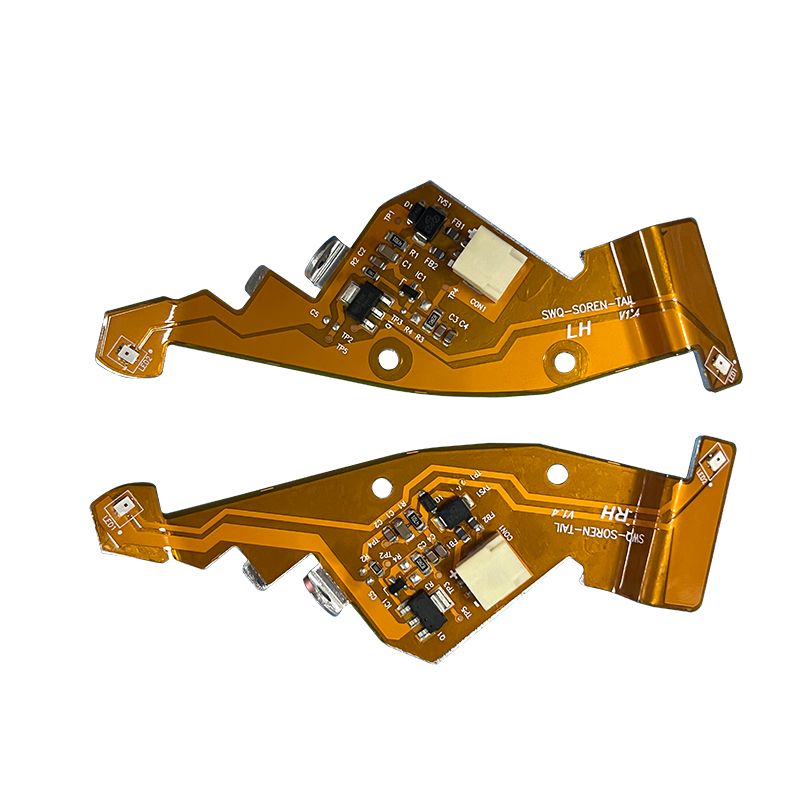
Immediate Performance Impacts of Voltage Fluctuation
| Voltage Condition | Effect on Nail Lamp PCBA | Consequence for Curing |
|---|---|---|
| Under-voltage (e.g., 90V instead of 110V) | Reduced LED forward current | Incomplete gel hardening, tacky surface |
| Over-voltage (e.g., 130V instead of 110V) | Excessive driver heat & current spikes | Overheating, shortened LED lifespan |
| Rapid fluctuation (±10% within seconds) | Microcontroller resets, timing errors | Inconsistent cure cycles, unit freezing |
Long-Term Reliability Risks
Repeated voltage swings degrade three core sections of any Nail Lamp PCBA: the rectifier circuit, constant current drivers, and onboard microcontroller. Over-voltage accelerates electrolytic capacitor aging, sometimes by 50% per 10°C temperature rise. Under-voltage forces LED drivers into dropout mode, producing irregular light pulses. Unixplore Electronics mitigates these risks through wide-input designs (85V–265V AC) with active surge protection.
Component-Level Breakdown
-
Rectifier Diodes: Voltage spikes above rated PIV cause avalanche breakdown.
-
PWM Controllers: Fluctuating Vcc leads to duty cycle jitter and flickering.
-
Thermal Sensors: False readings occur when supply rail voltage drifts outside 5V±5%.
Frequently Asked Questions about Nail Lamp PCBA
Q1: Can using a voltage stabilizer completely protect my Nail Lamp PCBA from performance issues?
A: A voltage stabilizer reduces large swings but cannot eliminate high-frequency transients or harmonic distortion. For complete protection, a Nail Lamp PCBA should include onboard over-voltage clamping and under-voltage lockout. Unixplore Electronics integrates both features at the circuit level, making external stabilizers optional rather than mandatory.
Q2: How do I test if my Nail Lamp PCBA has been damaged by voltage fluctuation?
A: Measure three things: first, LED current at maximum setting (should stay within ±5% of spec). Second, check for visible darkening of any PCB trace or capacitor vent. Third, run a full 60-second cure cycle with a heat camera—temperature rise exceeding 60°C on the driver IC indicates internal damage from past voltage stress. Reliable Nail Lamp PCBA units from Unixplore Electronics show less than 45°C rise under identical conditions.
Q3: What input voltage range should a high-quality Nail Lamp PCBA support for global use?
A: A professional-grade Nail Lamp PCBA must accept 100V to 240V AC, 50/60Hz without user adjustment. This covers North America (120V), Europe (230V), and Japan (100V). Within this range, regulation should keep LED current variation below 3%. Unixplore Electronics designs each Nail Lamp PCBA to tolerate 90V to 265V continuous, including brownout recovery in under 0.5 seconds.
Best Practices for Voltage-Related Reliability
-
Always power your Nail Lamp PCBA through a basic EMI filter if salon wiring is old.
-
Avoid daisy-chaining multiple high-power nail lamps on one outlet.
-
Periodically log curing times: any sudden extension indicates driver compensation for voltage drop.
Conclusion and Contact Call
Protecting your Nail Lamp PCBA from input voltage fluctuation directly extends lamp life and ensures perfect gel curing every cycle. Unixplore Electronics delivers boards with advanced voltage tolerance, thermal monitoring, and fail-safe current limiting. For custom designs or technical consultations, contact us today to discuss your Nail Lamp PCBA requirements and receive a reliability assessment checklist.