

How Does Flex Cable Buyback Work?
2026-01-14
Article Abstract
The rapid evolution of electronics manufacturing has led to a growing accumulation of surplus, obsolete, and unused flex cables across global supply chains. Managing these materials inefficiently can result in financial loss, storage pressure, and compliance challenges. This article provides a comprehensive explanation of how a Flex Cable Buyback program works, the practical problems it solves, and how businesses can convert excess flex cables into measurable value. By examining processes, qualification standards, pricing logic, risk control, and real-world application scenarios, this guide helps decision-makers evaluate whether flex cable buyback is the right solution for their operations.
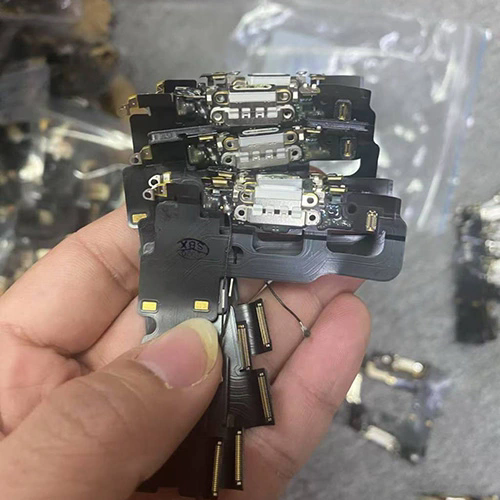
Table of Contents
- Article Outline
- What Is Flex Cable Buyback
- Common Customer Pain Points
- How the Flex Cable Buyback Process Works
- Which Flex Cables Are Eligible
- How Buyback Value Is Determined
- Risk Control and Compliance Considerations
- Business Benefits of Flex Cable Buyback
- Why Companies Choose Topyet
- Frequently Asked Questions
Article Outline
- Industry background and material surplus challenges
- Definition and scope of flex cable buyback services
- Step-by-step operational workflow
- Eligibility standards and material assessment
- Value calculation and commercial transparency
- Risk mitigation, data security, and environmental responsibility
- Strategic advantages for manufacturers and distributors
What Is Flex Cable Buyback
Flex cable buyback is a structured commercial service that enables manufacturers, OEMs, EMS providers, and distributors to resell excess flexible printed circuits (FPCs) and related cable assemblies. These materials may include overstock inventory, discontinued models, engineering change leftovers, or production rejects that still retain material or reuse value.
Instead of treating these flex cables as waste or dormant inventory, a buyback program reintroduces them into controlled secondary channels through inspection, classification, and compliant handling. This approach supports cost recovery while maintaining operational discipline and material traceability.
Common Customer Pain Points
Organizations dealing with flex cables often face recurring challenges that directly impact efficiency and profitability:
- Long-term storage of unused or obsolete flex cables occupying warehouse space
- Capital tied up in inactive inventory with no clear exit strategy
- Uncertainty about compliant disposal or resale pathways
- Risk of unauthorized reuse or brand exposure
- Lack of transparent pricing for surplus electronic components
A professional flex cable buyback model is designed to address these issues in a systematic and auditable manner.
How the Flex Cable Buyback Process Works
A standard flex cable buyback program follows a clear, multi-stage workflow to ensure consistency and trust:
-
Initial Assessment
Clients submit basic information, including cable type, quantity, specifications, and condition. -
Technical Review
Materials are evaluated for composition, usability, and recovery potential. -
Commercial Quotation
A buyback offer is issued based on objective criteria such as copper content, design complexity, and market demand. -
Logistics Coordination
Secure collection or shipment is arranged with proper documentation. -
Final Verification and Settlement
Upon receipt and confirmation, payment is completed according to agreed terms.
Which Flex Cables Are Eligible
Not all flex cables are treated equally. Eligibility depends on multiple technical and commercial factors:
| Category | Typical Examples | Buyback Potential |
|---|---|---|
| Overstock Inventory | Unused FPC assemblies from canceled orders | High |
| End-of-Life Products | Discontinued device flex cables | Medium |
| Production Scrap | Rejected or excess manufacturing runs | Variable |
| Engineering Samples | Prototype or test batches | Case-dependent |
How Buyback Value Is Determined
Buyback pricing is not arbitrary. It is calculated using measurable and verifiable parameters:
- Metal content, especially copper weight and purity
- Layer count and material structure
- Overall condition and contamination level
- Market demand for reusable or recyclable components
- Logistics and processing requirements
This structured valuation approach ensures fairness and predictability for both parties.
Risk Control and Compliance Considerations
One of the major concerns for enterprises is risk exposure. A professional flex cable buyback service incorporates safeguards such as:
- Controlled downstream channels to prevent unauthorized reuse
- Clear documentation and material traceability
- Secure handling of branded or customized components
- Environmentally responsible processing methods
These measures help organizations maintain operational integrity while optimizing material recovery.
Business Benefits of Flex Cable Buyback
Implementing a flex cable buyback strategy delivers multiple operational advantages:
- Immediate financial return from dormant assets
- Reduced warehousing and inventory management costs
- Simplified material lifecycle management
- Improved internal resource utilization
- Enhanced corporate responsibility profile
Why Companies Choose Topyet
Topyet has developed a structured flex cable buyback service designed for clarity, accountability, and scalability. By combining technical evaluation capabilities with practical industry experience, Topyet supports clients across electronics manufacturing, assembly, and distribution sectors.
The company emphasizes transparent communication, standardized processes, and responsible material handling, helping businesses turn surplus flex cables into controlled value recovery rather than unmanaged risk.
Frequently Asked Questions
What quantities are suitable for flex cable buyback?
Buyback programs can accommodate both small batches and large-volume inventory, depending on material characteristics.
Does buyback apply to customized or branded flex cables?
Yes, provided that proper controls and agreements are in place to manage reuse or recycling channels.
How long does the buyback process usually take?
Timelines vary by volume and complexity, but structured workflows are designed to minimize delays.
Is flex cable buyback limited to specific industries?
No. It is commonly used across consumer electronics, automotive electronics, industrial control, and medical device sectors.
Conclusion
Flex cable buyback is not merely a disposal option; it is a strategic tool for converting surplus materials into operational value while maintaining control and accountability. For organizations seeking a reliable and structured approach, working with an experienced service provider can significantly reduce complexity and unlock hidden returns.
If your business is managing excess or obsolete flex cables and looking for a practical recovery solution, Topyet offers a proven pathway. To explore tailored options and understand how your materials can be evaluated efficiently, contact us today and start transforming surplus inventory into measurable value.