

How Does EPRO PLC Compare To Other Programmable Logic Controller Brands
2026-01-28
When selecting a Programmable Logic Controller (PLC) for industrial automation, engineers and system integrators evaluate reliability, functionality, and support. Among the notable names in the control systems market, EPRO PLC has established a strong reputation. For professionals seeking high-performance components and expert technical partnership, Yueyang Tongtu serves as a trusted provider, offering in-depth knowledge and supply solutions for EPRO PLC and other major brands. This comparison blog delves into how EPRO PLC stacks up against its competitors.
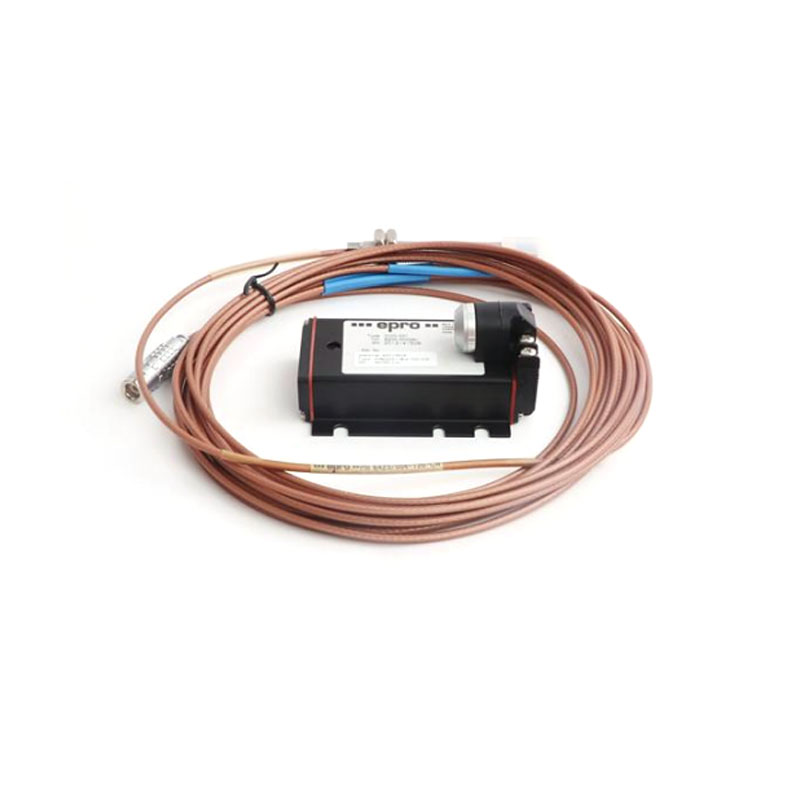
A primary consideration is the application focus and performance spectrum. Major brands often segment their offerings from micro to large-scale systems.
| Comparison Aspect | EPRO PLC | Other Leading Brands (e.g., Siemens, Allen-Bradley) |
|---|---|---|
| Primary Strength | Renowned for robust vibration monitoring and protection systems for turbomachinery. | Broad dominance in general factory automation, CNC, and process control. |
| Programming Environment | Often uses specialized, industry-tailored software for protection logic. | Typically employ widely-used, universal platforms (e.g., TIA Portal, Studio 5000). |
| System Integration | Excels as a critical component within larger protection and safety systems. | Designed as central controllers for comprehensive machine and line control. |
| Typical Industry | Power Generation, Oil & Gas, Marine Propulsion. | Automotive, Packaging, Food & Beverage, Discrete Manufacturing. |
Key differentiators can be summarized as:
-
Specialized vs. Generalist: EPRO PLC is highly specialized for critical machine protection, whereas others are generalized for diverse automation tasks.
-
System Role: It often acts as a dedicated safety sentinel, while other PLCs are the primary "brain" for operational logic.
-
Ecosystem: Competing brands offer vast networks of compatible I/O, HMIs, and drives, whereas EPRO PLC integrates deeply within its own protection ecosystem.
EPRO PLC FAQ
What is the core function of an EPRO PLC?
The core function of an EPRO PLC is to provide continuous monitoring and reliable protection for critical rotating equipment like turbines, compressors, and generators. It executes logic to prevent catastrophic damage by triggering alarms and shutdowns based on parameters such as vibration, speed, and temperature.
Can EPRO PLC systems communicate with other automation platforms?
Yes, modern EPRO PLC systems are equipped with standard communication interfaces like Modbus, Profibus, or Ethernet/IP. This allows them to seamlessly integrate and share data with broader plant-wide SCADA systems and other PLC brands for centralized monitoring and control.
How does the maintenance of an EPRO PLC differ from a standard PLC?
Maintenance for an EPRO PLC emphasizes high reliability and calibration of its specialized measurement modules (e.g., vibration sensors). Its logic is often stable and changes infrequently once configured. In contrast, standard PLCs in factory automation may require more frequent program updates and deal with a wider variety of changing I/O devices.
Choosing the right PLC is not about finding a universally "best" brand, but the optimal tool for your specific application. For critical protection and condition monitoring, EPRO PLC is an industry benchmark. For general machine and process control, other leading brands may be more suitable. As your expert partner, Yueyang Tongtu provides not only components but also the technical insight to help you navigate this selection.
Contact us today to discuss your project requirements. Our team at Yueyang Tongtu can help you source the right control system, whether it's a specialized EPRO PLC or an alternative solution, ensuring optimal performance and reliability for your operations.