

How Does an SLD Light Source Improve Precision in Optical Applications?
2026-06-04
Summary: SLD (Superluminescent Diode) light sources are revolutionizing the world of optical systems. They combine the brightness of lasers with the low coherence of LEDs, providing high precision and stability for a variety of applications. This article explores the principles, benefits, types, and practical uses of SLD light sources, addressing common challenges faced by engineers and researchers in selecting and deploying these devices.
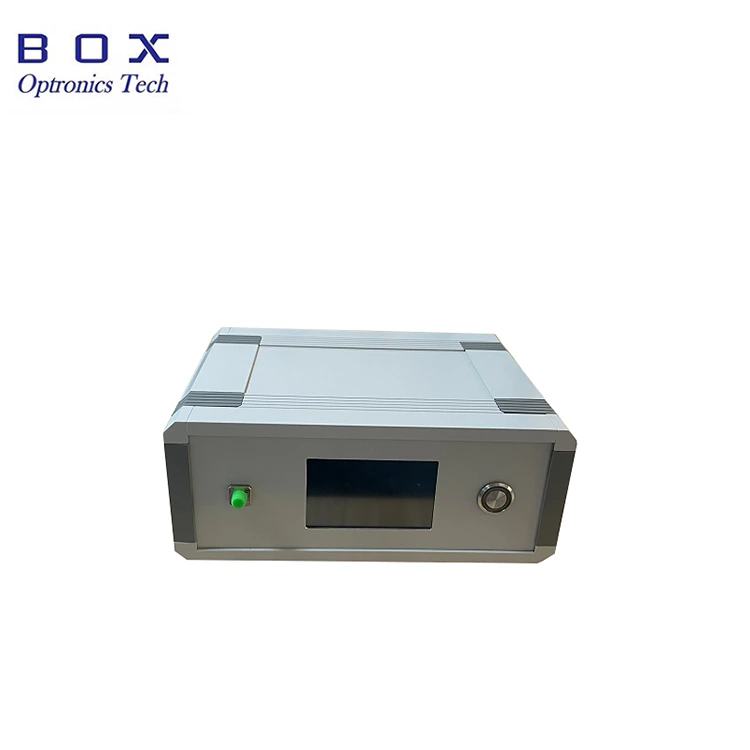
Table of Contents
- What is an SLD Light Source?
- How Does an SLD Light Source Work?
- What Are the Advantages of Using SLDs?
- Which Types of SLD Light Sources Are Available?
- How Are SLDs Applied in Real-World Scenarios?
- How to Choose the Right SLD for Your System?
- Frequently Asked Questions
- Conclusion & Contact Information
What is an SLD Light Source?
An SLD (Superluminescent Diode) light source is a semiconductor device that emits broadband light through spontaneous emission while maintaining a narrow spatial profile similar to a laser. Unlike traditional lasers, SLDs have low coherence, which reduces interference artifacts in optical systems.
- High brightness: Much stronger than standard LEDs.
- Low coherence: Minimizes noise and interference patterns.
- Compact design: Suitable for integration in modern optical systems.
SLDs are particularly valuable in precision measurement systems, biomedical imaging, fiber-optic sensing, and spectroscopy due to their unique combination of properties.
How Does an SLD Light Source Work?
The operational principle of an SLD is based on stimulated and spontaneous emission in a semiconductor material. Unlike a laser diode, SLDs do not rely on optical feedback from mirrors to achieve high coherence. This ensures:
- Broad spectral output with minimal mode interference.
- Stable light intensity over long periods.
- High coupling efficiency into optical fibers.
Modern SLDs integrate advanced thermal management and optical design to maximize performance in demanding environments.
What Are the Advantages of Using SLDs?
| Feature | Benefit | Customer Pain Point Solved |
|---|---|---|
| Low Coherence | Reduces interference noise in OCT and sensing systems | Minimizes measurement errors in precision applications |
| High Output Power | Enables long-distance fiber coupling and stronger signals | Solves the problem of weak illumination in complex setups |
| Compact Size | Easily integrates into existing optical assemblies | Reduces space constraints and system redesign requirements |
| Stable Spectrum | Consistent performance over temperature variations | Eliminates frequent recalibration and downtime |
Which Types of SLD Light Sources Are Available?
SLD devices vary based on wavelength, output power, and fiber coupling options. Common categories include:
- Fiber-Coupled SLDs: Directly integrated with single-mode or multi-mode fibers for easy system integration.
- Free-Space SLDs: Emission occurs in open space, suitable for bench-top laboratory setups.
- High-Power SLD Modules: For applications demanding maximum brightness over longer distances.
Choosing the right type depends on system requirements such as wavelength, coherence length, and power stability.
How Are SLDs Applied in Real-World Scenarios?
SLD light sources are versatile. Key application areas include:
- Optical Coherence Tomography (OCT): Provides high-resolution imaging for medical diagnostics.
- Fiber Optic Sensors: Detects strain, temperature, or vibration with high precision.
- Interferometry: Minimizes noise in metrology and scientific experiments.
- Spectroscopy: Broadband emission allows accurate material analysis.
How to Choose the Right SLD for Your System?
Consider the following factors when selecting an SLD light source:
- Wavelength Range: Match the SLD spectrum with your application requirements.
- Output Power: Ensure sufficient intensity for your system while maintaining thermal stability.
- Fiber Compatibility: Decide between single-mode or multi-mode coupling based on your optical setup.
- Reliability and Lifetime: Check manufacturer specifications for MTBF (Mean Time Between Failures).
Proper selection ensures maximum system performance, minimal noise, and long-term stability.
Frequently Asked Questions
1. Why choose an SLD over a laser or LED?
SLDs combine the brightness of lasers with the low coherence of LEDs, making them ideal for applications where interference noise must be minimized.
2. Can SLDs be used in harsh industrial environments?
Yes, high-quality SLD modules are designed with thermal management and robust packaging for reliable operation in challenging conditions.
3. How long does an SLD typically last?
SLD lifetimes often exceed 10,000 hours, depending on operating conditions and manufacturer specifications.
4. Are SLDs compatible with standard optical fibers?
Yes, fiber-coupled SLDs can interface with single-mode and multi-mode fibers, providing flexibility in system design.
Conclusion & Contact Information
SLD light sources offer unmatched precision, low noise, and high stability, making them indispensable for modern optical applications. Whether for medical imaging, fiber optic sensing, or scientific research, choosing the right SLD can significantly enhance system performance and reliability.
For more information or to explore our range of high-performance SLD light sources, contact us at Box Optronics today to find the perfect solution for your optical systems.