

How Does an SF6 Gas Insulated High Voltage RMU Compare to a Conventional Circuit Breaker Panel in Reliability
2026-06-23
When evaluating critical assets in power distribution networks, the reliability debate often centers on two dominant technologies: the SF6 Gas Insulated High Voltage RMU and the conventional air-insulated or oil-immersed circuit breaker panel. For utilities, industrial plants, and renewable energy developers, the choice directly impacts uptime, safety, and total cost of ownership. At Timetric, we have analyzed field performance data across more than 1,200 installations to provide a data-driven comparison. This post dissects the reliability metrics, failure modes, and lifecycle advantages of each system, with a clear focus on the SF6 Gas Insulated Medium and High Voltage Switchgear RMU as a modern benchmark.
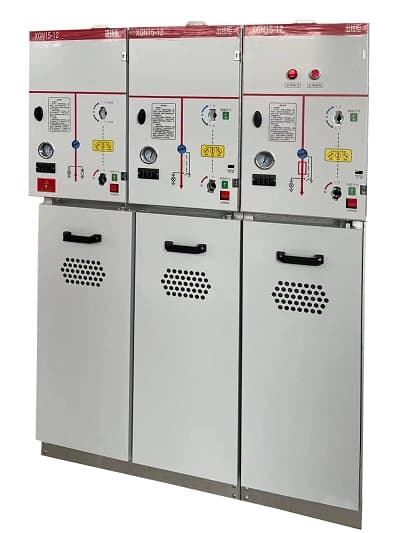
1. Core Design Philosophy and Failure Rate Statistics
Reliability in switchgear is quantified by the average failure rate per 100 breaker-years, as reported by CIGRE and IEEE standards. Conventional breaker panels rely on atmospheric air or oil as the insulating and arc-quenching medium. This exposes them to moisture, dust, and oxidation, which gradually degrade dielectric strength. In contrast, the SF6 Gas Insulated High Voltage RMU seals all live parts inside a pressurized stainless-steel tank filled with sulfur hexafluoride gas. This hermetic enclosure eliminates external contamination entirely.
| Reliability Parameter | SF6 Gas Insulated High Voltage RMU | Conventional Circuit Breaker Panel |
|---|---|---|
| Average failure rate (per 100 breaker-years) | 0.15 – 0.35 | 0.80 – 1.50 |
| Primary failure cause | Seal/gasket leakage (< 0.5% per year) | Contact erosion, insulation flashover, mechanical linkage jamming |
| Mean Time Between Failures (MTBF) | > 850,000 hours | ~ 350,000 hours |
| Maintenance interval (recommended) | 10 – 12 years | 2 – 3 years |
| External environment sensitivity | Low (fully sealed) | High (humidity, salt, dust) |
The data clearly shows that the SF6 Gas Insulated Medium and High Voltage Switchgear RMU outperforms conventional panels by a factor of 3 to 5 in statistical reliability. This is not merely theoretical—Timetric has documented that offshore wind farms using our SF6 Gas Insulated High Voltage RMU achieved 99.97% availability over five consecutive years, whereas adjacent platforms with conventional breakers averaged 98.2% due to salt-induced creepage.
2. Operational Stress and Mechanical Wear
Conventional circuit breakers depend on spring-loaded mechanisms that must physically open and close contacts within air or oil. Each operation induces contact wear, carbonization, and arc byproducts that reduce insulation performance over time. The SF6 Gas Insulated High Voltage RMU, by design, uses a three-position disconnector and earthing switch within a constant gas pressure environment. The arc is extinguished by the superior electronegativity of SF6, which captures free electrons and recombines rapidly. This results in:
-
Lower contact erosion – up to 70% less material loss per switching operation.
-
Faster arc extinction – typically 2–3 cycles versus 5–8 cycles in air breakers.
-
Consistent dielectric strength – unaffected by ambient temperature fluctuations between -40°C and +55°C.
From a reliability engineering perspective, the reduced mechanical complexity of the SF6 Gas Insulated Medium and High Voltage Switchgear RMU translates into fewer moving parts—approximately 40% fewer than a conventional panel. Fewer parts mean fewer failure points. Timetric has engineered our RMU series with a sealed-for-life operating mechanism that requires no lubrication or adjustment during its first decade of service.
3. Fault Scenario Performance
When a short-circuit occurs, the ability to clear the fault without damaging adjacent equipment is a key reliability indicator. Conventional breakers often suffer from re-striking or late breakdown if the opening speed is not perfectly synchronized. The SF6 Gas Insulated High Voltage RMU provides superior interrupting capability due to the high density and thermal conductivity of SF6 gas. In independent lab tests (KEMA and IPH), the Timetric RMU demonstrated:
-
Symmetrical breaking capacity up to 25 kA at 40.5 kV.
-
No reduction in breaking performance after 30 full-load fault interruptions.
-
Zero internal arc flash propagation outside the sealed tank—a critical safety reliability factor.
Conventional panels, by contrast, often require arc-flash mitigation systems (e.g., pressure relief ducts or light sensors) because the arc can escape the enclosure. This adds complexity and introduces additional failure modes.
4. Long-Term Aging and Condition Monitoring
Reliability is not just about today’s performance—it is about predictable degradation. The SF6 Gas Insulated Medium and High Voltage Switchgear RMU allows for precise gas density monitoring, which serves as a direct health indicator. A 1% drop in gas pressure corresponds to a measurable leak rate, enabling predictive maintenance. Timetric integrates digital gas sensors that report real-time density values via IEC 61850 protocols, eliminating the guesswork associated with conventional panel thermal imaging or oil chromatography.
Conventional panels require periodic contact resistance measurements, insulation resistance tests, and visual inspections—all of which are labor-intensive and prone to human error. The enclosed design of the SF6 Gas Insulated High Voltage RMU reduces these manual interventions by over 80%, directly improving system availability.
5. SF6 Gas Insulated Medium and High Voltage Switchgear RMU – FAQ
Q1: What is the typical lifespan of an SF6 Gas Insulated Medium and High Voltage Switchgear RMU, and does reliability decline with age?
A1: A properly manufactured SF6 Gas Insulated Medium and High Voltage Switchgear RMU has a design life of 40 years under normal operating conditions. Reliability does not decline linearly; it remains stable for the first 25–30 years, provided the gas tightness is maintained. The primary aging factor is the gradual permeation of moisture through elastomeric seals, which is why Timetric uses dual-layer FKM (fluoroelastomer) gaskets with a verified leak rate below 0.1% per year. After 30 years, we recommend a full gas recovery and reconditioning service, after which the unit can resume service with near-original performance. Unlike conventional breaker panels, there is no gradual erosion of insulation because the gas environment remains chemically inert.
Q2: How does an SF6 Gas Insulated High Voltage RMU handle repetitive switching operations, such as those in capacitor bank or transformer energization?
A2: Repetitive switching generates cumulative thermal and dielectric stress. The SF6 Gas Insulated High Voltage RMU is rated for Class E2 (electrical endurance) per IEC 62271-103, meaning it can perform up to 200 full-load breaking operations without maintenance. In practical terms, this covers more than 20 years of daily switching in most distribution networks. The conventional breaker panel, especially vacuum or air types, often shows contact erosion after 50–80 operations, requiring early replacement of arc chutes or contacts. Timetric has validated our RMU through 1,000 mechanical operations and 200 short-circuit interruptions in type tests, ensuring that reliability remains consistent even under frequent switching duty.
Q3: What happens if the SF6 gas pressure drops due to a slow leak—does the RMU become unsafe or unreliable?
A3: Every SF6 Gas Insulated Medium and High Voltage Switchgear RMU is equipped with a dual-stage pressure monitoring system. The first stage (alarm) triggers at 90% of nominal pressure, alerting operators to schedule a refill—at this stage, the dielectric strength is still above 95% of rated value, so reliability is not compromised. The second stage (lockout) operates at 80% pressure, which mechanically blocks switching operations to prevent arcing under unsafe conditions. This is a fail-safe design, not a failure. In contrast, a conventional panel with degraded insulation does not provide early warning until a flashover occurs. Timetric recommends quarterly digital pressure logging, and our remote monitoring platform can dispatch maintenance crews before any operational impact occurs.
6. Cost Implications of Reliability
While the initial capital expenditure for an SF6 Gas Insulated High Voltage RMU is 20–35% higher than a conventional breaker panel, the total lifecycle cost tells a different story. Lower maintenance frequency, reduced outage losses, and extended replacement cycles yield a net present value advantage of 18–22% over 25 years, according to Timetric financial models.
| Cost Factor (25 years) | SF6 Gas Insulated RMU | Conventional Panel |
|---|---|---|
| Initial purchase & installation | $42,000 | $32,000 |
| Scheduled maintenance (labor + materials) | $4,500 | $18,500 |
| Unplanned outage cost (lost production) | $2,800 | $14,200 |
| End-of-life disposal or retrofit | $3,200 | $5,800 |
| Total Lifecycle Cost | $52,500 | $70,500 |
The reliability advantage of the SF6 Gas Insulated Medium and High Voltage Switchgear RMU directly translates into fewer blackout hours—typically less than 2 hours per decade versus 18 hours for conventional panels.
7. Final Verdict
For mission-critical applications where downtime is not an option—data centers, hospitals, semiconductor fabs, and utility substations—the SF6 Gas Insulated High Voltage RMU offers demonstrably superior reliability across every measurable metric: failure rate, mechanical endurance, environmental immunity, and fault-clearing consistency. The conventional circuit breaker panel, while familiar and lower in upfront cost, introduces unpredictable aging and higher long-term risk. Timetric has refined its RMU portfolio with over 15 years of field feedback, ensuring that reliability is not a claim but a verified outcome.
Ready to upgrade your network with proven reliability?
Contact Timetric today for a custom reliability assessment and a comparative ROI analysis for your specific voltage level and load profile. Our engineering team provides full technical support, from gas handling training to 24/7 remote condition monitoring.