

How Does an AESA Radar Achieve Low Probability of Intercept (LPI) to Avoid Detection
2026-06-04
Modern electronic warfare relies on AESA Radar (Active Electronically Scanned Array) for its unique ability to remain hidden. Unlike traditional mechanical radars, an AESA Radar transmits energy across many small modules, making it extremely difficult for enemy sensors to detect. Jioptics provides advanced optical and sensing solutions that complement such stealth technologies.
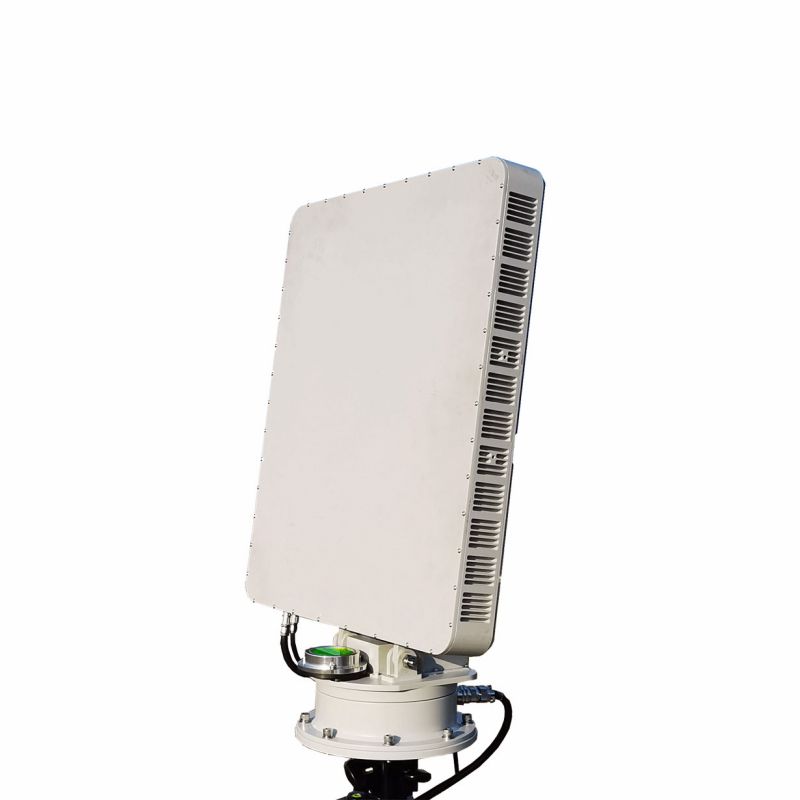
Core LPI Mechanisms in AESA Radar
| Mechanism | Function | Stealth Benefit |
|---|---|---|
| Spread Spectrum | Energy distributed over wide frequency range | Lowers peak power density |
| Frequency Agility | Rapid hopping between thousands of frequencies | Prevents interception by narrowband receivers |
| High Directivity | Beam focused only on target direction | Minimal energy leakage to sidelobes |
The table above shows how AESA Radar reduces detectability. Key techniques include:
-
Low Peak Power: Power is spread over time using long pulses, lowering instant emission
-
Pulse Compression: Enables low power while maintaining high range resolution
-
Sidelobe Control: Active cancellation reduces emissions away from the main beam
FAQ – AESA Radar LPI Questions
Q: What makes AESA Radar harder to intercept than mechanical radar?
A: A mechanical radar emits high-energy pulses in a rotating beam, which is easily recognized. An AESA Radar uses hundreds of tiny transmit/receive modules that work together. Energy is spread across time and frequency, so no single pulse carries enough signature for enemy radar warning receivers to classify. Additionally, the beam can be steered electronically without moving parts, eliminating predictable scanning patterns.
Q: Can an enemy jam an AESA Radar operating in LPI mode?
A: Jamming becomes very difficult. Because AESA Radar constantly changes frequency (frequency hopping) and keeps power low, a jammer cannot lock onto a stable signal. Even if broadband noise is used, the AESA Radar can form nulls in the direction of the jammer while continuing to track other targets. Jioptics high‑precision optical systems can further assist in cross‑cueing to verify radar tracks without active emission.
Q: Does LPI mode reduce detection range?
A: No. While instantaneous peak power is lowered, AESA Radar compensates through advanced pulse compression and long integration times. The total energy returned from a target remains sufficient for long‑range detection. Modern AESA Radar systems balance LPI settings based on operational risk – when stealth is critical, the radar automatically adjusts waveform parameters to keep range performance while staying undetected.
Conclusion
Mastering LPI requires deep integration of hardware and waveforms. Jioptics supports defense and aerospace clients with electro‑optical systems that pair perfectly with AESA Radar platforms. For customized solutions and technical consultation, contact us today.