

How Does Allen Bradley 1771-HS3CR Improve Motion Control Performance in Industrial Automation?
2026-08-21
Article Summary
The Allen Bradley 1771-HS3CR is a specialized high-performance motion control module designed for industrial automation systems that require accurate positioning, reliable feedback processing, and efficient machine operation. As manufacturing industries continue to demand higher productivity and precision, selecting the right motion control solution becomes critical for reducing downtime, improving system stability, and extending equipment service life.
This article explains how the Allen Bradley 1771-HS3CR works, what challenges it helps solve, why it remains valuable for automation upgrades, and how businesses can maximize the performance of their existing PLC-based control systems. Feimu provides professional automation component solutions to help customers achieve dependable industrial control performance.
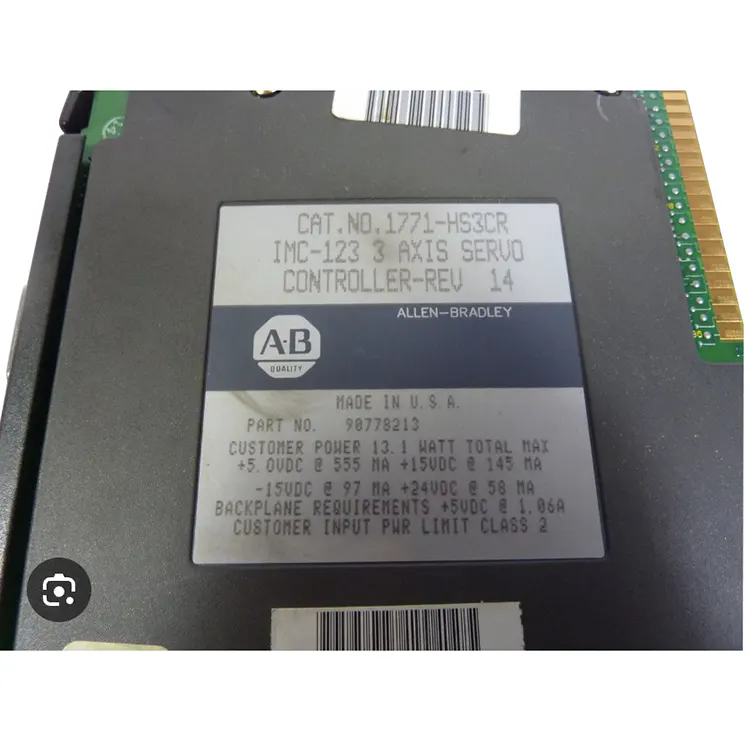
Table of Contents
- 1. What Is Allen Bradley 1771-HS3CR?
- 2. Why Is Motion Control Important in Industrial Automation?
- 3. How Does Allen Bradley 1771-HS3CR Work?
- 4. What Advantages Does Allen Bradley 1771-HS3CR Provide?
- 5. Where Is Allen Bradley 1771-HS3CR Commonly Used?
- 6. How to Choose the Right Motion Control Module?
- 7. How Can Users Maintain Allen Bradley 1771-HS3CR Systems?
- 8. Frequently Asked Questions
Article Outline
- Understanding the function and role of Allen Bradley 1771-HS3CR
- Analyzing industrial automation challenges related to motion control
- Explaining operating principles and technical benefits
- Exploring application industries and practical solutions
- Providing maintenance suggestions and purchasing guidance
1. What Is Allen Bradley 1771-HS3CR?
The Allen Bradley 1771-HS3CR is a motion control module designed for use with Allen Bradley PLC-based automation platforms. It provides advanced control capabilities for applications that require accurate movement management, position feedback, and coordinated machine operation.
In modern manufacturing environments, automation systems must handle increasingly complex tasks, including precise positioning, high-speed production cycles, and synchronized equipment movements. Traditional control methods may struggle to maintain accuracy when production requirements become more demanding. The Allen Bradley 1771-HS3CR addresses these challenges by providing a dedicated solution for motion-related operations.
Unlike general-purpose input and output modules, motion control modules are designed to process movement-related signals and commands more efficiently. They help reduce the workload placed on the main PLC processor while improving response speed and operational consistency.
For companies operating legacy automation systems, maintaining compatibility with existing PLC architectures is often a major concern. Replacing an entire control system can require significant investment, engineering time, and production interruptions. Using reliable components such as the Allen Bradley 1771-HS3CR allows manufacturers to upgrade performance while continuing to utilize existing infrastructure.
2. Why Is Motion Control Important in Industrial Automation?
Motion control is one of the most important technologies in automated manufacturing because many industrial processes depend on accurate mechanical movement. From packaging machines and material handling equipment to assembly lines and production robots, precise motion directly affects product quality and operational efficiency.
Poor motion control can create several production problems, including inaccurate positioning, inconsistent product quality, excessive mechanical wear, and unexpected downtime. These issues can increase operating costs and reduce manufacturing competitiveness.
| Common Industrial Challenge | Possible Impact | How Motion Control Helps |
|---|---|---|
| Positioning errors | Reduced product accuracy and increased waste | Provides precise movement control and feedback processing |
| Slow machine response | Lower production efficiency | Improves command execution speed |
| Mechanical stress | Shorter equipment lifespan | Enables smoother movement coordination |
| System instability | Frequent maintenance requirements | Creates more reliable automation operation |
A well-designed motion control system allows machines to perform repetitive operations with greater consistency. This is especially important in industries where even small positioning errors can result in expensive material waste or production delays.
The Allen Bradley 1771-HS3CR plays an important role by helping automation systems achieve better synchronization between control commands and mechanical actions.
3. How Does Allen Bradley 1771-HS3CR Work?
The Allen Bradley 1771-HS3CR operates by communicating motion instructions between the PLC control system and connected motion devices. It processes movement commands, receives feedback signals, and helps maintain accurate machine positioning during operation.
The working process generally includes several key stages:
- Receiving control commands: The PLC sends programmed movement instructions to the motion module based on the automation process requirements.
- Processing motion data: The module analyzes position, speed, and movement information to determine the required control response.
- Managing feedback signals: Feedback devices provide real-time information that allows the system to adjust movement accuracy.
- Executing precise control: The module helps connected equipment achieve stable and coordinated motion performance.
This closed-loop control approach is essential for applications where accuracy and repeatability are required. Instead of relying only on predefined commands, the system continuously evaluates actual machine performance and adjusts operation accordingly.
For manufacturers, this means fewer positioning problems, improved machine reliability, and better overall production results.
4. What Advantages Does Allen Bradley 1771-HS3CR Provide?
Choosing the right motion control component can significantly influence automation system performance. The Allen Bradley 1771-HS3CR provides several advantages for industrial users.
- High positioning accuracy: The module supports precise motion management, helping machines achieve consistent results during repeated operations.
- Improved production efficiency: Faster response and better coordination allow automated equipment to operate more smoothly.
- System compatibility: It is suitable for automation environments using Allen Bradley PLC platforms, making it a practical option for system upgrades.
- Reduced downtime: Reliable control performance helps minimize unexpected machine interruptions.
- Cost-effective modernization: Businesses can improve automation capability without completely replacing existing control systems.
Many industrial facilities prefer upgrading individual automation components instead of rebuilding complete systems. This approach reduces investment costs while extending the useful life of existing equipment.
5. Where Is Allen Bradley 1771-HS3CR Commonly Used?
The Allen Bradley 1771-HS3CR is widely applied in industrial environments where accurate and reliable motion control is required. Different industries depend on automated movement systems to improve productivity, reduce labor requirements, and maintain consistent product quality.
Typical application areas include:
| Industry | Application Example | Benefits of Motion Control |
|---|---|---|
| Packaging Industry | Filling machines, labeling systems, sealing equipment | Improves positioning accuracy and production speed |
| Manufacturing Industry | Assembly lines and automated processing equipment | Enhances repeatability and operational stability |
| Material Handling | Conveyor systems and automated transfer equipment | Provides smooth movement coordination |
| Automotive Production | Component assembly and inspection systems | Supports precise manufacturing processes |
| Electronic Manufacturing | High-precision production equipment | Helps maintain strict positioning requirements |
In packaging applications, for example, machines often need to perform repetitive movements at high speed. A small positioning error can affect packaging quality or cause material waste. A reliable motion control module helps maintain consistent operation throughout long production cycles.
In manufacturing environments, equipment downtime can directly influence delivery schedules and production costs. By improving control accuracy and system reliability, the Allen Bradley 1771-HS3CR helps companies maintain stable production performance.
6. How to Choose the Right Motion Control Module?
Selecting a suitable motion control module requires careful consideration of system requirements, equipment compatibility, and future expansion plans. Installing an unsuitable component may lead to performance problems, integration difficulties, or unnecessary maintenance costs.
Before choosing a motion control solution, users should evaluate the following factors:
- PLC compatibility: Confirm that the module can work effectively with the existing control platform and system architecture.
- Application requirements: Analyze required positioning accuracy, movement speed, and operational conditions.
- Installation environment: Consider temperature, vibration, dust, and other industrial conditions that may affect equipment performance.
- Future scalability: Select components that can support possible automation upgrades.
- Supplier reliability: Work with experienced suppliers who understand industrial automation requirements.
For companies maintaining older automation systems, component availability and technical support are also important considerations. A reliable supplier can help reduce replacement risks and ensure smoother equipment operation.
Feimu focuses on providing industrial automation components and solutions that help customers maintain efficient and dependable control systems. By supplying suitable automation products, Feimu supports businesses in improving equipment performance and reducing operational challenges.
7. How Can Users Maintain Allen Bradley 1771-HS3CR Systems?
Proper maintenance is essential for maximizing the service life and reliability of automation components. Although industrial control modules are designed for continuous operation, regular inspection and preventive maintenance can help avoid unexpected failures.
Recommended maintenance practices include:
- Regular system inspections: Check module status, connection conditions, and overall system performance periodically.
- Monitor operating conditions: Ensure the control cabinet environment remains within suitable temperature and humidity ranges.
- Check electrical connections: Loose wiring or poor connections may affect communication stability.
- Review system performance: Analyze abnormal movement patterns or control delays before they develop into larger problems.
- Keep technical documentation: Maintain updated records of system configuration and maintenance history.
Preventive maintenance allows manufacturers to identify potential issues before equipment failure occurs. This approach reduces production interruptions and helps maintain long-term automation efficiency.
Comparison Between Traditional Control and Motion Control Solutions
| Feature | Traditional Control Method | Motion Control Module Solution |
|---|---|---|
| Position Accuracy | Limited by basic control logic | Higher precision through feedback processing |
| Response Speed | May experience processing delays | Designed for faster motion operations |
| Complex Movement | Difficult to manage advanced coordination | Supports more sophisticated motion tasks |
| System Upgrade | Often requires major replacement | Allows targeted automation improvement |
As manufacturing technology continues to develop, motion control has become a key factor in achieving efficient and flexible production systems. Companies that invest in reliable control components can improve competitiveness and adapt more easily to changing market demands.
8. Frequently Asked Questions
Q1: What is the main function of Allen Bradley 1771-HS3CR?
The Allen Bradley 1771-HS3CR is designed to provide advanced motion control functions within PLC-based automation systems. It helps manage precise movement operations, process feedback information, and improve machine control performance.
Q2: Why do manufacturers need motion control modules?
Manufacturers use motion control modules because modern production equipment requires higher accuracy, faster response, and better synchronization. These modules help reduce errors and improve overall machine efficiency.
Q3: Can Allen Bradley 1771-HS3CR support existing automation systems?
The Allen Bradley 1771-HS3CR is commonly used in Allen Bradley PLC environments. Before installation, users should confirm system compatibility and technical requirements.
Q4: What problems can a reliable motion control module solve?
A reliable motion control module can help solve issues such as inaccurate positioning, unstable machine operation, slow response times, and unnecessary production interruptions.
Q5: How can companies purchase suitable Allen Bradley automation components?
Companies should select suppliers with experience in industrial automation products. Professional suppliers can provide product information, compatibility guidance, and solutions based on actual application requirements.
Conclusion
The Allen Bradley 1771-HS3CR plays an important role in improving industrial automation performance by providing accurate motion management, reliable feedback processing, and stable equipment operation. For manufacturers facing challenges such as production inefficiency, positioning errors, and outdated automation systems, selecting the right motion control component can create significant improvements.
With increasing demand for smarter and more efficient manufacturing processes, dependable automation hardware remains essential. Companies that properly select, install, and maintain motion control modules can achieve better productivity and long-term operational reliability.
Feimu is committed to supplying quality industrial automation components and helping customers find suitable solutions for their control system requirements. Whether you need product consultation, replacement support, or automation component assistance, please contact us for professional service and reliable solutions.
Looking for a dependable Allen Bradley 1771-HS3CR solution for your automation system? Contact us today to discuss your requirements and receive professional support from Feimu.