

How Does a Welding Capacitor Improve Precision and Efficiency in Modern Welding?
2026-09-04
A Welding Capacitor is a key energy-storage component used in capacitor discharge welding and other high-current welding systems. Instead of relying entirely on continuous power from the electrical grid, the capacitor stores electrical energy and releases it rapidly when welding begins. This produces a short-duration, high-intensity current pulse that concentrates heat at the joint, helping reduce unnecessary heat transfer to surrounding materials. Research on capacitor discharge welding shows that this rapid energy release can create highly localized heating and very short welding cycles, making the technology particularly useful for precision joining applications.
For manufacturers seeking reliable energy-storage components, Guangdong Haoer Electronics Co., Ltd. provides Welding Capacitor solutions with a strong focus on application adaptability. One particularly valuable advantage is support for custom case and housing shapes, allowing the capacitor structure to be adapted to different equipment layouts, installation spaces, and engineering requirements.
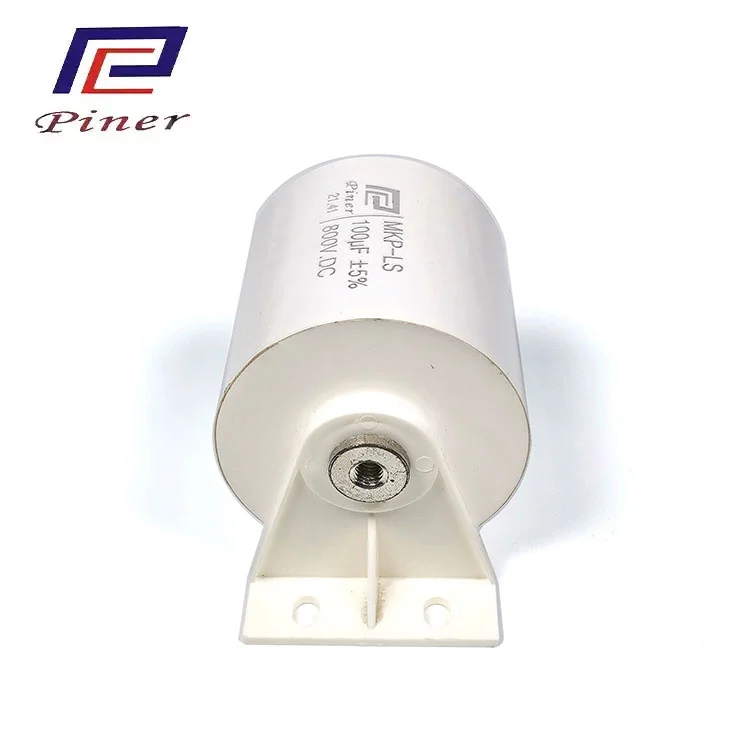
What Is a Welding Capacitor?
A Welding Capacitor is an energy-storage component designed to accumulate electrical energy and release it quickly when required by the welding circuit.
In capacitor discharge welding, the stored energy can be expressed by the basic relationship:
E = ½CV²
where:
- E = stored electrical energy
- C = capacitance
- V = charging voltage
During welding, this stored energy is discharged through the welding circuit to generate a powerful current pulse. Capacitor discharge systems are known for very short welding durations and concentrated energy delivery.
This operating principle makes Welding Capacitor technology suitable for applications where manufacturers need:
- High peak current
- Rapid energy release
- Controlled welding energy
- Low heat transfer to surrounding components
- Repeatable welding performance
- Compact and application-specific equipment designs
Why Is a Welding Capacitor Important?
The quality of a capacitor can directly influence the stability and repeatability of the welding process. If the capacitor cannot provide the required energy quickly and consistently, the welding system may experience unstable weld formation, excessive heat, or inconsistent production results.
A high-quality Welding Capacitor helps the system deliver energy at the appropriate moment and within the required electrical parameters.
1. Rapid Energy Release
The capacitor stores energy before welding and releases it within a very short period. This enables high current to be delivered to the welding point without requiring the same level of continuous input from the power supply.
2. Concentrated Heat Generation
Because the welding pulse is short and intense, heat can be concentrated around the joint area rather than spreading extensively throughout the workpiece. This is one reason capacitor discharge welding is useful for thin or heat-sensitive components.
3. Better Process Efficiency
A capacitor-based system can reduce the instantaneous demand placed on the electrical supply because energy is accumulated and then released when needed. This can be particularly valuable in production environments where welding equipment operates repeatedly.
4. Support for Precision Welding
The short welding cycle helps limit excessive thermal exposure. This is important when working with small components, thin metal sheets, electronic parts, or assemblies where deformation and surface damage must be minimized.
What Are the Main Functions of a Welding Capacitor?
A Welding Capacitor is more than a simple energy-storage component. It works as an important part of the overall welding power system.
| Function | Value to Welding Equipment |
|---|---|
| Energy storage | Stores electrical energy before welding |
| Rapid discharge | Provides high-energy pulses when required |
| Current support | Helps deliver high peak welding current |
| Thermal control | Helps concentrate energy at the welding area |
| Process consistency | Supports repeatable welding cycles |
| Equipment integration | Can be designed for different system configurations |
For specialized welding equipment, selecting the appropriate capacitance, voltage rating, construction, terminal configuration, and physical dimensions is essential.
How Does Customization Improve Welding Capacitor Installation?
Different welding machines rarely have exactly the same internal structure. Space limitations, electrical connections, cooling arrangements, mounting positions, and mechanical constraints can vary considerably from one machine to another.
This is where custom Welding Capacitor solutions become particularly valuable.
Custom Case and Housing Shapes
One of the key advantages offered by Guangdong Haoer Electronics Co., Ltd. is support for custom case shapes.
Instead of restricting customers to a standard cylindrical or rectangular housing, the capacitor housing can be developed according to the customer's equipment structure and installation requirements.
For example, customers may require:
- Cylindrical housings
- Rectangular housings
- Customized dimensions
- Special terminal positions
- Application-specific mounting structures
- Different external configurations
- Customized case proportions
This flexibility is especially useful when the available installation space is limited or when the capacitor must integrate directly into an existing welding machine.
Why Does Case Shape Matter?
The physical shape of a Welding Capacitor can affect how efficiently it fits into the overall equipment design.
A standard capacitor may have excellent electrical specifications but still be difficult to install because of limited space or incompatible mounting arrangements.
A customized case can help engineers optimize:
Capacitor → Mounting Space → Electrical Connection → Cooling Arrangement → Welding System
This makes customized housing particularly attractive to equipment manufacturers developing specialized welding machines or upgrading existing systems.
Welding Capacitor Applications
Capacitor discharge technology is used in various industrial joining applications. These include resistance projection welding, stud welding, sheet-metal applications, electronics, laboratory equipment, medical equipment, and other precision manufacturing processes.
Typical applications include:
- Resistance welding equipment
- Projection welding systems
- Capacitor discharge welding machines
- Stud welding equipment
- Electronic component welding
- Precision metal joining
- Automotive component production
- Thin-sheet metal assembly
- Specialized industrial welding systems
The suitability of a particular capacitor depends on the machine design, required energy, operating voltage, pulse characteristics, duty cycle, and application conditions.
How to Select the Right Welding Capacitor?
When sourcing a Welding Capacitor, buyers should evaluate more than capacitance alone.
Key Selection Factors
1. Capacitance
The capacitance determines how much electrical energy can be stored at a given voltage. It should be selected according to the required welding energy.
2. Voltage Rating
The capacitor's rated voltage must match the welding system and provide an appropriate safety margin.
3. Discharge Performance
A Welding Capacitor must be capable of releasing stored energy rapidly while maintaining reliable electrical performance.
4. Physical Dimensions
Dimensions are particularly important for compact welding machines. A customized case can provide greater flexibility than an off-the-shelf design.
5. Terminal Configuration
Terminal position and structure should correspond with the equipment's electrical connections.
6. Operating Environment
Temperature, vibration, installation conditions, and duty cycle should all be considered during capacitor selection.
Standard vs. Customized Welding Capacitor
| Feature | Standard Capacitor | Customized Welding Capacitor |
|---|---|---|
| Dimensions | Fixed | Application-specific |
| Case shape | Standard | Customizable |
| Installation | General-purpose | Optimized for equipment |
| Terminal position | Usually fixed | Can be adapted |
| Engineering flexibility | Limited | High |
| Suitable for specialized equipment | Sometimes | Yes |
For manufacturers building unique welding systems, customization can reduce installation difficulties and improve equipment integration.
Why Choose Guangdong Haoer Electronics Co., Ltd.?
Guangdong Haoer Electronics Co., Ltd. focuses on providing electronic component solutions for demanding industrial applications. For customers sourcing Welding Capacitors, the company's ability to support custom case shapes provides an important engineering advantage.
Rather than simply supplying a standard component, the company can work around specific application requirements, helping customers address issues such as limited installation space, special mounting requirements, and non-standard equipment structures.
This is especially beneficial for:
- Welding equipment manufacturers
- Industrial equipment integrators
- OEM customers
- Engineering companies
- Electrical equipment manufacturers
- Buyers requiring customized capacitor solutions
The combination of electrical performance requirements and mechanical customization allows customers to develop a Welding Capacitor solution that is better matched to their actual equipment.
What Benefits Can Custom Welding Capacitors Bring?
A properly customized Welding Capacitor can help manufacturers achieve a more integrated equipment design.
Main advantages include:
- Flexible housing design
- Better utilization of internal equipment space
- Easier mechanical integration
- Adaptable terminal arrangements
- Support for OEM requirements
- More convenient equipment upgrades
- Improved suitability for specialized welding applications
For large-volume production, customized capacitor specifications can also help standardize components across a specific machine platform.
Conclusion
A Welding Capacitor plays an important role in modern capacitor discharge welding by storing electrical energy and releasing it rapidly to generate concentrated welding power. Its ability to support short-duration, high-current pulses makes it valuable for precision welding and applications where excessive heat must be minimized.
However, electrical performance is only part of the selection process. Physical compatibility is equally important, particularly for OEM welding equipment with limited internal space or unusual installation requirements. This is why the ability of Guangdong Haoer Electronics Co., Ltd. to support custom case shapes can provide a meaningful advantage for industrial customers.
If you are looking for a Welding Capacitor with application-specific dimensions, housing configurations, or OEM requirements, Guangdong Haoer Electronics Co., Ltd. can help develop a solution suited to your welding equipment. Contact us to discuss your capacitance, voltage, dimensions, case shape, terminal configuration, and other technical requirements.