

How Does a Self-Healing Shunt Capacitor Work?
2026-04-29
Summary: Self-healing shunt capacitors are essential components in modern electrical systems, providing stability, improving power factor, and enhancing energy efficiency. This article explains how they work, their benefits, maintenance considerations, and how Geyue Electric ensures reliable performance for industrial and commercial applications.
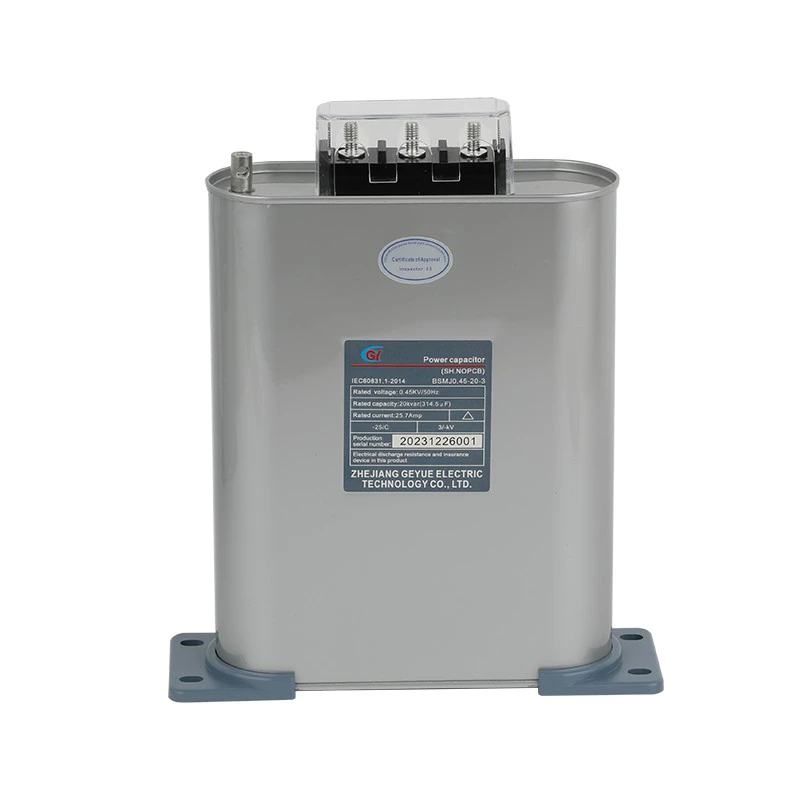
Table of Contents
- Introduction to Self-Healing Shunt Capacitors
- Working Principle
- Types and Applications
- Key Benefits
- Maintenance Tips
- Common Issues and Troubleshooting
- Frequently Asked Questions
- Conclusion
Introduction to Self-Healing Shunt Capacitors
In industrial and commercial power systems, voltage fluctuations, harmonics, and reactive power issues can severely affect efficiency. Self-healing shunt capacitors are engineered to address these challenges. Unlike traditional capacitors, they can recover from dielectric breakdowns, ensuring continuous operation and extended service life. Companies like Geyue Electric have developed advanced designs to optimize energy management for their clients.
Working Principle
Self-healing shunt capacitors operate on the principle of dielectric recovery. When a dielectric fault occurs, a small localized breakdown creates a conductive path. The heat generated during this fault vaporizes the thin metallized layer around the breakdown, isolating the fault and restoring the capacitor’s normal operation.
- Step 1: High voltage stress causes a micro breakdown in the dielectric film.
- Step 2: The metallized layer around the fault evaporates instantly.
- Step 3: The capacitor continues functioning without interruption.
This self-healing property significantly reduces downtime and maintenance needs, making it highly valuable in continuous operation scenarios.
Types and Applications
Types of Self-Healing Shunt Capacitors
| Type | Description | Typical Voltage Range | Common Use Cases |
|---|---|---|---|
| Dry-Type | Uses metallized film with solid insulation | 400V - 36kV | Industrial machinery, motor control centers |
| Oil-Immersed | Capacitor immersed in insulating oil for cooling | 3kV - 36kV | Utility substations, reactive power compensation |
Applications
- Power factor correction in industrial plants
- Voltage stabilization in distribution networks
- Harmonic filtering in complex electrical systems
- Energy efficiency improvement in commercial buildings
Key Benefits
Investing in high-quality self-healing shunt capacitors offers measurable advantages:
- Continuous Operation: Self-healing ensures minimal service interruptions.
- Extended Lifespan: Reduced wear from dielectric faults.
- Improved Energy Efficiency: Maintains optimal power factor.
- Low Maintenance: Reduced need for frequent replacements.
Maintenance Tips
Although self-healing capacitors are designed for reliability, regular inspection ensures peak performance:
- Check for visual signs of damage or swelling.
- Monitor operating temperature and current ratings.
- Test capacitance values periodically using specialized equipment.
- Ensure connections and terminals are clean and secure.
Geyue Electric provides detailed guidelines for maintenance to maximize efficiency and lifespan.
Common Issues and Troubleshooting
Even with self-healing technology, capacitors can face occasional problems:
- Overvoltage Stress: Prolonged exposure can cause accelerated aging.
- Harmonic Distortion: Excessive harmonics may reduce capacitance efficiency.
- Temperature Extremes: High ambient temperatures can impact performance.
Troubleshooting involves systematic testing, checking connections, and replacing faulty units when necessary.
Frequently Asked Questions
What is the difference between traditional and self-healing capacitors?
Traditional capacitors fail completely when dielectric breakdown occurs, while self-healing capacitors recover and continue functioning without downtime.
How long does a self-healing shunt capacitor last?
With proper operation and maintenance, lifespan typically ranges from 15 to 25 years, depending on voltage and environmental conditions.
Can self-healing capacitors handle high harmonics?
Yes, but careful selection of capacitor ratings and harmonic filters is recommended to ensure efficiency.
Are these capacitors suitable for outdoor installations?
Oil-immersed types are generally preferred for outdoor applications due to better insulation and cooling properties.
Conclusion
Self-healing shunt capacitors are a cornerstone of reliable electrical systems. Their ability to recover from dielectric faults reduces downtime, lowers maintenance costs, and improves energy efficiency. Geyue Electric provides advanced self-healing capacitors engineered for industrial, commercial, and utility applications. For more details on how our products can optimize your power systems, contact us today to explore solutions tailored to your needs.