

How does a programmable controller handle fault tolerance in mission-critical environments
2026-03-31
In mission-critical environments such as nuclear power plants, aerospace ground support, and automated surgical systems, even a millisecond of control failure can trigger catastrophic outcomes. A programmable controller designed for high availability must therefore embed fault tolerance at every layer—from hardware redundancy to software recovery logic. At Aicheng, industrial controllers are architected to detect, isolate, and mitigate faults without interrupting the controlled process.
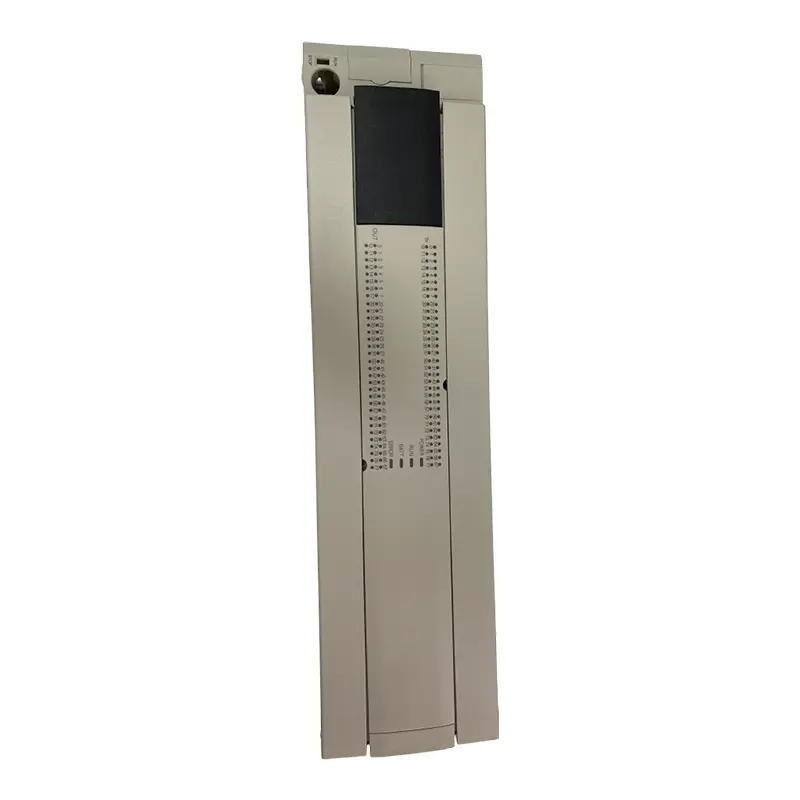
Core Fault-Tolerance Mechanisms in a Programmable Controller
| Layer | Mechanism | Application Example |
|---|---|---|
| Hardware | Redundant processors, power supplies, and I/O modules | Hot-standby CPU takes over within one scan cycle |
| Communication | Dual network rings with auto‑path switching | EtherNet/IP or PROFINET MRP (Media Redundancy Protocol) |
| Software | Watchdog timers, heartbeat signals, and state rollback | Automated recovery from transient memory faults |
| Diagnostics | Built‑in self‑test (BIST) and predictive failure alerts | Preemptive module replacement before actual failure |
Why Redundancy Alone Is Not Enough
Many assume that duplicating hardware solves all failure scenarios. However, a true fault‑tolerant programmable controller must also handle silent data corruption, stuck‑at faults on backplanes, and voting mismatches between redundant channels. Aicheng controllers implement triple‑modular redundancy (TMR) with mid‑value voting, ensuring that a single faulty module never propagates incorrect outputs.
Programmable Controller FAQ – Fault Tolerance Deep Dive
Q1: What happens if the primary CPU in a programmable controller fails during a critical write operation
A1: A fault‑tolerant programmable controller from Aicheng maintains synchronised memory states between primary and backup CPUs via a dedicated high‑speed fibre link. The backup CPU continuously shadows all I/O updates. Upon primary failure detection (typically <2 ms), the backup assumes control using the latest consistent state. No write operation is lost because the backup mirrors each write transaction before acknowledgment.
Q2: Can a programmable controller recover from a network break without resetting the controlled machine
A2: Yes, provided the programmable controller supports link aggregation and redundant media. For example, Aicheng controllers implement PRP (Parallel Redundancy Protocol) over two independent Ethernet interfaces. When one link breaks, the controller seamlessly transmits duplicate frames over the second link. The process actuator receives continuous commands without any re‑initialisation or position hunting.
Q3: How does a programmable controller detect and isolate a faulty I/O module without shutting down
A3: Modern programmable controller platforms, including those by Aicheng, assign each I/O module a self‑checking logic and a cross‑channel comparator. If output mismatches exceed a configurable threshold, the controller automatically disconnects the suspect module via electronic fuses and re‑routes the signal to a pre‑installed hot‑standby module. The system logs the event for maintenance while the production line continues unaltered.
Best Practices for Deploying Fault‑Tolerant Programmable Controllers
-
Implement end‑to‑end CRC on all cyclic data blocks.
-
Use diverse software versions in redundant processors to avoid common‑mode bugs.
-
Schedule periodic injected fault tests (non‑destructive) to verify recovery paths.
-
Keep fault response time less than the process safety margin—typically <50 ms for high‑speed machinery.
Aicheng integrates all these practices into its programmable controller line, with certified SIL‑3 capability for IEC 61508 environments.
Contact Us
Do you need a programmable controller that never compromises uptime in your critical infrastructure? Contact Aicheng today to request a fault‑injection demo or consult our safety engineers for your specific redundancy architecture.