

How Does a Pockels Cell Driver Improve Precision in Laser Systems?
2026-05-27
Discover how a Pockels Cell Driver enhances laser modulation, pulse picking, Q-switching stability, and synchronization accuracy for industrial, scientific, and medical laser applications.
Article Summary
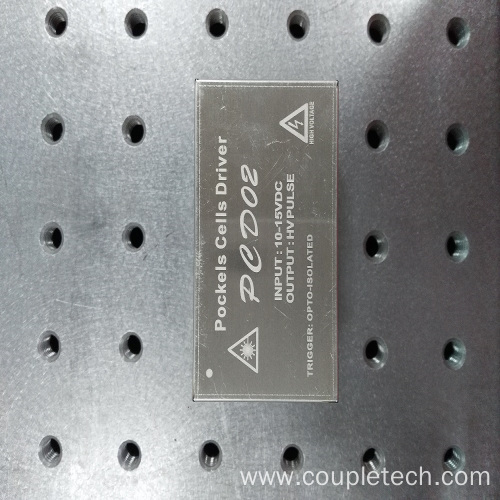
A Pockels Cell Driver is one of the most critical components in modern electro-optic laser systems. It controls high-voltage electrical pulses that manipulate the polarization state of light inside a Pockels cell. This enables accurate laser pulse modulation, ultra-fast switching, pulse picking, and stable Q-switching performance. In this article, we explain how Pockels Cell Drivers work, the challenges users often face, how to choose the right driver, and why reliable driver performance directly impacts laser efficiency and beam quality.
Table of Contents
- What Is a Pockels Cell Driver?
- Why Precision Matters in Laser Applications
- Key Functions of a Pockels Cell Driver
- Common Problems Users Encounter
- How to Choose the Right Pockels Cell Driver
- Applications Across Industries
- Technical Comparison Table
- Maintenance and Reliability Tips
- Why Manufacturers Trust Coupletech Co., Ltd.
- FAQ
What Is a Pockels Cell Driver?
A Pockels Cell Driver is a high-voltage electronic device designed to control the operation of a Pockels cell in electro-optic systems. The driver generates extremely fast electrical pulses that alter the birefringence of the crystal inside the Pockels cell, allowing precise manipulation of polarized light.
In practical laser systems, the driver acts as the “control center” for timing and switching operations. Without a stable and responsive driver, even a high-quality Pockels cell cannot deliver optimal optical performance.
Pockels Cell Drivers are widely used in:
- Q-switched lasers
- Regenerative amplifiers
- Pulse picking systems
- Medical laser devices
- Scientific laboratories
- Industrial laser machining
- Military electro-optic systems
Why Precision Matters in Laser Applications
Laser systems often require nanosecond-level timing accuracy. Even minor voltage fluctuations or timing delays can negatively affect beam quality, pulse energy, and operational stability.
A high-performance Pockels Cell Driver ensures:
Fast Rise Time
Enables ultra-fast switching for accurate pulse control and cleaner laser output.
Voltage Stability
Maintains consistent optical modulation and minimizes pulse distortion.
Synchronization Accuracy
Ensures precise coordination between optical and electrical signals.
For applications such as laser micromachining or biomedical imaging, precision directly affects processing quality, imaging resolution, and system reliability.
Key Functions of a Pockels Cell Driver
Modern Pockels Cell Drivers are designed with advanced electronic architectures to support demanding optical environments.
| Function | Importance |
|---|---|
| High-Voltage Pulse Generation | Provides sufficient voltage to activate electro-optic crystals |
| Pulse Width Control | Optimizes modulation timing and laser efficiency |
| Low Jitter Timing | Improves synchronization precision |
| Repetition Rate Adjustment | Supports different laser operating modes |
| Protection Circuits | Enhances operational safety and system lifespan |
Common Problems Users Encounter
Many laser integrators and research institutions experience challenges when selecting or operating Pockels Cell Drivers.
- Insufficient voltage stability causing pulse inconsistency
- Slow rise times reducing switching performance
- Electromagnetic interference affecting synchronization
- Overheating during continuous operation
- Compatibility issues with existing laser systems
- Excessive timing jitter in high-speed applications
These issues can reduce productivity, damage optical components, and increase maintenance costs. Selecting a driver with optimized electronic protection and robust engineering is essential for long-term operational stability.
How to Choose the Right Pockels Cell Driver
Choosing the correct driver depends on multiple technical factors. Buyers should evaluate both electrical specifications and application requirements before making a decision.
| Selection Factor | Why It Matters |
|---|---|
| Output Voltage | Must match the Pockels cell crystal requirements |
| Rise and Fall Time | Affects switching speed and optical accuracy |
| Pulse Repetition Frequency | Determines operational flexibility |
| Cooling System | Prevents thermal instability during continuous use |
| System Compatibility | Ensures integration with existing optical setups |
Professional manufacturers usually provide customized driver solutions for specific laser wavelengths, crystal materials, and pulse configurations.
Applications Across Industries
Pockels Cell Drivers are widely used across industries requiring high-speed optical switching and laser precision.
Industrial Manufacturing
Supports laser cutting, welding, engraving, and micromachining systems requiring accurate pulse control.
Medical Equipment
Used in ophthalmology lasers, dermatology devices, and biomedical imaging systems.
Scientific Research
Enables ultra-fast laser experiments and advanced photonics research.
Defense and Aerospace
Supports electro-optic targeting, lidar systems, and precision sensing applications.
Technical Comparison Table
| Feature | Basic Driver | Advanced Driver |
|---|---|---|
| Rise Time | Moderate | Ultra-fast |
| Timing Jitter | Higher | Very Low |
| Thermal Stability | Standard | Enhanced |
| Continuous Operation | Limited | Optimized |
| Application Precision | General Purpose | High-End Scientific & Industrial |
Maintenance and Reliability Tips
Proper maintenance can significantly extend the service life of a Pockels Cell Driver and maintain stable laser performance.
- Ensure proper grounding to reduce electromagnetic interference.
- Maintain adequate ventilation and thermal management.
- Inspect connectors and cables regularly for wear or looseness.
- Use stable power supplies to prevent voltage fluctuations.
- Follow manufacturer-recommended operating conditions.
Preventive maintenance is especially important in high-frequency industrial applications where continuous operation can place significant stress on electronic components.
Why Manufacturers Trust Coupletech Co., Ltd.
Coupletech Co., Ltd. specializes in advanced electro-optic components and laser control technologies. The company provides reliable Pockels Cell Driver solutions designed for demanding scientific, industrial, and medical applications.
With extensive experience in electro-optic engineering, Coupletech Co., Ltd. focuses on:
- High-speed switching performance
- Stable high-voltage output
- Low jitter timing control
- Custom integration capabilities
- Long-term operational reliability
- Comprehensive technical support
Their Pockels Cell Driver products are engineered to meet the evolving requirements of modern laser systems while maintaining precision and durability in challenging environments.
FAQ
What does a Pockels Cell Driver do?
It generates high-voltage electrical pulses that control the optical switching behavior of a Pockels cell in laser systems.
Why is low timing jitter important?
Low timing jitter improves synchronization accuracy and ensures consistent laser pulse performance.
Can a Pockels Cell Driver be customized?
Yes. Many manufacturers offer customized voltage ranges, pulse widths, repetition rates, and interface options for specific applications.
Which industries commonly use Pockels Cell Drivers?
They are widely used in industrial laser systems, scientific research laboratories, aerospace technologies, and medical laser equipment.
How can I improve the lifespan of my driver?
Proper cooling, stable power input, regular inspections, and correct operating conditions can significantly improve longevity and performance.
Looking for a Reliable Pockels Cell Driver Solution?
Coupletech Co., Ltd. provides professional electro-optic solutions tailored for advanced laser applications. Whether you need stable high-voltage performance, ultra-fast switching, or customized system integration, our engineering team is ready to support your project requirements.
Contact us today to discuss your laser system needs and discover the right Pockels Cell Driver solution for your application.