

How Does a High Frequency Board Improve Signal Performance in Modern Electronics?
2026-05-27
As communication systems, radar devices, automotive electronics, aerospace equipment, and 5G infrastructure continue to evolve, traditional PCB materials can no longer meet the requirements of high-speed signal transmission. A High Frequency Board is specifically designed to minimize signal loss, maintain impedance stability, and improve transmission reliability under demanding operating conditions. This article explains how high frequency boards work, their advantages, applications, materials, manufacturing challenges, and how choosing the right PCB supplier such as HONTEC can improve product quality and long-term performance.
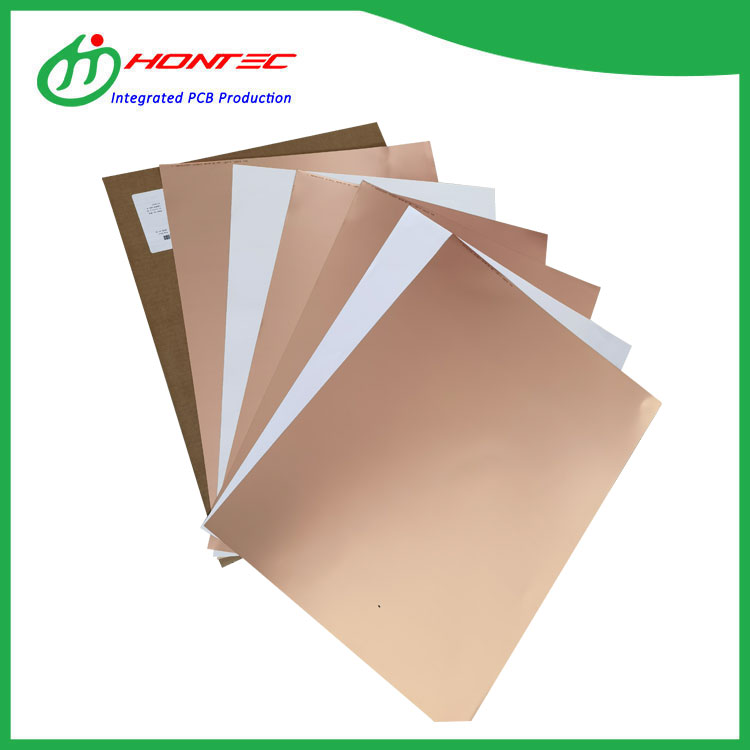
Table of Contents
- What Is a High Frequency Board?
- How Does a High Frequency Board Work?
- Common Materials Used in High Frequency PCBs
- Advantages of High Frequency Boards
- Industries That Use High Frequency Boards
- Key Manufacturing Challenges
- How to Choose the Right High Frequency PCB Manufacturer
- High Frequency PCB vs Standard PCB
- FAQ
- Conclusion
What Is a High Frequency Board?
A High Frequency Board is a specialized printed circuit board designed to transmit signals operating at frequencies typically above 500MHz and often extending into the GHz range. These boards are widely used in RF communication systems, microwave devices, satellite communication equipment, radar systems, and advanced networking hardware.
Unlike ordinary FR4 circuit boards, high frequency boards use low dielectric constant materials and low-loss laminates to maintain signal integrity. They are engineered to reduce electromagnetic interference, minimize transmission loss, and support stable high-speed performance.
The increasing adoption of 5G technology, IoT devices, autonomous vehicles, and advanced medical equipment has significantly increased demand for reliable high frequency PCB solutions.
How Does a High Frequency Board Work?
A High Frequency Board works by controlling electrical behavior at very high transmission speeds. At high frequencies, signal distortion, attenuation, impedance mismatch, and electromagnetic interference become major concerns.
To overcome these challenges, engineers optimize several important parameters:
- Dielectric constant (Dk)
- Dissipation factor (Df)
- Trace width and spacing
- Surface roughness of copper foil
- Layer stack-up design
- Impedance control accuracy
The PCB material plays a critical role because signals travel through the dielectric substrate. Stable dielectric properties ensure consistent electrical performance even under temperature fluctuations and high-frequency conditions.
Precise impedance matching also prevents signal reflection and improves transmission efficiency, especially in RF and microwave applications.
| Performance Factor | Impact on Signal Quality |
|---|---|
| Low Dielectric Constant | Improves signal speed and stability |
| Low Dissipation Factor | Reduces signal loss |
| Controlled Impedance | Prevents reflection and distortion |
| Smooth Copper Surface | Minimizes conductor loss |
Common Materials Used in High Frequency PCBs
Material selection is one of the most important factors in high frequency PCB manufacturing. Different applications require specific dielectric properties, thermal stability, and mechanical performance.
Some commonly used materials include:
- Rogers materials
- PTFE (Teflon-based laminates)
- Hydrocarbon ceramic substrates
- Taconic laminates
- Modified epoxy materials
Compared with conventional FR4, these materials provide significantly lower signal loss and more stable electrical characteristics at high frequencies.
| Material | Main Advantage | Typical Applications |
|---|---|---|
| Rogers | Excellent RF performance | Radar, RF communication |
| PTFE | Ultra-low loss | Microwave systems |
| Taconic | Stable dielectric properties | Antenna systems |
| Modified Epoxy | Cost-effective solution | Commercial electronics |
Advantages of High Frequency Boards
High frequency PCBs provide multiple technical and operational advantages for modern electronic systems.
- Superior signal transmission quality
- Reduced electromagnetic interference
- Lower insertion loss
- Improved thermal stability
- Enhanced impedance consistency
- Better performance in compact electronic devices
- Reliable operation under high-speed conditions
These benefits are especially important in industries where signal reliability directly affects system performance and operational safety.
Industries That Use High Frequency Boards
High frequency boards are now essential in many advanced technology sectors.
5G Communication Equipment
High-speed data transmission requires low-loss PCB materials to maintain signal integrity across complex communication networks.
Automotive Radar Systems
ADAS and autonomous driving technologies depend on stable radar signal processing for accurate object detection.
Aerospace and Defense
Radar systems, satellite communication devices, and military electronics require extremely reliable RF PCB performance.
Medical Devices
Advanced imaging equipment and wireless monitoring systems rely on precise signal transmission.
Industrial Automation
High-speed industrial control systems require stable communication between sensors and controllers.
Key Manufacturing Challenges
Manufacturing high frequency boards is significantly more complex than producing standard PCBs. Small processing errors can affect electrical performance and reduce signal reliability.
Major manufacturing challenges include:
- Precise impedance control
- Accurate layer alignment
- Strict copper surface treatment
- Thermal expansion management
- Material handling sensitivity
- Advanced drilling and plating processes
Professional PCB manufacturers use advanced production equipment and testing systems to maintain tight tolerances throughout fabrication.
HONTEC has extensive experience in manufacturing high frequency circuit boards for demanding industrial applications, helping customers achieve stable product performance and consistent quality standards.
How to Choose the Right High Frequency PCB Manufacturer
Selecting the right manufacturing partner directly affects product quality, production efficiency, and long-term reliability.
When evaluating a PCB supplier, consider the following factors:
- Experience with RF and microwave PCB fabrication
- Availability of advanced laminate materials
- Impedance control capabilities
- Quality inspection and testing standards
- Engineering support services
- Production capacity and delivery reliability
An experienced supplier can help optimize PCB stack-up design, reduce manufacturing risks, and improve overall product performance.
High Frequency PCB vs Standard PCB
| Feature | High Frequency PCB | Standard PCB |
|---|---|---|
| Operating Frequency | High GHz range | Low to medium frequency |
| Signal Loss | Very low | Higher |
| Materials | Rogers/PTFE/Taconic | FR4 |
| Impedance Stability | Excellent | Moderate |
| Application Areas | RF, radar, 5G | General electronics |
FAQ
What frequency range requires a high frequency PCB?
Generally, applications above 500MHz require specialized PCB materials and designs to maintain signal integrity.
Why are high frequency PCB materials more expensive?
These materials provide lower signal loss, stable dielectric performance, and improved thermal reliability, which require advanced manufacturing technologies.
Can FR4 be used for high frequency applications?
FR4 may work for some lower-frequency applications, but it often cannot meet the performance requirements of high-speed RF systems.
What industries benefit most from high frequency boards?
Telecommunications, aerospace, automotive electronics, medical equipment, and defense industries are among the largest users.
How important is impedance control?
Impedance control is critical because improper impedance can cause signal reflection, distortion, and transmission instability.
Conclusion
High Frequency Boards have become essential components in modern electronic systems where signal integrity, transmission speed, and operational stability are critical. From 5G communication infrastructure to radar systems and advanced automotive electronics, these specialized PCBs provide the electrical performance required for high-speed applications.
Choosing the right PCB materials, maintaining strict manufacturing tolerances, and partnering with an experienced manufacturer are all crucial for achieving reliable product performance.
HONTEC provides professional high frequency PCB manufacturing solutions for global customers across telecommunications, automotive, industrial, and aerospace industries. If you are looking for reliable high frequency board production with advanced material support and strict quality control, please contact us for more information about customized PCB solutions.