

How Does a Drop Out Fuse Ensure Reliable Power Protection?
2025-09-28
Electrical distribution networks rely heavily on protective devices that safeguard equipment and ensure uninterrupted service. Among the most widely adopted solutions is the Drop Out Fuse (DOF). This device is commonly used in overhead power distribution lines, offering both cost efficiency and effective protection.
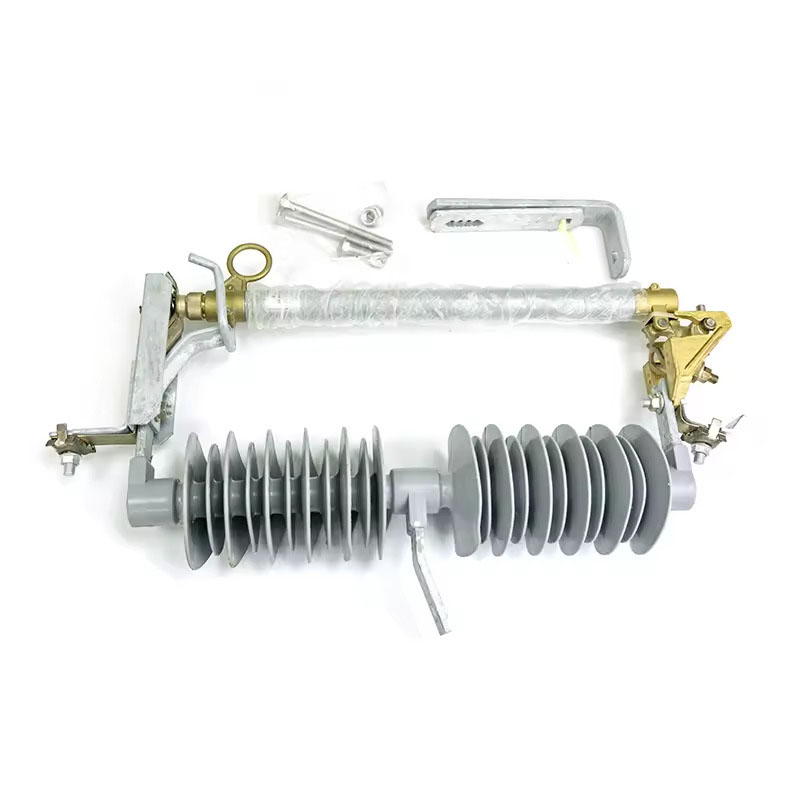
A drop out fuse is a type of protective device installed on poles and substations in medium-voltage distribution networks. Its core function is simple: it interrupts the circuit when a fault occurs, thereby protecting transformers, cables, and other equipment from severe damage. When the fuse element melts due to excessive current, the fuse carrier physically drops down, providing a visible indication of operation. This “drop out” action allows linemen to quickly identify the faulted fuse and replace it.
The importance of this device lies in its simplicity, visibility, and reliability. Unlike circuit breakers, which require more complex mechanisms and higher costs, the drop out fuse offers a straightforward way to protect against overcurrent and short-circuit conditions. Its clear drop-down mechanism provides safety for maintenance teams, reducing downtime and operational risks.
Additionally, drop out fuses are designed to perform in a wide range of environmental conditions, from tropical humidity to freezing winters. Their robust structure ensures reliable operation in regions where grid stability is vital. With the continuous growth of renewable energy systems and smart grids, demand for efficient and affordable protection devices such as drop out fuses is expected to rise.
How Does a Drop Out Fuse Work and What Are Its Core Parameters?
Understanding the working principle of a drop out fuse is essential for professionals managing electrical networks. Unlike automatic reclosers or circuit breakers, the drop out fuse is a single-operation device that isolates faults with precision. Here’s how it works:
-
Normal Operation – Under standard load conditions, current flows through the fuse element without interruption. The fuse tube remains firmly in position.
-
Overcurrent or Fault Condition – When a fault such as a short circuit or overload occurs, the current rises beyond the fuse’s rated capacity. The fuse element melts.
-
Drop Out Mechanism – The melting of the fuse element causes the fuse carrier to pivot or drop out of its mount. This visible separation indicates disconnection.
-
Isolation and Maintenance – Once dropped, the fuse ensures the line or transformer is safely isolated, allowing for inspection and replacement.
To highlight technical details, here are the common product parameters of drop out fuses:
| Parameter | Typical Range/Specification |
|---|---|
| Rated Voltage | 11kV, 15kV, 22kV, 33kV |
| Rated Current | 50A – 200A |
| Breaking Capacity | Up to 12.5 kA |
| Fuse Link Material | Silver, Copper, or Tin-alloy |
| Insulator Material | Porcelain or Polymer |
| Operating Temperature Range | -40°C to +55°C |
| Mounting | Pole-mounted or Substation |
| Visible Isolation | Drop out indication |
| Compliance Standards | IEC, ANSI, or national grid requirements |
These parameters ensure that drop out fuses are adaptable to various applications across industrial, rural, and urban distribution systems. Their compatibility with international standards also makes them suitable for use in multiple regions, ensuring operational consistency.
Another major advantage lies in cost-effectiveness. Unlike reclosers, drop out fuses do not require significant capital investment. They can be deployed widely across long-distance networks, making them particularly valuable for utility companies managing large rural grids.
Why Choose a Drop Out Fuse Over Other Protection Devices?
With advancements in electrical engineering, there are numerous protection devices available today. Circuit breakers, reclosers, and relays all provide various levels of control and monitoring. So why is the drop out fuse still a popular choice in distribution systems?
a. Simplicity and Reliability
Drop out fuses are mechanical devices with no reliance on external power supply or complex electronics. This makes them inherently reliable, especially in remote areas where maintenance resources may be limited.
b. Cost-Efficiency
Compared with vacuum circuit breakers or automatic reclosers, the drop out fuse is significantly cheaper to procure, install, and maintain. This affordability makes it the first choice for rural electrification projects.
c. Clear Visual Indication
When the fuse operates, the carrier physically drops. This clear indication helps maintenance teams quickly locate and address the fault, minimizing downtime.
d. Versatility
They can be used for both transformer protection and line protection, making them adaptable in diverse network designs.
e. Low Maintenance Requirements
Once installed, drop out fuses require minimal attention. Occasional inspection for insulator integrity and fuse condition is typically sufficient.
f. Environmental Endurance
Designed with robust porcelain or polymer insulators, they withstand UV radiation, moisture, dust, and extreme temperatures. This resilience ensures stable operation for years.
These advantages demonstrate why utilities and industries continue to favor drop out fuses, even with more advanced alternatives available. Their balance of affordability, durability, and performance keeps them highly relevant in the global power sector.
What Are the Common Applications, FAQs, and How Can You Contact Us?
Drop out fuses are employed across a variety of industries and distribution setups. Their key applications include:
-
Overhead Distribution Lines – Installed on poles to protect feeders and branches.
-
Transformer Protection – Safeguarding distribution transformers from overloads and short circuits.
-
Rural Electrification Projects – Offering cost-effective solutions in large-area grids.
-
Renewable Energy Systems – Used in solar and wind farm connections to prevent faults from spreading.
-
Industrial Facilities – Protecting dedicated substations or equipment in manufacturing plants.
To address common concerns, here are two frequently asked questions:
Q1: How often should a drop out fuse be replaced?
A drop out fuse does not require regular replacement. It should only be replaced after it has operated due to a fault or if visual inspection reveals deterioration of the fuse link or insulator. Typically, utilities stock spare fuses for rapid replacement, ensuring minimal downtime.
Q2: Can a drop out fuse be used in high-altitude or harsh weather conditions?
Yes. Drop out fuses are designed with durable insulators (porcelain or polymer) that perform well in diverse environments, including coastal, desert, or high-altitude regions. However, for extreme climates, utilities may select polymer-based insulators due to their superior hydrophobic properties.
In today’s expanding power distribution networks, choosing reliable protective devices is critical for uninterrupted service and equipment longevity. The drop out fuse remains one of the most trusted solutions thanks to its simplicity, cost efficiency, and proven reliability. Whether deployed for rural electrification, transformer safety, or renewable energy systems, it ensures dependable fault isolation and ease of maintenance.
At ZIKAI, we are committed to delivering high-quality drop out fuses that meet global standards and serve a wide range of applications. Our products are engineered for durability, safety, and efficiency, making them a smart choice for utilities and industries worldwide.
For more details about our drop out fuses, specifications, or customized solutions, please contact us today. Our team is ready to provide technical support and product guidance to help you achieve reliable power protection in your projects.