

How Does a Digital Analog Clock Enhance User Experience in Smart Home Devices
2026-04-10
In the rapidly evolving world of smart home technology, the Digital Analog Clock has emerged as a surprisingly powerful interface element. Unlike standard digital displays, a Digital Analog Clock bridges the gap between traditional readability and modern functionality. At SYNST, we have observed that integrating this hybrid timepiece into smart ecosystems significantly reduces cognitive load while adding an elegant, intuitive layer to home automation. This blog explores how the Digital Analog Clock transforms everyday interactions with connected devices.
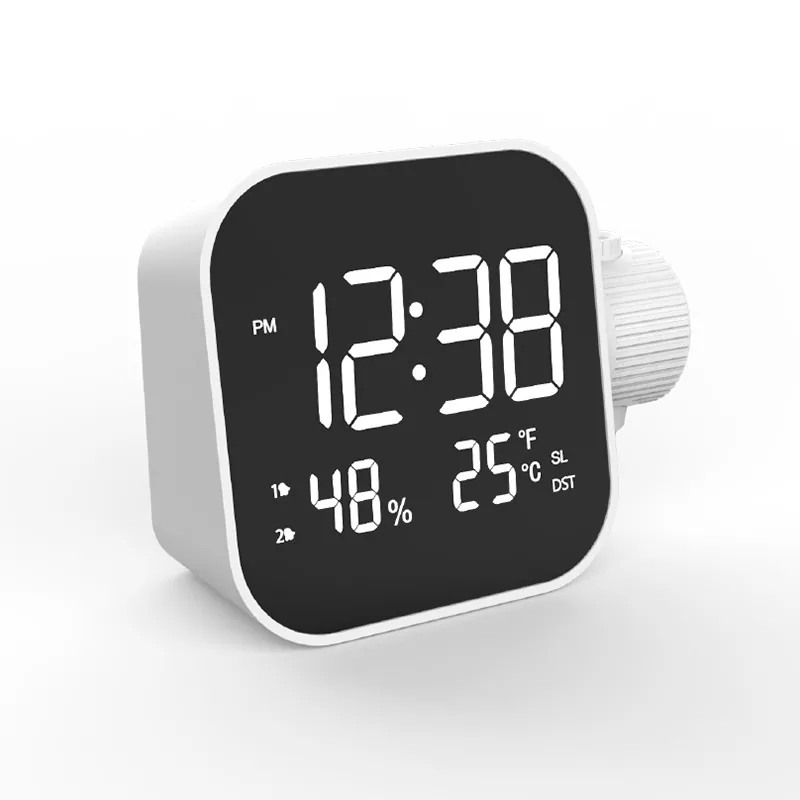
Core Enhancements Brought by a Digital Analog Clock
| User Experience Factor | Role of Digital Analog Clock | Benefit to Smart Home Users |
|---|---|---|
| Visual Intuition | Mimics traditional clock hands with digital precision | Faster time estimation at a glance |
| Cognitive Ease | No need to parse numbers; spatial recognition is automatic | Reduced mental effort, especially in low-light conditions |
| Ambient Integration | Displays smoothly on smart screens, mirrors, or hubs | Matches natural home aesthetics without digital harshness |
| Automation Feedback | Hands can shift color or speed to indicate routines (e.g., red for security mode) | Clear, non-intrusive status updates |
1. Reduced Cognitive Load for Daily Routines
When a user glances at a Digital Analog Clock on a SYNST smart hub, the brain processes the hand positions almost instantly. This spatial reasoning is older and faster than reading digits. For example, seeing a hand approaching the “6” naturally signals “half past the hour,” which helps schedule voice commands or morning routines without interrupting workflow. Smart devices that use Digital Analog Clock interfaces require fewer confirmations, because users internalize time relative to their actions.
2. Seamless Aesthetic and Functional Blending
Most smart home devices suffer from “screen fatigue” — too many numbers, menus, and pop-ups. A Digital Analog Clock offers a calming visual anchor. SYNST implements this by allowing the clock face to change background colors based on room temperature or air quality. The hands remain constant, providing a reliable reference point. This design choice increases user engagement because people check the time more often, inadvertently monitoring other smart data displayed around the clock face.
3. Enhanced Accessibility and User Control
For elderly users or those with dyslexia, a Digital Analog Clock is far more accessible than numeric readouts. SYNST smart speakers and displays include voice-guided setup for the clock face, enabling contrast adjustments and hand thickness changes. This personalization ensures that the timepiece serves both as a decorative element and a functional tool. Moreover, the clock can show progressive events — like a shaded sector indicating how long until the next scheduled thermostat change.
Digital Analog Clock FAQ – Common Questions
What makes a Digital Analog Clock different from a regular analog clock on a smart device
A Digital Analog Clock uses digital rendering technology to simulate moving hands, but it can dynamically change appearance based on smart home conditions. Unlike a physical analog clock, a Digital Analog Clock on SYNST devices can switch color schemes, display additional data like weather inside the clock face, and even adjust hand speed to show timers or countdowns. It retains the familiar dial layout while adding unlimited customization and interactivity.
Can a Digital Analog Clock help reduce eye strain in smart home displays
Yes, significantly. Traditional digital clocks with bright numerals can cause visual fatigue during nighttime use. A Digital Analog Clock often features softer transitions and larger spatial contrasts. SYNST integrates an adaptive backlight that dims the clock face gradually while keeping hand positions visible. Because the eyes track movement rather than sharp digits, users report less squinting and faster recognition when waking up or checking the time from across the room.
How do I set up a Digital Analog Clock to control other smart home devices
On SYNST platforms, the Digital Analog Clock is not just a display — it is a control hub. You can assign time zones on the clock face to trigger actions. For example, tap the area between 7 and 9 AM to set your morning coffee maker. Long-press the hour hand to link it to lighting scenes. The clock’s digital nature allows each segment to become a touch target. Detailed setup is found in the SYNST app under “Clock Automation,” where you drag routines onto clock sectors.
Conclusion – Elevate Your Smart Home with SYNST
The Digital Analog Clock is far more than a nostalgic design choice. It is a functional upgrade that enhances spatial reasoning, reduces screen fatigue, and makes smart home interactions feel natural rather than technical. From accessibility benefits to seamless automation mapping, SYNST has proven that this hybrid timepiece belongs at the center of every connected living space.
Contact us today to explore how SYNST smart hubs and displays integrate the Digital Analog Clock into your daily life. Visit our official website or reach out to our support team for a live demonstration. Transform the way you experience time at home.