

Article Summary
Developing embedded systems requires a reliable hardware foundation that can connect processors, peripherals, communication interfaces, and expansion modules efficiently. A Dev Kit Carrier Board plays a critical role in simplifying hardware evaluation, accelerating prototype development, and reducing engineering challenges. This article explains how a Dev Kit Carrier Board works, why it is important for developers, what problems it solves, and how to select the right solution for different embedded applications.
With professional experience in embedded hardware solutions, Thinkcore Technology Co., Ltd. provides advanced development platforms designed to support rapid innovation in industrial control, artificial intelligence, edge computing, smart devices, and customized embedded applications.
Table of Contents
- 1. What Is a Dev Kit Carrier Board?
- 2. Why Is a Dev Kit Carrier Board Important for Embedded Development?
- 3. How Does a Dev Kit Carrier Board Work?
- 4. What Development Challenges Can a Dev Kit Carrier Board Solve?
- 5. What Features Should You Consider When Choosing a Dev Kit Carrier Board?
- 6. Where Are Dev Kit Carrier Boards Commonly Used?
- 7. How to Select the Right Dev Kit Carrier Board for Your Project?
- 8. Frequently Asked Questions
1. What Is a Dev Kit Carrier Board?
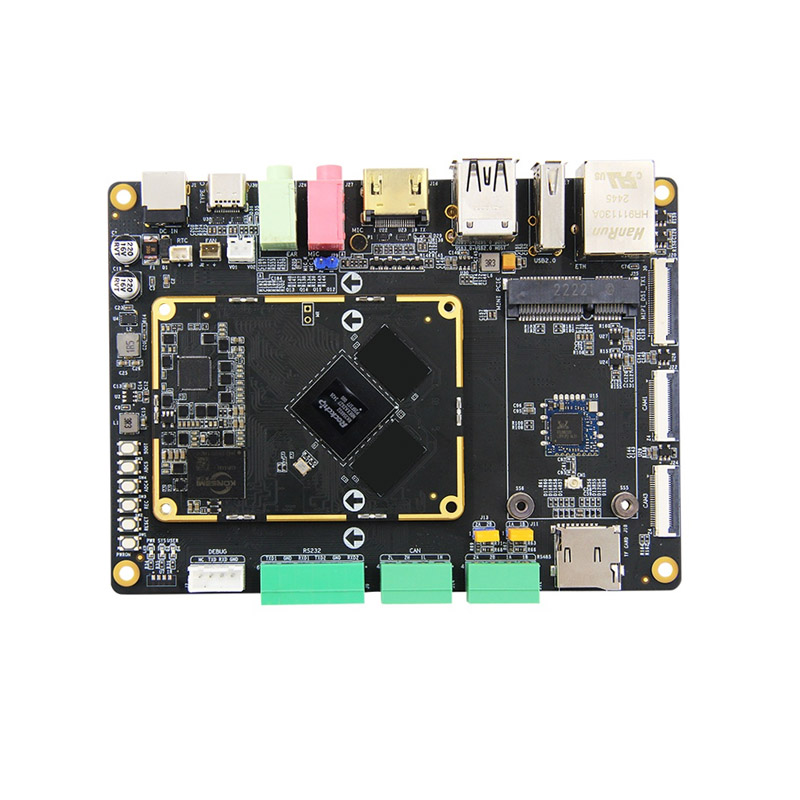
A Dev Kit Carrier Board is a hardware platform designed to provide connectivity, expansion capability, and functional support for embedded computing modules. It works together with a core processing module, such as an ARM-based system-on-module (SoM), to create a complete development environment.
Unlike a standalone processor module, which usually provides only basic computing capabilities, a carrier board integrates various interfaces and supporting circuits. These may include USB ports, Ethernet connections, display interfaces, camera connectors, GPIO expansion, storage interfaces, power management circuits, and communication modules.
For engineers, the carrier board serves as the bridge between the computing module and external devices. It allows developers to test hardware functions quickly without designing a completely new PCB from the beginning.
- Providing stable power supply and signal management
- Expanding processor module capabilities
- Supporting hardware testing and software debugging
- Reducing prototype development time
- Offering flexible interfaces for customized applications
2. Why Is a Dev Kit Carrier Board Important for Embedded Development?
Modern embedded products require higher computing performance, faster communication, and more flexible designs. Traditional hardware development methods often require engineers to spend significant time designing, testing, and modifying circuit boards before reaching the prototype stage.
A Dev Kit Carrier Board provides a ready-to-use development foundation that helps companies overcome these challenges. By using an optimized hardware platform, engineers can focus more on software development, application optimization, and product innovation.
The major advantages include:
- Faster Product Development: Developers can immediately begin system testing without waiting for custom PCB manufacturing.
- Lower Development Costs: Pre-designed hardware reduces repeated design revisions and engineering expenses.
- Better Hardware Reliability: Professional carrier boards are designed with tested layouts and optimized signal integrity.
- Flexible Product Expansion: Multiple interfaces allow products to be adapted for different industries.
3. How Does a Dev Kit Carrier Board Work?
A Dev Kit Carrier Board operates by connecting a processing module with external hardware components. The processor module handles computing tasks, while the carrier board provides additional functions required for complete system operation.
The basic workflow includes several important stages:
- Power Management: The carrier board converts and distributes power to ensure stable operation of processors and peripherals.
- Interface Expansion: It provides additional ports for connecting displays, sensors, cameras, storage devices, and communication modules.
- Data Communication: Integrated interfaces enable data exchange between the processor and external equipment.
- Hardware Testing: Developers can evaluate system performance before moving into mass production.
This modular approach allows companies to develop products more efficiently while maintaining flexibility for future upgrades.
4. What Development Challenges Can a Dev Kit Carrier Board Solve?
Embedded developers often encounter several difficulties during product development. A properly designed Dev Kit Carrier Board can address many of these issues.
-
Complex Hardware Design:
Designing high-speed circuits, power systems, and communication interfaces requires specialized knowledge. A carrier board simplifies this process by providing a tested hardware structure. -
Long Prototype Cycles:
Creating custom hardware from scratch can delay product launches. Development boards shorten the initial testing phase. -
Interface Compatibility Problems:
Different applications require different peripherals. Carrier boards provide multiple interfaces to improve compatibility. -
Limited Engineering Resources:
Companies can reduce workload by using existing hardware solutions instead of developing every component independently. -
Product Scalability Requirements:
A modular design allows companies to upgrade processors or add new functions more easily.
5. What Features Should You Consider When Choosing a Dev Kit Carrier Board?
Selecting the right carrier board directly affects development efficiency, system stability, and future product expansion. Engineers should evaluate several important factors before making a decision.
| Feature | Why It Matters |
|---|---|
| Processor Compatibility | Ensures the carrier board works correctly with the selected computing module. |
| Interface Availability | Provides necessary connections for displays, cameras, sensors, and communication devices. |
| Power Design | Maintains stable operation under different workloads. |
| Expansion Capability | Supports future upgrades and customized applications. |
| Industrial Reliability | Improves durability in demanding environments. |
A high-quality carrier board should not only support current development needs but also provide enough flexibility for future product improvements.
6. Where Are Dev Kit Carrier Boards Commonly Used?
Due to their flexibility and powerful expansion capabilities, Dev Kit Carrier Boards are widely used across various industries.
- Industrial Automation: Used for machine control, monitoring systems, and intelligent manufacturing equipment.
- Artificial Intelligence Applications: Supports edge AI processing, computer vision, and smart analytics systems.
- Smart Healthcare: Enables medical devices, monitoring equipment, and intelligent diagnostic solutions.
- Smart Transportation: Used in vehicle systems, navigation equipment, and intelligent traffic solutions.
- Consumer Electronics: Supports smart terminals, multimedia devices, and interactive systems.
- Internet of Things: Provides computing and connectivity solutions for IoT gateways and smart devices.
7. How to Select the Right Dev Kit Carrier Board for Your Project?
Choosing a carrier board requires a clear understanding of application requirements. The following steps can help developers make a better decision:
- Define Performance Requirements: Determine required processing power, memory capacity, and computing performance.
- Identify Required Interfaces: Consider whether the project needs Ethernet, USB, HDMI, MIPI, PCIe, CAN, or other connections.
- Evaluate Environmental Conditions: Industrial applications may require stronger durability, temperature resistance, and reliability.
- Consider Future Expansion: Select a platform that can support future product upgrades.
- Choose an Experienced Supplier: Working with a professional manufacturer helps ensure technical support and stable product quality.
Thinkcore Technology Co., Ltd. focuses on providing reliable embedded computing solutions and development platforms to help customers accelerate product innovation and achieve efficient hardware integration.
Frequently Asked Questions
1. What is the difference between a Dev Kit Carrier Board and a development board?
A development board usually includes a processor and basic supporting components, while a Dev Kit Carrier Board is mainly designed to expand the functions of a processor module. It provides additional interfaces and connections for system development.
2. Can a Dev Kit Carrier Board be customized?
Yes. Many manufacturers provide customized carrier board solutions based on customer requirements, including interface changes, mechanical designs, and application-specific functions.
3. Why should engineers use a carrier board instead of designing their own PCB?
A carrier board reduces design complexity, shortens development time, and allows engineers to validate product concepts faster before investing in custom hardware production.
4. What industries benefit most from Dev Kit Carrier Boards?
Industries such as industrial automation, AI computing, robotics, healthcare equipment, smart transportation, and IoT benefit greatly from flexible embedded development platforms.
5. How does Thinkcore Technology Co., Ltd. support embedded development?
Thinkcore Technology Co., Ltd. provides embedded hardware solutions with reliable performance, flexible customization options, and professional technical support to help customers build efficient and scalable products.
Conclusion
A Dev Kit Carrier Board is an essential tool for modern embedded system development. It simplifies hardware integration, improves development efficiency, and provides the flexibility needed for complex applications. By choosing a reliable carrier board solution, companies can reduce development risks and bring innovative products to market faster.
With advanced embedded technology and customer-focused solutions, Thinkcore Technology Co., Ltd. continues to support global developers and businesses in building next-generation intelligent systems. For professional embedded solutions and customized development support, please contact us today.