

How Does a Covered Emergency Stop Button Improve Workplace Hazard Response
2026-03-26
In high-risk industrial environments, the difference between a minor incident and a catastrophic event often comes down to the speed and reliability of safety equipment. A Covered Emergency Stop Button serves as a critical control point, designed to prevent accidental activation while ensuring immediate accessibility during genuine emergencies. At Yijia, we specialize in manufacturing safety components that meet stringent international standards, and our Covered Emergency Stop Button solutions are engineered to enhance hazard response through deliberate design, regulatory compliance, and operational reliability.
The Mechanism Behind Enhanced Hazard Response
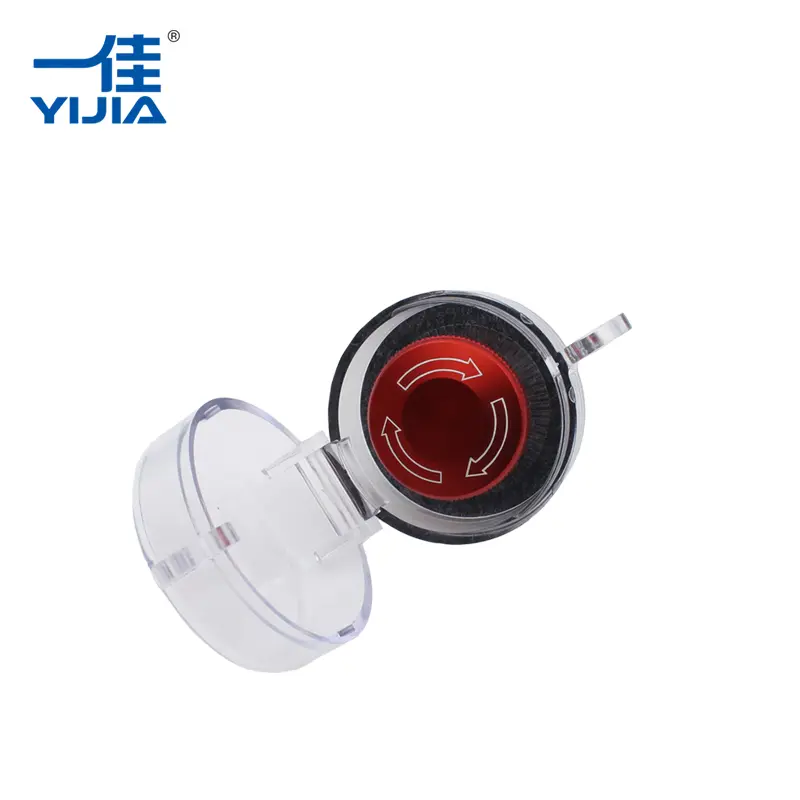
A Covered Emergency Stop Button differs from standard e-stops by incorporating a protective shroud or cover. This mechanical guard reduces the risk of unintended actuation caused by moving equipment, falling objects, or worker error—a common cause of unnecessary production stoppages. Conversely, when a true hazard occurs, the cover’s design allows for swift, intuitive operation. The result is a safety system that balances prevention with immediate response.
The following table outlines the core functional advantages:
| Feature | Function | Benefit to Hazard Response |
|---|---|---|
| Protective Cover | Prevents accidental contact | Reduces nuisance trips that desensitize workers to safety alarms |
| High-Visibility Design | Bright colors (typically yellow or red) with clear signage | Ensures rapid location during emergency conditions |
| Direct-Action Mechanism | Positive opening operation per IEC 60947-5-5 | Guarantees circuit interruption even in contact welding scenarios |
| Robust Mounting | Vandal-resistant and impact-tolerant construction | Maintains functionality in harsh industrial settings |
Operational Benefits in Real-World Scenarios
Implementing a Covered Emergency Stop Button directly influences hazard response time and accuracy. In facilities where production lines operate at high speeds, workers must be able to distinguish between routine adjustments and genuine emergency stops. The covered design creates a deliberate action threshold—operators must lift or flip the cover before pressing, which psychologically reinforces the severity of the activation.
From a maintenance perspective, Yijia integrates durability features that support consistent performance. Dust, debris, and moisture are common factors that compromise unprotected buttons. Our covered solutions include IP65 or higher ingress protection ratings, ensuring that the button remains operational even in wet or dusty environments.
Covered Emergency Stop Button FAQ
What is the difference between a covered emergency stop button and a standard emergency stop button?
A standard emergency stop button is typically a mushroom-head push button that can be activated by pressing directly. A Covered Emergency Stop Button includes a protective shroud—often a hinged or removable cover—that prevents accidental pressing. This cover must be moved aside before the button can be actuated. The primary distinction lies in intentionality: standard buttons are more prone to inadvertent activation, while covered versions ensure that every emergency stop is deliberate, reducing unnecessary downtime and maintaining trust in the safety system.
How do I test a covered emergency stop button without causing unplanned downtime?
Testing should be conducted during scheduled maintenance or shift change periods to avoid disrupting production. Begin by visually inspecting the cover for cracks or obstruction. Next, manually lift or rotate the cover and press the button, confirming that the machinery or circuit disengages immediately. After resetting the button by twisting or pulling it per the manufacturer’s instructions, verify that the equipment cannot restart without a deliberate reset procedure. Yijia recommends documenting each test and retaining logs to comply with OSHA and ISO safety audit requirements.
What industries or applications require a covered emergency stop button by regulation?
While specific codes vary by region, industries involving heavy machinery, conveyor systems, robotics, and high-voltage equipment frequently mandate covered or guarded e-stops. Standards such as NFPA 79 (Electrical Standard for Industrial Machinery) and ISO 13850 emphasize that emergency stop devices must be positioned to avoid accidental operation. In applications where vibration, moving parts, or operator proximity increase the risk of unintended contact, a Covered Emergency Stop Button is considered a best practice and, in many cases, a compliance requirement. Yijia designs our products to align with these global safety frameworks.
Design Considerations for Optimal Safety
Selecting the right Covered Emergency Stop Button involves evaluating environmental conditions, operator accessibility, and reset methodology. The table below summarizes key selection criteria:
| Criteria | Consideration | Recommended Action |
|---|---|---|
| Environment | Exposure to dust, moisture, chemicals | Choose IP65 or higher with corrosion-resistant cover materials |
| Mounting Surface | Panel type and thickness | Verify compatibility with standard cutouts or request custom adapters from Yijia |
| Actuation Force | Ease of pressing during emergency | Ensure button requires ≤50N but cover prevents casual contact |
| Reset Type | Twist-release vs. pull-release | Select based on operational protocols and accessibility requirements |
Conclusion
Integrating a Covered Emergency Stop Button into workplace safety systems is not merely a compliance exercise—it is a strategic investment in operational reliability and worker protection. By minimizing false activations while ensuring rapid, unambiguous emergency response, these devices help facilities maintain productivity without compromising on safety. Yijia combines engineering precision with rigorous testing to deliver covered e-stop solutions that perform consistently under pressure.
For more information on selecting, installing, or maintaining a Covered Emergency Stop Button for your specific application, contact us today. Our technical team is ready to assist with product specifications, compliance guidance, and customized safety solutions tailored to your operational needs.