

How Does a Cellular Network Antenna Improve Wireless Connectivity?
2026-08-24
Article Summary: Reliable cellular communication depends on more than the modem or network operator. The antenna is the component that converts electrical RF energy into electromagnetic waves and receives those signals back from the cellular network. A properly selected Cellular Network Antenna can help improve signal stability, coverage, data reliability, and overall device performance, especially in industrial, vehicle, IoT, outdoor, and remote applications. This guide explains how cellular antennas work, which specifications matter, how installation affects RF performance, and how to choose a practical antenna solution for your equipment.
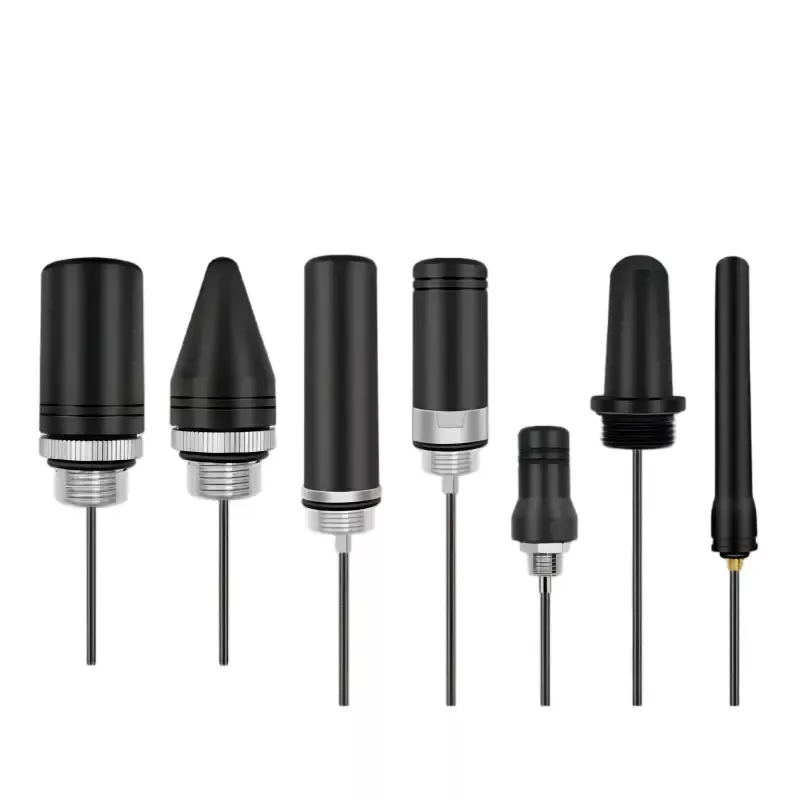
Table of Contents
- What Is a Cellular Network Antenna?
- Why Is Antenna Performance Important?
- How Does a Cellular Network Antenna Work?
- Which Factors Affect Cellular Antenna Performance?
- How Should You Select a Cellular Network Antenna?
- Which Cellular Antenna Type Fits Different Applications?
- Where Are Cellular Network Antennas Used?
- How Can Installation Improve Signal Reliability?
- Why Does Customization Matter for Cellular Antennas?
- How Does Shenzhen Qianmu Support Cellular Antenna Projects?
- Cellular Antenna Selection Checklist
- Frequently Asked Questions
- Conclusion
1. What Is a Cellular Network Antenna?
A Cellular Network Antenna is an RF component designed to transmit and receive wireless signals through cellular communication networks. It can be used with communication modules and terminals operating on technologies such as 2G, 3G, 4G LTE, and 5G Sub-6GHz, depending on its design and frequency coverage.
In practical applications, the antenna is the interface between the electronic communication system and the surrounding electromagnetic environment. A cellular modem may have excellent processing capabilities, but poor antenna selection, unfavorable positioning, or an unsuitable RF connection can still result in weak or unstable communication.
Cellular antennas are available in many configurations. External antennas can be installed outside equipment housings, while internal antennas can be integrated into compact electronic products. Magnetic-base, screw-mounted, adhesive, embedded, rod, rubber, and flexible antenna structures can all serve different installation requirements.
For equipment manufacturers, the correct antenna therefore needs to match both the communication requirements and the physical design of the final product.
2. Why Is Antenna Performance Important?
Wireless communication systems often operate in environments where signal conditions are far from ideal. Metal cabinets, vehicle bodies, walls, machinery, electrical equipment, underground locations, and densely populated areas can all influence RF performance.
A suitable cellular antenna helps the communication module use the available network signal more effectively. It does not create network coverage where none exists, but it can significantly influence how efficiently a device transmits and receives RF energy.
Common problems caused by an unsuitable antenna include:
- Frequent network disconnections
- Slow or inconsistent data transmission
- Poor signal reception
- Unstable remote monitoring
- Communication failures inside metal enclosures
- Reduced performance in vehicle installations
- Difficulty maintaining connectivity in weak-signal areas
- Unexpected RF performance after final device assembly
For industrial and commercial equipment, these issues can have operational consequences. A disconnected monitoring terminal, unstable gateway, or communication failure in a vehicle tracking system may interrupt data collection and reduce system reliability.
3. How Does a Cellular Network Antenna Work?
A cellular antenna operates by converting electrical signals from the communication module into electromagnetic radiation during transmission. During reception, it performs the reverse function by capturing electromagnetic energy and delivering the corresponding RF signal to the cellular module.
The overall communication path can be simplified as:
Communication Module → RF Cable/Connector → Antenna → Cellular Network
During transmission, the modem generates an RF signal. The antenna radiates that energy into the surrounding environment. During reception, the antenna captures signals from nearby cellular base stations and transfers them to the modem for processing.
Several technical parameters influence this process.
| Parameter | What It Indicates | Why It Matters |
|---|---|---|
| Frequency Range | The frequencies supported by the antenna | Must match the cellular bands required by the device |
| Gain | Directional concentration of radiated energy | Influences signal performance and coverage characteristics |
| Impedance | Electrical matching between RF components | Common cellular RF systems use 50Ω interfaces |
| VSWR | Indicates impedance matching quality | Lower VSWR generally means less reflected RF power |
| Radiation Efficiency | How effectively input power is converted into radiation | Important for practical wireless performance |
| Polarization | Orientation of the electromagnetic field | Affects compatibility with the surrounding communication environment |
4. Which Factors Affect Cellular Antenna Performance?
Choosing an antenna based only on its appearance or nominal gain can lead to disappointing results. Real-world performance depends on the interaction between the antenna, device, installation environment, and cellular network.
Frequency Compatibility
The first consideration is frequency. Different cellular technologies and regions can use different frequency bands. A device intended for international deployment may therefore require broader band coverage than equipment designed for a single market.
Before selecting an antenna, identify the cellular module and its supported frequency bands. The antenna should provide appropriate performance across the bands that the device actually uses.
Device Housing
Metal enclosures can affect RF behavior because conductive materials interact with electromagnetic fields. Even plastic housings can influence antenna performance depending on their composition, thickness, and internal structure.
An antenna that performs well in an open test environment may behave differently after being installed inside a finished product.
Installation Position
Antenna placement can be just as important as antenna selection. Placing an antenna too close to batteries, circuit boards, cables, motors, metal panels, or other RF components may alter its impedance and radiation characteristics.
RF Cable and Connector
The cable between the antenna and communication module introduces additional RF loss. Connector selection, cable length, cable type, and assembly quality should therefore be considered together.
For compact electronic devices, connectors such as IPEX or MMCX may be appropriate. External equipment may use SMA or other threaded RF connectors. The correct choice depends on the communication module and mechanical structure.
Environmental Conditions
Outdoor and vehicle applications introduce additional requirements. Temperature changes, moisture, vibration, dust, UV exposure, and mechanical impact can affect long-term reliability.
An antenna intended for an industrial cabinet should therefore not automatically be treated as equivalent to one designed for a handheld electronic device.
5. How Should You Select a Cellular Network Antenna?
A practical selection process should begin with the complete application rather than the antenna itself. The following steps can reduce compatibility problems and unnecessary redesign work.
- Identify the cellular module: Check the module's supported standards and frequency bands.
- Define the operating region: Determine which network bands are required in the target market.
- Determine the installation location: Decide whether the antenna will be internal, external, magnetic, screw-mounted, or integrated.
- Evaluate the enclosure: Consider metal, plastic, composite, or other housing materials.
- Set the RF requirements: Review gain, VSWR, impedance, efficiency, and bandwidth requirements.
- Select the connector: Match the antenna connector and cable assembly to the communication module.
- Consider the environment: Evaluate vibration, water exposure, temperature, dust, and other conditions.
- Test the complete assembly: Validate antenna performance after integration into the final device.
This approach is more reliable than choosing an antenna based on gain alone.
6. Which Cellular Antenna Type Fits Different Applications?
| Antenna Type | Typical Installation | Common Applications |
|---|---|---|
| Rubber Antenna | External connector mounting | Routers, gateways, terminals |
| Rod Antenna | External fixed mounting | Industrial and communication equipment |
| Magnetic Base Antenna | Magnetic surface mounting | Vehicles, temporary installations, test equipment |
| Embedded Antenna | Inside product housing | IoT devices, smart hardware, compact terminals |
| FPC Antenna | Adhesive or internal mounting | Compact electronics and IoT terminals |
| Customized External Antenna | Equipment-specific installation | Industrial, outdoor, transportation applications |
The best option depends on the physical constraints of the equipment. For example, a compact IoT terminal may prioritize a flexible internal antenna, while an outdoor industrial gateway may require a more robust external configuration.
7. Where Are Cellular Network Antennas Used?
Industrial IoT
Industrial IoT systems use cellular connectivity for remote monitoring, telemetry, equipment management, and cloud communication. Cellular antennas can be integrated into gateways, data terminals, monitoring equipment, smart meters, and automation systems.
For remote equipment, communication stability is particularly important because maintenance personnel may not be physically present when a connection problem occurs.
Vehicle Communication
Vehicles have complex electromagnetic and mechanical environments. Cellular connectivity may support fleet management, tracking, remote diagnostics, transportation monitoring, and other intelligent transportation functions.
A suitable antenna must account for vehicle structure, vibration, installation position, and exposure to changing environmental conditions.
4G and 5G Routers
Cellular routers can use mobile networks as their primary internet connection or as a backup communication channel. In locations where fixed broadband is unavailable or unreliable, antenna performance becomes an important part of overall connectivity.
Remote Monitoring Systems
Remote monitoring equipment may be deployed at construction sites, utility facilities, outdoor cabinets, agricultural locations, and other distributed sites. A properly configured cellular antenna can help maintain communication between field equipment and centralized platforms.
Smart Meters and Connected Terminals
Smart meters and distributed terminals often need compact antennas that fit within limited spaces. In these products, mechanical integration and RF performance must be considered simultaneously.
8. How Can Installation Improve Signal Reliability?
Even a technically capable antenna can deliver poor results if it is installed incorrectly. Several practical measures can improve the probability of stable operation.
- Keep appropriate clearance: Avoid unnecessary proximity to large metal structures and high-noise electronics.
- Choose the correct orientation: Maintain the intended antenna orientation and polarization.
- Minimize unnecessary cable length: Excessive coaxial cable introduces additional RF loss.
- Use compatible connectors: Ensure connectors are mechanically secure and electrically suitable.
- Protect outdoor connections: Outdoor installations should account for moisture and environmental exposure.
- Test after final assembly: RF behavior should be verified in the actual product configuration.
One common mistake is testing the antenna separately and assuming that the same performance will automatically remain after installation. The final housing, PCB, battery, cables, mounting brackets, and surrounding structures can all influence RF behavior.
9. Why Does Customization Matter for Cellular Antennas?
Standard antennas are convenient when the application matches their existing specifications. However, equipment manufacturers often encounter restrictions involving frequency, dimensions, cable routing, connectors, mounting holes, or enclosure geometry.
Customization can address these practical limitations.
| Customization Area | Potential Requirement |
|---|---|
| Frequency | Specific cellular bands or multi-band operation |
| Dimensions | Limited installation space or product-specific geometry |
| Cable | Specific cable type and required cable length |
| Connector | SMA, IPEX, MMCX, or other compatible RF interfaces |
| Mounting | Magnetic, adhesive, screw-fixed, or embedded installation |
| RF Performance | Application-specific gain, VSWR, efficiency, and bandwidth targets |
For OEM and ODM projects, customization can also reduce the need to redesign the surrounding mechanical structure simply to accommodate an off-the-shelf antenna.
10. How Does Shenzhen Qianmu Support Cellular Antenna Projects?
Shenzhen Qianmu specializes in wireless communication antenna development and manufacturing, providing cellular antenna solutions for industrial, IoT, vehicle, networking, and other connected applications.
The company supports cellular antenna requirements covering multiple generations of mobile communication technology, including 2G, 3G, 4G LTE, and 5G Sub-6GHz applications. Its product development approach considers not only nominal antenna specifications but also the installation conditions and communication requirements of the customer's equipment.
For project development, Shenzhen Qianmu can support areas such as:
- Cellular antenna selection
- Frequency-band adaptation
- Antenna structure development
- RF matching and optimization
- Prototype sampling
- Connector and cable customization
- OEM production
- ODM development
- RF performance testing
- Mass-production support
The company's product information indicates support for common RF interfaces such as SMA, IPEX, and MMCX, together with cable options including RG174, RG178, RG316, and customized configurations. The actual specification should be determined according to the communication module and final equipment design.
For manufacturers developing a new connected device, early antenna involvement can be particularly valuable. Reviewing the antenna position, enclosure, cable route, and RF requirements during the design stage can reduce the risk of discovering communication problems late in product development.
11. Cellular Antenna Selection Checklist
Before placing an order, engineering and purchasing teams can use the following checklist:
- ☐ What cellular standards does the device support?
- ☐ Which frequency bands are required?
- ☐ Will the antenna be installed internally or externally?
- ☐ Is the product enclosure made from metal or non-metallic material?
- ☐ What antenna dimensions can the product accommodate?
- ☐ What connector does the communication module require?
- ☐ What cable length and cable type are appropriate?
- ☐ What gain and VSWR targets are required?
- ☐ Does the antenna need to operate outdoors?
- ☐ Will the antenna experience vibration or temperature variation?
- ☐ Does the application require multi-band cellular coverage?
- ☐ Has the antenna been tested after installation in the final enclosure?
- ☐ Are prototype samples required before mass production?
Answering these questions before selecting a product makes technical communication with an antenna manufacturer much more efficient.
12. Frequently Asked Questions
What is a Cellular Network Antenna used for?
A Cellular Network Antenna is used to transmit and receive wireless signals through cellular networks. Typical applications include 4G LTE and 5G devices, IoT terminals, industrial gateways, routers, vehicle systems, remote monitoring equipment, and connected smart devices.
Can one cellular antenna support multiple network bands?
Yes. Multi-band cellular antennas can be designed to operate across several frequency ranges. Whether a particular antenna supports the required bands depends on its electrical design and specified frequency range.
Does higher antenna gain always mean better performance?
No. Gain should be considered together with frequency coverage, radiation pattern, efficiency, installation position, and the surrounding environment. An antenna with higher nominal gain is not automatically the best choice for every device.
Why does an antenna perform differently after installation?
The finished device can change the antenna's RF environment. Metal housings, PCB traces, batteries, cables, brackets, and nearby components can influence impedance and radiation characteristics. This is why testing the antenna in the final product configuration is important.
Can Shenzhen Qianmu customize a cellular antenna?
Yes. Shenzhen Qianmu provides customized solutions involving frequency, dimensions, cable length, connectors, mounting structure, and other application-specific requirements.
Which connector should I choose?
The connector should match the communication module and mechanical design. SMA, IPEX, MMCX, and other RF connectors may be used depending on the equipment architecture.
Can cellular antennas be used outdoors?
Yes, but the antenna must be designed and selected for the intended environmental conditions. Outdoor installations may require suitable mechanical protection, sealing, mounting, cable routing, and resistance to environmental exposure.
Is a prototype necessary before bulk production?
For customized or integrated products, prototype testing is strongly recommended. It allows engineers to verify RF behavior after the antenna has been installed in the actual equipment before committing to large-scale production.
13. Conclusion
A reliable cellular connection starts with the complete RF system, and the antenna is one of its most important components. The right Cellular Network Antenna must match the required frequency bands, communication module, installation structure, enclosure, environmental conditions, connector, cable, and performance targets.
For industrial IoT devices, vehicle communication systems, routers, smart meters, remote monitoring terminals, and other connected equipment, careful antenna selection can help reduce communication instability and integration problems.
Shenzhen Qianmu provides cellular antenna products and customized development support for manufacturers seeking practical RF solutions. If you are developing a new device or need to replace an existing antenna, providing your frequency requirements, installation conditions, dimensions, connector type, and application environment can help the engineering team recommend a more suitable configuration.
Need a cellular antenna matched to your application? Contact Shenzhen Qianmu for product selection, customization, prototype evaluation, and mass-production support. Contact us today to discuss your cellular communication antenna requirements and find a solution designed around your equipment.