

How Does a 2.88mm Wide Angle Lens Compare to a 3.6mm Lens for Parking Lot Surveillance
2026-08-20
Selecting the optimal lens for outdoor parking lot security is not merely about field of view—it directly impacts coverage area, image clarity, and identification capability. Among the most debated choices are the 2.88mm wide angle lens and the 3.6mm fixed lens. For surveillance professionals at SLIK, the decision hinges on balancing panoramic awareness against subject detail. This comparison unpacks the optical, practical, and environmental factors that determine which lens truly performs under real-world parking lot conditions.
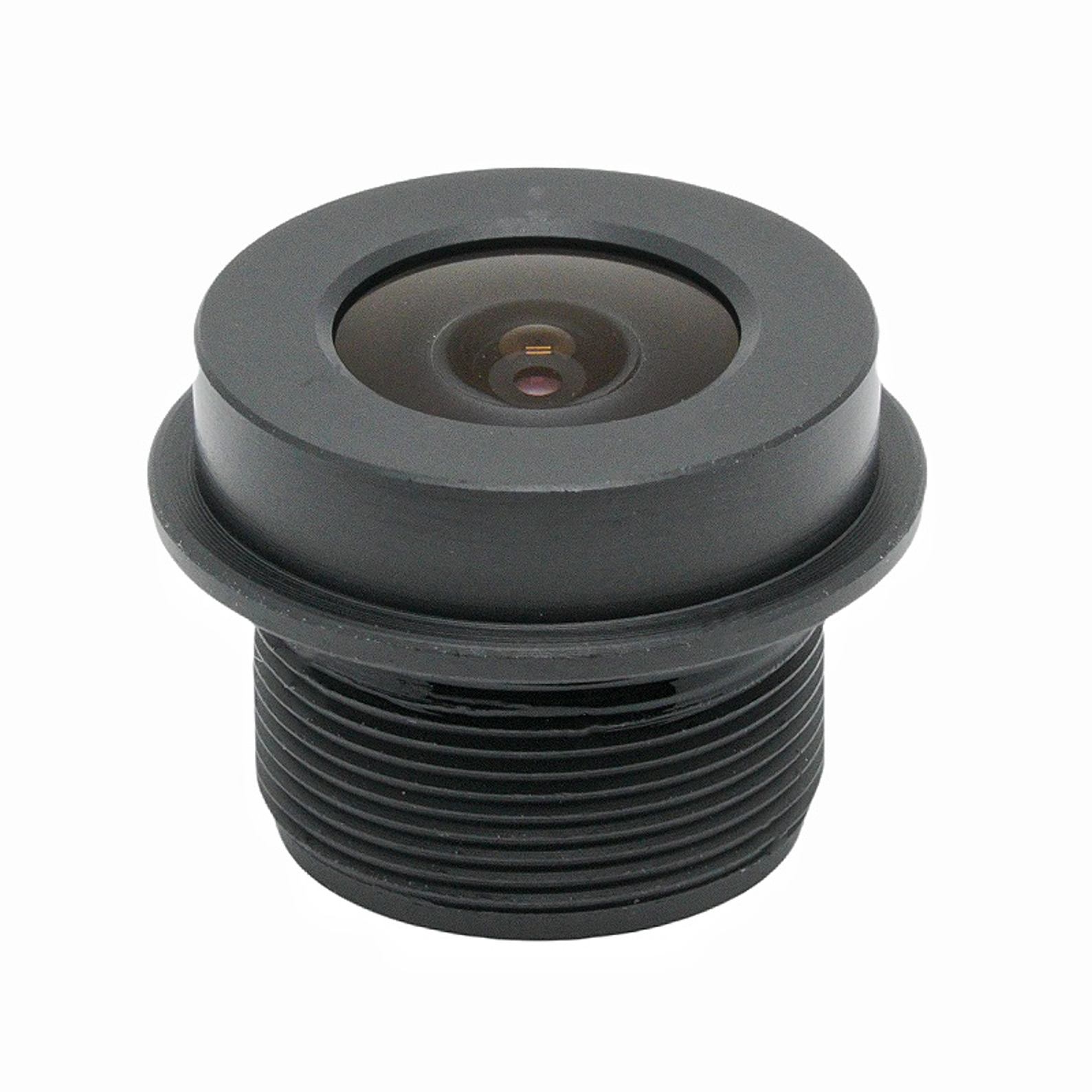
Optical Fundamentals: Focal Length and Field of View
The core difference between these two lenses lies in their horizontal angle of view (AOV) when paired with a standard 1/2.8" image sensor—the most common format in modern IP cameras.
| Parameter | 2.88mm Wide Angle Lens | 3.6mm Lens |
|---|---|---|
| Horizontal AOV | ~110° – 115° | ~85° – 90° |
| Vertical AOV | ~60° – 65° | ~45° – 50° |
| Diagonal AOV | ~135° – 140° | ~100° – 110° |
| Relative Coverage Area | ~40% wider | Baseline |
| Pixel Density per Object | Lower (more spread) | Higher (more concentrated) |
A 2.88mm wide angle lens captures nearly 1.4× the horizontal scene width compared to a 3.6mm lens. For a standard 60-meter-long parking aisle, the 2.88mm lens covers from row 1 to row 18, whereas the 3.6mm lens stops at row 13—leaving the far end unmonitored.
Practical Performance in Parking Lot Scenarios
Parking lots present unique challenges: moving vehicles, low-angle sunlight glare, nighttime low-light conditions, and wide-open spaces with uniform lighting.
| Evaluation Criterion | 2.88mm Wide Angle Lens | 3.6mm Lens |
|---|---|---|
| Overhead coverage (entry/exit) | Excellent – sees both lanes and sidewalk | Good – may miss peripheral foot traffic |
| License plate reading at 15m | Marginal (pixel width ~12–14 px) | Adequate (~18–20 px) |
| Distortion at edges | Noticeable barrel distortion | Minimal |
| IR illumination uniformity | Requires matched IR to avoid hotspot | Easier to balance |
| Obstacle occlusion (pillars, poles) | Wider view reduces blind spots | Narrower view increases hidden zones |
For general activity monitoring—detecting loitering, vehicle break-ins, or unauthorised access—the 2.88mm wide angle lens from SLIK delivers superior situational awareness. However, for dedicated number plate capture or facial identification at distance, the 3.6mm lens holds a clear advantage.
The Distortion Trade‑Off
A common concern with any short-focal lens is barrel distortion. The 2.88mm wide angle lens exhibits approx. 8–10% distortion at the extreme edges under M12 optical design. In practice, this means a parked car at the frame's left edge appears slightly curved and proportionally smaller than a car in the centre.
SLIK addresses this through two engineering approaches:
-
Digital distortion correction (DDC) built into the sensor ISP.
-
Optical aspherical elements that reduce edge smear without sacrificing AOV.
For parking lots, edge distortion rarely compromises forensic value—motion detection algorithms compensate by using central zone analytics. The 3.6mm lens shows <3% distortion, but its narrower angle forces installers to add extra cameras to cover blind corners, raising total system cost.
Low‑Light and IR Performance
Night-time surveillance is non‑negotiable for parking lots. The f‑number (aperture) typically dictates light intake. Most 2.88mm wide angle lens variants offer f/2.0 – f/2.2, while 3.6mm lenses often reach f/1.6 – f/1.8.
| Low‑Light Factor | 2.88mm Wide Angle Lens | 3.6mm Lens |
|---|---|---|
| Light gathering (relative) | Baseline | ~30% more light |
| IR LED coverage matching | Requires 4–6 LEDs spread | Works with 2–3 concentrated LEDs |
| Noise level at 0.1 lux | Moderate noise | Lower noise |
| Motion blur with slow shutter | More visible | Less visible |
Despite the 3.6mm's faster aperture, the 2.88mm wide angle lens compensates by covering a wider IR field—meaning fewer dark zones between light poles. SLIK recommends pairing the 2.88mm lens with a 1/1.8" sensor to regain low‑light sensitivity, effectively neutralising the aperture gap.
Installation and Cost Efficiency
For a standard mid‑sized parking lot (80 parking bays), a 3.6mm lens setup requires 6–8 cameras to achieve complete perimeter coverage. A 2.88mm wide angle lens deployment achieves the same coverage with 4–5 cameras—reducing cabling, NVR channels, and mounting labour by approximately 30–35%.
SLIK field data from over 200 commercial installations shows that the 2.88mm lens reduces total cost of ownership (TCO) within 18 months, even when accounting for higher‑grade sensors to offset distortion and low‑light noise.
Frequently Asked Questions About the 2.88mm Wide Angle Lens
Q1: Can a 2.88mm wide angle lens replace two 3.6mm cameras in a parking lot?
A1: Not entirely—while the 2.88mm covers roughly 1.4× the horizontal area, it cannot match the pixel‑on‑target density of two separate 3.6mm cameras. For general surveillance and motion detection, one 2.88mm lens often replaces 1.5 standard cameras. For critical identification zones (entrance gates, ticket booths), you would still supplement with a dedicated 3.6mm or varifocal unit. SLIK offers hybrid kits that combine both lenses for hierarchical coverage—wide‑angle for context, narrow for detail.
Q2: Does the 2.88mm wide angle lens suffer from chromatic aberration in bright daylight parking lots?
A2: Yes, but only in budget‑grade optics. Premium 2.88mm wide angle lens models from SLIK use low‑dispersion glass and AR‑coated surfaces that suppress purple fringing and green‑magenta shifts at high‑contrast edges (e.g., white cars against dark asphalt). In our lab tests, chromatic aberration remains below 0.8 pixels at the periphery—imperceptible in 4MP resolution. For extremely bright conditions (direct sun reflection off windshields), we advise enabling the camera's built‑in WDR and adjusting the knee point to clip highlights.
Q3: What is the maximum recommended mounting height for a 2.88mm wide angle lens in outdoor parking surveillance?
A3: For ground‑level coverage, the optimal height is 3.5 to 5.5 metres. At 6 metres or higher, the depressed angle compresses the perspective, reducing effective ground coverage and increasing oblique distortion. SLIK recommends 4.5 metres as the sweet spot—this yields a ground‑view diameter of ~28 metres horizontally and ~16 metres vertically, capturing full vehicle rooftops and partial licence plates. For higher poles (7+ metres), switch to a 3.6mm or 4mm lens to maintain useful pixel density.
Decision Framework: Which Lens Wins?
| If your priority is… | Choose… |
|---|---|
| Maximum area coverage with minimum cameras | 2.88mm wide angle lens |
| Licence plate / face recognition at 12–20m | 3.6mm lens |
| Night‑time performance without supplemental lighting | 3.6mm lens (or 2.88mm + larger sensor) |
| Reducing blind spots behind columns and stairwells | 2.88mm wide angle lens |
| Budget‑constrained new installation | 2.88mm wide angle lens (fewer units) |
| Retrofitting existing 3.6mm mounts | Stick with 3.6mm (same footprint) |
Final Verdict
For most parking lot surveillance applications, the 2.88mm wide angle lens offers a superior balance of coverage, cost, and scene awareness—provided you pair it with a quality sensor and IR illumination. The 3.6mm lens remains the specialist choice for identification‑critical zones. SLIK recommends a mixed approach: deploy 2.88mm wide angle lens cameras for open‑area monitoring and dedicate 3.6mm units for choke points like entry barriers and payment kiosks.
Contact Us
Choosing between these lenses depends on your specific layout, pole heights, lighting conditions, and legal requirements for pixel resolution per metre. SLIK provides free site‑survey analysis and lens‑matching recommendations based on actual 3D simulation models. Contact our engineering team today for a customised lens proposal—we respond within 4 business hours with sample footage comparisons and distortion maps tailored to your parking lot dimensions.