

How Do You Properly Crimp and Assemble an M12 Series Industrial Waterproof Connector for Field Installation
2026-09-04
In the world of factory automation, robotics, and outdoor instrumentation, the M12 Series Industrial Waterproof Connector has become the gold standard for reliable signal and power transmission. However, even the best connector fails prematurely if field crimping and assembly are done incorrectly. At Reunion, we have trained hundreds of maintenance engineers and system integrators on proper termination techniques. This guide walks through every critical step, common pitfalls, and best practices to ensure your M12 Series Industrial Waterproof Connector delivers its full IP67/IP68 rated performance in the harshest environments.
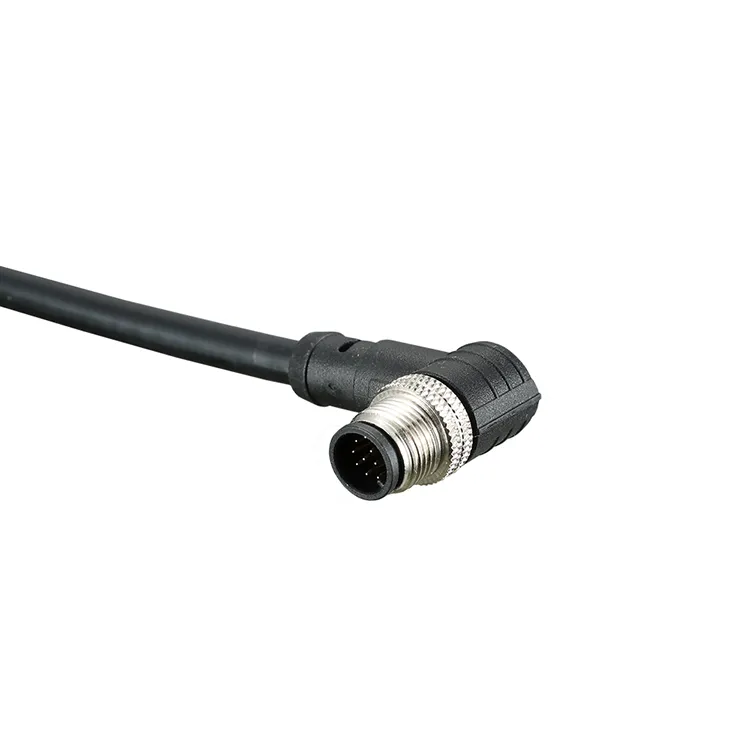
Tools and Materials You Will Need
Before starting, gather the following. Using incorrect tools is the number one cause of intermittent connections.
| Item | Specification / Note |
|---|---|
| Cable stripper | Adjustable for wire gauges 24–18 AWG |
| Crimping tool | Ratchet-type with interchangeable dies for M12 contacts |
| Torque wrench | For locking ring (recommended 0.6–1.2 Nm) |
| Contact inserter/extractor | Plastic or metal, per pin size |
| Multimeter | For continuity and insulation testing |
| Heat shrink or overmolding kit | Optional but recommended for strain relief |
| Manufacturer’s datasheet | Always refer to Reunion pinout drawings |
Step-by-Step Crimping and Assembly Process
Step 1 – Cable Preparation
Strip the outer jacket to the exact length specified (typically 20–25 mm). Avoid nicking the inner conductor insulation. Expose the individual wires (4, 5, or 8 pins depending on your M12 Series Industrial Waterproof Connector variant) to 5–6 mm of bare copper.
Step 2 – Contact Crimping
Select the correct crimp contact for your wire gauge. Insert the stripped wire into the contact barrel until the insulation rests against the crimp window. Use the ratchet crimping tool and compress fully—listen for the release click. A good crimp has a symmetrical indent and no exposed strands outside the barrel.
Step 3 – Inserting Contacts into the Insert
Push each crimped contact into the corresponding cavity on the insert block. You will hear or feel a positive click. Gently tug each wire to confirm locking. For field installable M12 Series Industrial Waterproof Connector models from Reunion, the insert is color-coded to match standard TIA-568B or PROFINET wiring schemes.
Step 4 – Assembling the Backshell and Sealing Elements
Slide the sealing grommet, compression ring, and backshell over the cable before crimping (this is a common mistake – always pre-thread these parts). Tighten the backshell nut gradually while holding the insert stationary. The internal elastomer seal must compress evenly around the cable jacket to achieve the stated waterproof rating.
Step 5 – Final Torque and Mating
Apply the specified torque to the coupling nut when mating to the panel receptacle. Over-tightening can distort the O-ring, while under-tightening allows moisture ingress. Reunion recommends using a torque wrench set to 0.8 Nm for most plastic-shell versions.
Critical Quality Checks After Assembly
Perform these three tests before putting the cable into service:
| Test | Pass Criterion | Fail Action |
|---|---|---|
| Continuity (each pin) | Resistance < 1 Ω | Re-crimp or replace contact |
| Insulation resistance (between pins) | > 100 MΩ at 250 VDC | Clean or replace insert |
| Leakage test (optional) | No bubbles under 0.5 bar air pressure | Replace sealing grommet |
Common Mistakes and How to Avoid Them
-
Reversing pin 1 and pin 2 – Always double-check the coding (A, B, D, or X) because pinouts differ. Reunion provides a laser-etching on every insert for visual verification.
-
Using a standard pliers instead of a ratchet crimper – This creates cold-weld failures after thermal cycling.
-
Forgetting the sealing ring on the backshell – Without it, your IP67-rated M12 Series Industrial Waterproof Connector becomes an IP20 device.
M12 Series Industrial Waterproof Connector – FAQ
Q1: Can I reuse a crimped contact after removing it from the insert?
A: No. Once a contact is crimped and inserted, the retention barb deforms permanently. Extracting it weakens the spring tension. For mission-critical applications, Reunion always advises cutting the wire and using a new contact. If you must extract, use the correct extractor tool and inspect the barb under magnification. Reusing a pulled contact is the leading cause of intermittent field failures in vibration-heavy environments such as robotic welding cells.
Q2: What is the maximum cable length I can terminate with an M12 Series Industrial Waterproof Connector without signal degradation?
A: This depends entirely on the coding and protocol. For D-coded (PROFINET) 4-pin Ethernet, the maximum channel length is 100 meters (including patch cords) per IEEE 802.3. For A-coded analog sensors, you can run up to 200 meters for 4–20 mA loops, but voltage-drop must be calculated. Reunion offers an online cable-length calculator based on your conductor gauge and supply voltage. Always factor in that field-terminated connectors add about 0.5 dB insertion loss per mating pair, so reserve at least 3 dB of system margin.
Q3: How do I verify that my field-assembled M12 Series Industrial Waterproof Connector actually meets the IP67 waterproof claim?
A: Visual inspection alone is insufficient. The proper method is a positive-pressure decay test: seal one end of the assembled cable, apply 0.3 bar of clean dry air to the other end, and monitor for pressure drop over 60 seconds. A pass means less than 1 mbar loss. Alternatively, for non-critical applications, a simple dunk test in fresh water with the connector fully mated to a dummy receptacle works—but dry it immediately and check for internal condensation after 24 hours. Reunion factory-tested assemblies carry a 100% leakage certificate, but field-assembled units should be re-verified after every third disconnect/reconnect cycle, because the O-ring wears microscopically.
Performance Comparison: Crimp vs. Screw-Terminal Field Installation
| Feature | Crimp Type (Recommended) | Screw Terminal |
|---|---|---|
| Vibration resistance | Excellent (gas-tight joint) | Moderate (screws can loosen) |
| Installation time | 3–5 minutes per connector | 1–2 minutes |
| Tool cost | Higher (dedicated crimper) | Lower (screwdriver) |
| Contact resistance | Stable < 5 mΩ | May drift to 15 mΩ |
| Reunion recommendation | Preferred for moving machinery | Suitable for static test benches |
Final Checklist for Field Engineers
-
□
Cable OD matches the connector’s clamping range (check Reunion datasheet).
-
□
Crimp tool die is the exact match for contact part number.
-
□
All four (or eight) contacts are seated with an audible click.
-
□
Torque is applied within specified range – not by “feel.”
-
□
A continuity test is performed and logged.
Why Choose Reunion for Your M12 Series Industrial Waterproof Connector Needs
Every Reunion connector is designed with field technicians in mind—from laser-marked pin indicators to color-coded sealing rings that prevent mismatching. Our crimp contacts are pre-lubricated to reduce insertion force, and every batch includes a QR code linking to a video assembly guide. More importantly, our technical support team responds within 4 business hours with crimp die recommendations and torque settings for custom cable builds.
Ready to standardize your field terminations? Contact Reunion today for a complimentary sample kit that includes two field-installable M12 Series Industrial Waterproof Connectors, a crimp die selection card, and an O-ring maintenance schedule. Our application engineers will review your cable specifications and suggest the optimal coding (A/B/D/X) and shell material (brass nickel-plated or stainless steel) for your ambient temperature range. Reach us through the live chat on our product page or email [email protected] – we guarantee a technical reply, not a generic sales pitch, within one working day.