

How Do You Choose the Right Universal Variable Frequency Power Supply for Industrial Automation
2026-07-03
Selecting the optimal Universal Variable Frequency Power Supply for industrial automation is not a one-size-fits-all decision. It directly impacts energy consumption, motor longevity, production uptime, and return on investment. With decades of field experience, Kaihong has observed that most costly missteps stem from overlooking load characteristics, environmental conditions, or control interface requirements. This guide distills that expertise into a structured selection framework, helping you match the right Universal Variable Frequency Power Supply to your specific application—whether you are retrofitting a conveyor line, upgrading a pump station, or commissioning a new CNC machining center.
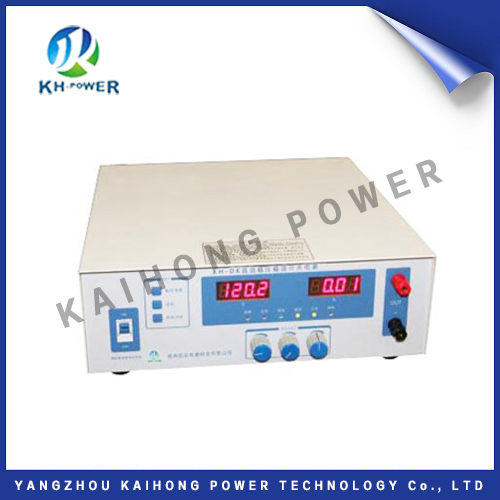
Core Selection Criteria (Checklist)
Before comparing models, evaluate these five technical pillars. Each carries different weight depending on your industry sector.
| Criteria | Key Questions | Typical Industrial Priority |
|---|---|---|
| Load Type | Constant torque (conveyors, extruders) or variable torque (fans, pumps)? | Variable torque allows 20–40% derating; constant torque requires full rated current. |
| Input Power | Available voltage (110V, 220V, 380V, 480V) and phase (single/three)? | Mismatch causes immediate startup failure. Kaihong units support auto‑sensing input ranges. |
| Output Frequency Range | 0–400 Hz standard; do you need up to 1000 Hz for high‑speed spindles? | Standard drives suffice for 90% of motors; special orders require extended range. |
| Environmental Rating | IP20 (clean panels), IP54 (dusty), or IP66 (washdown/harsh)? | Under‑rating IP leads to premature PCB failure within 6–12 months. |
| Communication Protocol | Modbus RTU, Profibus, EtherNet/IP, or CANopen? | Seamless integration with existing PLC/DCS saves days of commissioning. |
Step‑by‑Step Selection Workflow
-
Define the motor nameplate data – voltage, full‑load amperage (FLA), rated speed, and insulation class. The Universal Variable Frequency Power Supply must deliver at least 110% of FLA continuously.
-
Calculate peak overload demand – starting heavy inertia loads (e.g., flywheels, crushers) may require 150–200% overload for 60 seconds. Verify the drive’s overload curve.
-
Match control modes – V/f (voltage/frequency) for general use, vector control for high dynamic response, or permanent‑magnet motor control for new energy‑efficient designs. Kaihong offers all three modes in a single firmware package.
-
Evaluate harmonic filtering – IEEE‑519 compliance often dictates external line reactors or active front ends. Some Universal Variable Frequency Power Supply models embed DC chokes to reduce THD (Total Harmonic Distortion) below 5%.
-
Validate braking requirements – regenerative loads (hoists, decelerating conveyors) need braking resistors or regenerative units. Sizing errors trigger overvoltage faults repeatedly.
Comparative Snapshot: Popular Application Matches
| Application | Recommended Drive Class | Critical Feature | Kaihong Model Example |
|---|---|---|---|
| HVAC centrifugal pump | Variable torque, 0.75–75 kW | Sleep mode & PID sleep/wake | KH‑V3000‑VT |
| Extruder screw drive | Constant torque, heavy overload | I²t thermal monitoring | KH‑V5000‑CT |
| High‑speed grinding spindle | 0–800 Hz, vector control | High‑frequency carrier (16 kHz) | KH‑V6000‑HS |
| Overhead crane traversing | Regenerative, 4‑quadrant operation | Dynamic braking transistor built‑in | KH‑V7000‑REG |
Three Essential FAQs About the Universal Variable Frequency Power Supply
Q1: What happens if I oversize the Universal Variable Frequency Power Supply “just to be safe”?
A: Oversizing beyond 150% of motor FLA reduces low‑speed torque accuracy and increases harmonic currents due to higher internal capacitance. It also raises upfront cost and panel space. Kaihong recommends sizing within 110–125% of FLA for standard duty, and using the drive’s internal motor thermal model to protect against overload—never rely on gross oversizing as a safety margin.
Q2: Can a Universal Variable Frequency Power Supply damage my old or unrated motor?
A: Yes, if the motor lacks inverter‑grade insulation. The PWM (Pulse Width Modulation) output creates voltage spikes (up to 1.2 × DC bus voltage) that can puncture aged winding insulation. Mitigation includes adding an output dV/dt filter or sine‑wave filter, and programming the carrier frequency below 4 kHz. Kaihong drives come with adjustable slew‑rate control, a feature seldom found in entry‑level units.
Q3: How often should I perform preventive maintenance on a Universal Variable Frequency Power Supply?
A: Every 6 months for dusty environments, and annually for clean panel installations. Maintenance includes: (a) checking DC‑bus capacitor ripple current (capacitor life = 10 years typical at 40 °C), (b) cleaning heatsink fins with compressed air, (c) verifying all control terminal torque (0.5–0.6 Nm), and (d) reviewing fault logs for recurring undervoltage/overcurrent events. Kaihong provides a free maintenance checklist with every purchase.
Real‑World ROI Example
A food‑processing plant replaced 12 fixed‑speed fans with Kaihong Universal Variable Frequency Power Supply units (variable torque, IP66 rated). Within 8 months, they recorded:
-
32% average energy reduction (from 187 kWh to 127 kWh per line)
-
Zero nuisance tripping due to built‑in phase‑loss protection
-
4‑hour average commissioning time per drive, thanks to the quick‑start wizard
Final Selection Rule of Thumb
Always request a full‑load test report from the supplier—not just simulation data. A reputable Universal Variable Frequency Power Supply manufacturer like Kaihong provides factory acceptance test (FAT) curves showing output voltage linearity, ripple, and thermal rise at your specified ambient temperature. This documentation is non‑negotiable for ISO‑compliant facilities.
Ready to specify the exact Universal Variable Frequency Power Supply for your next automation project?
Contact Kaihong today for a personalized sizing tool, 3D panel layout drawing, and a competitive quote within 4 business hours. Our engineering team offers remote commissioning support and same‑day technical Q&A—because choosing the right drive is only the first step; keeping it running optimally is our shared priority. Reach out via our website or call your regional Kaihong distributor—we are here to help you succeed.