

How Do You Choose a Reliable Supplier for Automobile Precision Stamping Parts
2026-10-08
Selecting the right manufacturing partner for Automobile Precision Stamping Parts is one of the most consequential decisions in automotive procurement. Whether you are launching a new EV platform, scaling a Tier 1 program, or resourcing an existing line, the supplier you choose directly affects dimensional accuracy, delivery performance, warranty exposure, and total landed cost. Qiren has supported automotive OEMs and Tier 1 customers across stamping, tooling, and metal forming programs for years, and the patterns below reflect what consistently separates dependable partners from costly surprises.
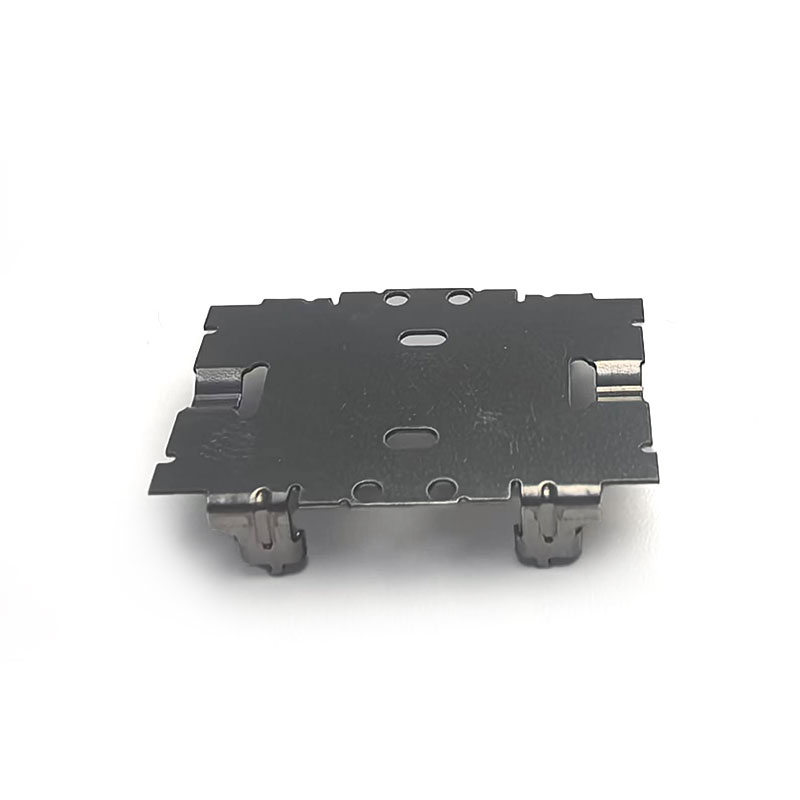
Start with Process Capability, Not Price
The lowest quotation rarely reflects the lowest total cost. A supplier must first demonstrate that its processes can hold the tolerances your drawing requires at the volumes you project. Automobile Precision Stamping Parts typically demand repeatable capability in the ±0.05 mm to ±0.10 mm range for critical features, depending on material gauge and part geometry.
| Evaluation Area | What to Verify | Why It Matters |
|---|---|---|
| Press capacity | Tonnage range, bed size, stroke rate | Determines feasible part size and output |
| Tolerance capability | Cpk data on comparable parts | Predicts dimensional consistency |
| Tooling capability | In-house design and build | Controls lead time and change costs |
| Material handling | Coil feeding, straightening, lubrication | Affects surface quality and scrap rate |
| Inspection | CMM, vision systems, SPC discipline | Confirms ongoing conformance |
Audit the Quality Management System
A certificate on a website is not evidence. Request the actual scope of registration, recent surveillance audit results, and corrective action history. Suppliers producing Automobile Precision Stamping Parts should operate under IATF 16949, with PPAP, APQP, MSA, and control plan documentation available for review. Qiren maintains documented process controls from incoming coil inspection through final packaging, which allows customers to trace every batch back to its material heat number.
Assess Engineering and Tooling Depth
Tooling is where most programs succeed or fail. Ask whether the supplier designs and builds dies internally, how it manages tryout and runoff, and how it handles engineering changes after SOP. A partner with in-house tooling engineering can compress lead times and resolve formability issues without outsourcing delays.
-
Die design and simulation capability
-
In-house machining and die maintenance
-
Documented tryout and sampling process
-
Structured engineering change management
Evaluate Production Scalability and Delivery
A supplier that performs well on a 5,000-piece pilot may struggle at 500,000 pieces annually. Review capacity utilization, shift structure, automation level, and secondary operations such as welding, tapping, and surface treatment. Confirm how the supplier manages safety stock, kanban, and emergency replenishment for Automobile Precision Stamping Parts.
Review Cost Transparency and Communication
Request a cost breakdown covering material, labor, tooling amortization, overhead, packaging, and freight. Transparent suppliers explain cost drivers rather than defending a lump sum. Qiren provides itemized quotations and assigned engineering contacts so customers can evaluate should-cost models and anticipate price changes tied to steel indices.
Automobile Precision Stamping Parts FAQ
What tolerances can Automobile Precision Stamping Parts realistically achieve in mass production?
Typical commercial tolerances range from ±0.10 mm to ±0.25 mm for general features, while critical dimensions can reach ±0.05 mm with proper die design, rigid presses, and closed-loop inspection. Achieving these limits consistently requires capable tooling, controlled material properties, and SPC monitoring rather than inspection alone.
Which materials are most commonly used for Automobile Precision Stamping Parts?
Cold-rolled steel, galvanized and galvannealed steel, stainless steel, aluminum alloys, and high-strength low-alloy steels dominate the category. Material selection depends on strength requirements, corrosion exposure, weight targets, and formability. High-strength steels reduce weight but demand careful springback compensation in the die.
How do you verify a supplier's quality before awarding a program for Automobile Precision Stamping Parts?
Begin with a documented supplier audit covering quality systems, process capability, and tooling maintenance. Then require PPAP Level 3 submission, dimensional layout reports, material certifications, and a controlled runoff at production rate. Pilot lots should be measured with CMM and compared against the control plan before full release.
Final Considerations
Choose a supplier whose capability, documentation, and communication style match the risk profile of your program. Qiren works with automotive customers to engineer, tool, and produce Automobile Precision Stamping Parts that meet drawing requirements, delivery schedules, and quality targets. Contact us today to discuss your next program, request a quotation, or schedule a supplier audit with our engineering team.