

How Do Surface Finish Techniques Impact the Durability and Performance of a Precision Aluminum Chassis
2026-03-23
When engineers and product designers evaluate a Precision Aluminum Chassis Fabrication, the focus often lands on structural strength and dimensional accuracy. Yet one of the most decisive factors influencing long-term reliability and operational performance is the surface finish. At Zhongyilong, we have observed that even the most meticulously machined aluminum chassis can underperform if the surface treatment is not precisely matched to its intended environment and mechanical demands.
Surface finish is far more than an aesthetic layer. It directly governs corrosion resistance, fatigue life, friction behavior, and the ability to withstand thermal cycling. In sectors such as aerospace, medical instrumentation, automotive electronics, and industrial automation, the durability of a Precision Aluminum Chassis Fabrication is often determined not by the base alloy alone, but by how its surfaces are processed and protected.
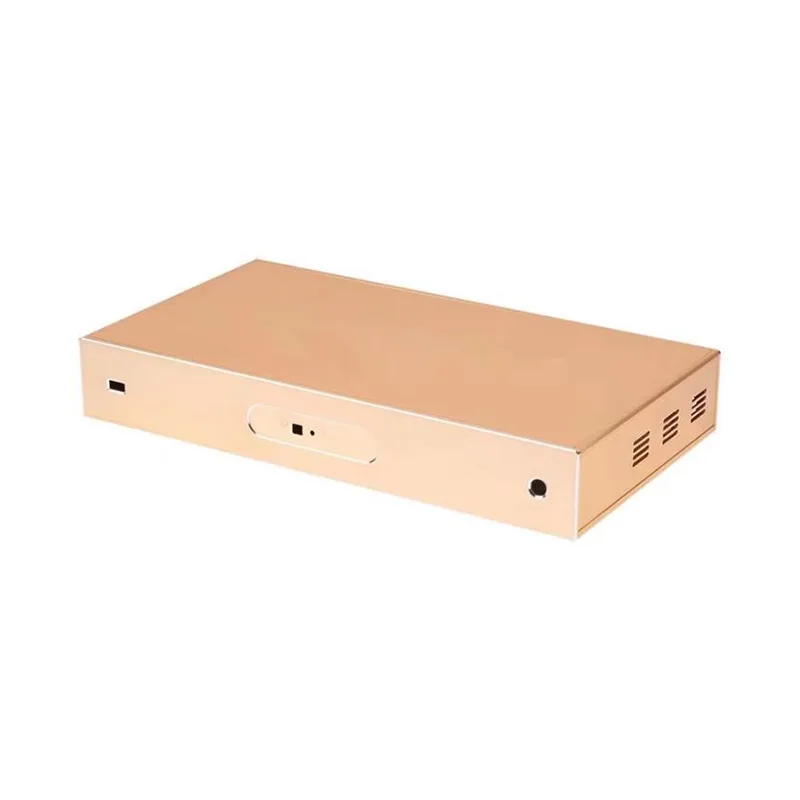
Key Surface Finish Techniques and Their Impact
The table below outlines common surface finishing methods, their functional benefits, and how they influence durability and performance in precision chassis applications.
| Surface Finish Technique | Primary Functional Benefit | Impact on Durability & Performance |
|---|---|---|
| Anodizing (Type II & III) | Forms a hard, corrosion-resistant ceramic layer | Enhances surface hardness (up to 70 Rockwell C), prevents galvanic corrosion, improves dielectric strength, and provides a wear-resistant surface ideal for high-contact assemblies |
| Bead Blasting | Creates a uniform matte finish with compressive stress | Eliminates machining marks that can act as stress risers; improves fatigue life by inducing surface compression; enhances coating adhesion for secondary finishes |
| Chemical Film (Chromate Conversion) | Provides a conductive, corrosion-inhibiting coating | Maintains electrical grounding essential for RF and electronic chassis; offers a thin yet durable barrier against oxidation without altering dimensional tolerances |
| Powder Coating | Delivers a thick, impact-resistant protective layer | Offers superior abrasion and chemical resistance; ideal for outdoor or industrial environments where physical impact and UV exposure are concerns |
| Electropolishing | Removes a microscopic surface layer to achieve a smooth, passivated finish | Eliminates micro-burrs and surface contaminants; significantly improves corrosion resistance, particularly for aluminum chassis used in medical or cleanroom settings |
Performance Factors Influenced by Surface Finish
Beyond material protection, surface finish techniques directly affect several critical performance attributes of a Precision Aluminum Chassis Fabrication:
-
Corrosion Resistance: In humid, marine, or chemically exposed environments, anodized or chemical film-treated aluminum prevents oxidation that could compromise structural integrity over time.
-
Thermal Management: Surface emissivity is altered by finishes such as black anodizing, which enhances radiative heat dissipation—a vital consideration for chassis housing power-dense electronics.
-
Dimensional Stability: Thin-film processes like anodizing (typically 0.002 to 0.004 inches per side) or chemical film preserve tight tolerances, whereas thicker coatings require careful pre-machining allowance.
-
Electrical Conductivity: For RF enclosures and electronic housings, maintaining surface conductivity is critical. Chemical film preserves conductivity, while anodizing acts as an insulator unless selectively masked.
Precision Aluminum Chassis Fabrication FAQ
What surface finish is most suitable for a precision aluminum chassis used in high-humidity outdoor environments?
For outdoor applications with consistent moisture exposure, Type III hard anodizing is the preferred choice. This process creates a dense, non-porous ceramic layer that resists salt spray, pH variations, and ultraviolet degradation. Unlike powder coating, which can chip and allow localized corrosion to propagate, hard anodizing becomes integral to the aluminum substrate. It also provides a surface hardness approaching that of hardened steel, protecting the chassis from particulate abrasion and mechanical wear. When combined with a sealed finish, it offers decades of corrosion protection without compromising dimensional accuracy.
How does surface finish affect the fatigue life of a precision aluminum chassis subjected to continuous vibration?
Fatigue life is highly sensitive to surface condition. Any machining marks, tooling striations, or micro-burrs act as stress concentrators where cracks can initiate under cyclic loading. Bead blasting or electropolishing effectively mitigates this risk. Bead blasting introduces beneficial compressive residual stresses on the surface, which counteract tensile stresses generated during operation. Electropolishing removes the outermost deformed layer left by machining, eliminating micro-cracks and improving overall fatigue resistance by up to 30% in dynamic applications such as automotive or aerospace chassis mounts. A properly finished surface ensures that the Precision Aluminum Chassis Fabrication meets its intended mechanical lifespan without premature failure.
Can a single precision aluminum chassis utilize different surface finishes on different areas?
Yes, and this is a common practice in complex assemblies. Through selective masking, Zhongyilong applies differentiated finishes to optimize performance per zone. For example, a chassis may receive hard anodizing on external surfaces for wear resistance, while interior mounting interfaces are treated with chemical film to maintain electrical continuity for grounding. Threaded holes and critical datum surfaces can be masked during anodizing to preserve precise tolerances. This hybrid approach allows engineers to tailor corrosion protection, conductivity, and hardness precisely where each property is most needed without compromising overall chassis functionality.
Conclusion
Selecting the appropriate surface finish is not an afterthought in Precision Aluminum Chassis Fabrication—it is a strategic engineering decision that directly defines durability, performance, and lifecycle cost. From enhancing corrosion resistance to optimizing thermal and electrical properties, the right finish transforms a structurally sound chassis into a truly application-optimized solution.
At Zhongyilong, we integrate surface finish planning from the earliest design stages, ensuring that material selection, machining tolerances, and finishing processes work in harmony. Our expertise across anodizing, chemical film, blasting, and coating techniques allows us to deliver precision chassis that perform reliably in the most demanding environments.
Contact us to discuss your next project. Whether you require a standard finish or a customized multi-zone treatment, our engineering team is ready to develop a Precision Aluminum Chassis Fabrication solution tailored to your exact performance requirements.