

How Do Small High-Power Relays Improve Modern Electrical System Reliability?
2026-09-30
Article Summary:
Small high-power relays are designed to solve a common challenge in modern electrical equipment: achieving reliable high-current switching while maintaining compact size and efficient system design. With advantages such as electrical isolation, stable switching performance, and space-saving construction, these relays are widely used in automotive electronics, industrial control systems, smart appliances, charging equipment, and energy applications.
This guide explains how Small high-power relays work, why engineers choose them, how to avoid common selection problems, and what performance factors should be considered when integrating them into electrical products. Songle provides reliable relay solutions developed for demanding applications where durability, safety, and consistent performance are essential.
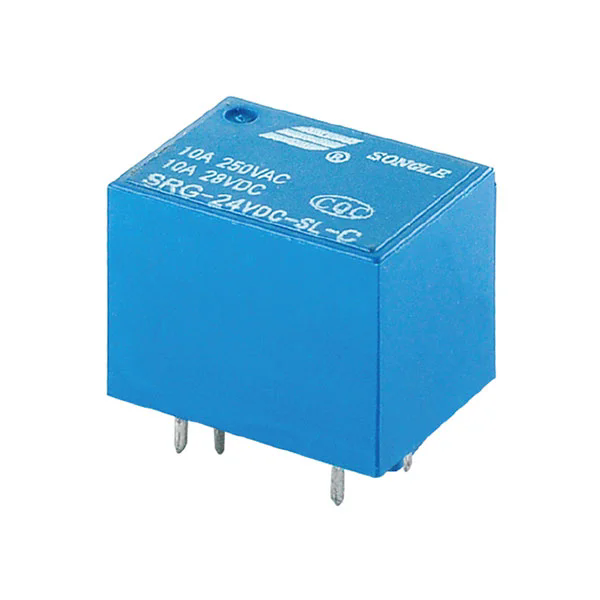
Understanding Small High-Power Relays
A relay is an electrical switching component that allows a low-power control signal to operate a higher-power circuit. Small high-power relays combine compact dimensions with strong current-handling capability, making them suitable for equipment where installation space is limited but switching requirements remain demanding.
Unlike ordinary signal relays designed mainly for low-current control, small high-power relays are engineered with stronger contact systems, optimized internal structures, and improved heat resistance to manage higher electrical loads. They create a safe separation between the control circuit and the power circuit, helping protect sensitive electronic components from high voltage or current impact.
In applications such as electric vehicles, industrial equipment, automation systems, and household appliances, designers often need components that balance size, efficiency, and reliability. Small high-power relays provide a practical solution by delivering high switching capability without requiring large traditional contactors.
A small high-power relay enables low-energy control signals to safely manage higher-power electrical loads while maintaining electrical isolation and operational stability.
Common Problems Engineers Face During Relay Selection
Selecting a relay is not simply about matching voltage and current values. Many electrical failures happen because the relay specification does not fully match the real operating environment.
1. Limited Installation Space
Modern electronic products continue to become smaller. Control boards, automotive modules, and smart devices require components with compact footprints. Traditional high-power switching devices may provide enough capacity but occupy too much space.
2. Contact Wear Under Heavy Loads
When switching inductive loads such as motors, compressors, and power supplies, electrical arcs can occur between contacts. Without proper design, repeated switching may reduce relay lifespan and affect system reliability.
3. Heat Management Issues
High current operation generates heat. A relay with insufficient thermal performance may experience temperature rise, contact resistance increase, and unstable operation.
4. Difficult Application Matching
Different industries require different relay characteristics. Automotive systems require vibration resistance, industrial equipment needs long operating life, while consumer electronics focus more on compact design and cost efficiency.
How Small High-Power Relays Improve System Performance
The biggest advantage of small high-power relays is their ability to deliver high electrical performance within a compact structure. This feature helps manufacturers improve product design flexibility while maintaining reliable operation.
Compact Design Without Sacrificing Power Capacity
Space limitations are a major concern in modern electronic products. Small high-power relays allow engineers to reduce control system size while still handling demanding electrical loads. This makes them especially valuable for applications where every millimeter of installation space matters.
Reliable Electrical Isolation
Electrical isolation protects sensitive control circuits from high-power sections. By separating the input and output sides, relays help improve safety and reduce the risk of damage caused by voltage fluctuations.
Stable Switching Performance
High-quality relay structures use optimized contact materials and mechanical designs to reduce contact resistance and improve switching consistency. This supports long service life in equipment that requires frequent operation.
Flexible Integration With Control Systems
Small high-power relays can work with various control platforms, including microcontrollers, PLC systems, automotive control modules, and intelligent electronic devices.
Key Factors for Choosing the Right Relay
Choosing the correct relay requires evaluating electrical parameters, environmental conditions, and application requirements. A suitable relay should not only meet current demands but also provide enough safety margin for long-term operation.
| Selection Factor | Why It Matters |
|---|---|
| Rated Current | Determines whether the relay can safely handle continuous electrical loads. |
| Rated Voltage | Ensures safe operation under the system voltage requirements. |
| Load Type | Resistive, inductive, and capacitive loads affect contact stress differently. |
| Coil Voltage | Must match the control circuit to guarantee reliable activation. |
| Mechanical Life | Indicates expected switching durability under operating conditions. |
| Operating Temperature | Important for equipment exposed to heat or changing environments. |
Consider the Actual Working Environment
A relay used inside a stable indoor appliance has different requirements compared with one installed in vehicles or industrial machinery. Temperature changes, vibration, dust, humidity, and switching frequency should all be evaluated before final selection.
- Automotive applications require vibration resistance and stable operation under temperature variation.
- Industrial equipment requires long electrical life and reliable switching cycles.
- Smart devices require compact size and efficient power management.
- Energy equipment requires strong load control capability and safety performance.
Main Application Areas of Small High-Power Relays
Small high-power relays are widely adopted across industries because they provide a practical balance between size and electrical capability.
Automotive Electronics
Vehicles contain many electrical systems that require reliable switching control. Small high-power relays are commonly used for lighting systems, motors, HVAC equipment, battery-related systems, and other electronic modules.
Industrial Automation Equipment
Automation systems depend on accurate electrical control. Small high-power relays help control motors, actuators, pumps, and other industrial components while protecting control circuits.
Household Appliances
Air conditioners, washing machines, refrigerators, and kitchen appliances often require compact switching components. Small high-power relays provide dependable operation while supporting product miniaturization.
Energy and Charging Equipment
Renewable energy systems, battery storage equipment, and charging devices require safe switching solutions. Small high-power relays support efficient power management in compact electrical designs.
Small High-Power Relay Performance Comparison
| Feature | Standard Relay | Small High-Power Relay |
|---|---|---|
| Size | Compact | Compact with enhanced power capability |
| Current Handling | Suitable for lower loads | Designed for higher current applications |
| Main Advantage | Basic switching function | Power switching with space efficiency |
| Typical Use | Signal control | Automotive, industrial, appliance, energy systems |
| Design Focus | Simple control | Reliability, durability, and high load performance |
Why Engineers Prefer Compact High-Power Solutions
As electronic products become more integrated, manufacturers need components that provide higher performance without increasing product size. Small high-power relays help achieve this goal by combining efficient design with dependable switching capability.
Songle focuses on relay solutions that meet diverse application requirements, supporting customers with stable products suitable for different electrical control environments.
Frequently Asked Questions
What is a small high-power relay?
A small high-power relay is a compact switching device designed to control higher electrical loads while maintaining a smaller installation size compared with traditional high-power switching components.
Where are small high-power relays commonly used?
They are widely used in automotive electronics, industrial automation, appliances, charging equipment, energy systems, and other applications requiring reliable power switching.
How can relay lifespan be improved?
Selecting the correct current rating, matching the relay with the load type, controlling operating temperature, and following proper installation methods can help extend relay service life.
Are small high-power relays suitable for industrial applications?
Yes. When properly selected according to load requirements and environmental conditions, small high-power relays can provide reliable switching performance in many industrial control systems.
Why choose Songle for relay solutions?
Songle develops relay products focused on stable electrical performance, compact design, and application reliability. The company supports customers requiring dependable switching components for different industries and equipment designs.
Reliable Small High-Power Relay Solutions From Songle
Choosing the right relay is essential for improving electrical system safety, reducing maintenance issues, and achieving long-term equipment reliability. Songle provides professional relay solutions designed for modern applications where compact structure and high-performance switching are required.
Whether you are developing automotive components, industrial equipment, smart appliances, or customized electrical systems, Songle can help you find a suitable relay solution based on your technical requirements.
Contact us today to discuss your project needs and discover reliable small high-power relay products designed to support your next-generation electrical applications.