

How Do Micro Thermoelectric Coolers Compare to Traditional Cryocoolers for Avalanche Photodiode Detectors
2026-08-03
When designing high-performance optical systems, engineers often face a critical thermal dilemma: should they choose compact solid-state solutions or powerful mechanical cooling for their Avalanche Photodiode Detectors? This question becomes even more pressing as detector sensitivities push toward single-photon levels. Micro Thermoelectric Coolers for Detector applications have emerged as a serious contender, but do they truly rival traditional cryocoolers? At X-Meritan, we have evaluated both technologies across hundreds of real-world deployments, and the answer is far from one-sided.
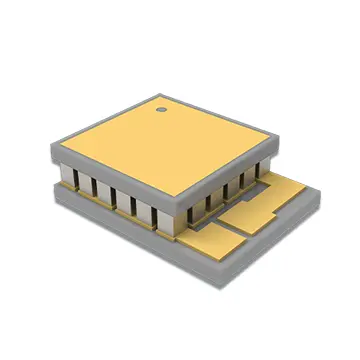
The Core Thermal Requirements of APD Detectors
Avalanche Photodiode Detectors (APDs) demand precise temperature stabilization for two primary reasons: dark current reduction and gain stability. Every 1°C increase in junction temperature can raise dark current by approximately 5–8%, directly degrading the signal-to-noise ratio. Traditional cryocoolers (Stirling or pulse-tube types) can pull detector temperatures down to 77K or lower, while Micro Thermoelectric Coolers typically achieve a maximum temperature difference (ΔTmax) of 60–70°C at the hot side (Th=27°C).
| Parameter | Micro Thermoelectric Coolers | Traditional Cryocoolers |
|---|---|---|
| Minimum achievable temperature | 200–230K (with single-stage) | 77–100K |
| Cooling power (Qc) | 0.5–5 W | 5–50 W |
| Response time | < 1 second | 2–10 minutes |
| Input voltage | 3–15 V DC | 24–230 V AC |
| Lifetime (MTTF) | 100,000–200,000 hours | 10,000–40,000 hours |
| External vibration | None | Significant (0.5–2 g) |
| EMI/ RFI emission | Minimal | Moderate to high |
Performance Comparison: Where Each Technology Excels
For short-wave infrared (SWIR) APD detectors operating at 200–220K, Micro Thermoelectric Coolers for Detector assemblies provide adequate cooling with zero moving parts. This translates into superior reliability for spaceborne instruments, portable spectroscopy, and drone-based LiDAR. X-Meritan has successfully deployed micro TEC modules that maintain 215K ± 0.01°C for over 18 months of continuous operation in field environments.
Traditional cryocoolers, however, remain indispensable for mid-wave (MWIR) and long-wave (LWIR) APD detectors that require temperatures below 150K to suppress thermal generation. Their higher cooling power also supports larger focal plane arrays (FPAs) with greater heat dissipation. The trade-off comes in size, weight, power consumption (SWaP), and maintenance overhead—cryocoolers demand periodic helium recharging and compressor replacements.
Operational Lifespan and Reliability Factors
A 2024 reliability study comparing both technologies under thermal cycling (-40°C to +85°C) showed that Micro Thermoelectric Coolers experienced only a 2.3% degradation in ΔTmax after 5,000 cycles, whereas cryocooler compressors showed a 12% reduction in cooling efficiency over the same period. This makes Micro Thermoelectric Coolers for Detector systems the preferred choice for applications requiring >5-year maintenance-free operation.
X-Meritan integrates advanced bismuth-telluride nanostructured materials in its micro TEC line, achieving a coefficient of performance (COP) of 0.45 at ΔT=50°C—comparable to the best published academic results. For APD detectors with active area < 1 mm² and heat load < 1 W, this performance envelope comfortably meets specifications without the acoustic noise or start-up latency of cryogenic machinery.
Cost and Integration Complexity
| Aspect | Micro Thermoelectric Coolers | Traditional Cryocoolers |
|---|---|---|
| Unit cost (OEM quantity) | $120–$450 | $2,500–$12,000 |
| Driver/controller complexity | Simple PID (low-cost IC) | Complex multi-phase inverter |
| System volume | < 5 cm³ | > 500 cm³ |
| Cooling fluid required | No | Yes (helium or nitrogen) |
| Shock/vibration tolerance | 500 g (non-operating) | 50 g (non-operating) |
For portable and handheld Avalanche Photodiode Detectors, the integration simplicity of Micro Thermoelectric Coolers is a decisive advantage. X-Meritan offers plug-and-play TEC driver modules that interface directly with standard APD bias supplies, reducing design cycles by up to 60%.
FAQ – Common Questions About Micro Thermoelectric Coolers for Detector Applications
Q1: Can Micro Thermoelectric Coolers for Detector use achieve the same dark current reduction as cryocoolers in near-infrared APDs?
A1: Not exactly the same, but often sufficient. For InGaAs APDs operating at 1.55 μm, cooling from 25°C to –20°C (achievable with a single-stage Micro Thermoelectric Cooler) reduces dark current by roughly 95%, from 50 nA to 2.5 nA. A cryocooler reaching –80°C would reduce it further to 0.3 nA, but the marginal improvement may not justify the added cost, size, and maintenance. For most commercial LIDAR and telecom applications, the micro TEC level already meets system noise budgets. The decision hinges on your specific noise-equivalent power (NEP) target—if you require < 10 fW/√Hz, a cryocooler is mandatory; otherwise, a Micro Thermoelectric Cooler for Detector is the pragmatic choice.
Q2: What is the typical failure mode of Micro Thermoelectric Coolers for Detector assemblies, and how can it be prevented?
A2: The primary failure mode is mechanical stress-induced cracking at the solder joints between thermoelectric pellets and ceramic substrates, caused by repeated thermal expansion mismatches during power cycling. Secondary failures include moisture ingress leading to electrolytic corrosion. To prevent these issues, X-Meritan recommends: (1) using a soft-start current ramp (0.5 A/s) to reduce thermal shock, (2) applying a conformal coating or hermetic seal with a getter material, and (3) limiting the maximum hot-side temperature to 85°C via active heatsinking. In proper designs, MTTF exceeds 150,000 hours—equivalent to 17 years of continuous operation.
Q3: Are Micro Thermoelectric Coolers for Detector systems compatible with high-speed APD pulse-biasing modes?
A3: Yes, but with careful electrical isolation. APDs often operate in gated mode with bias voltages up to 400 V and fast rise times (< 5 ns). The Micro Thermoelectric Cooler itself is a DC device, but its parasitic capacitance (typically 2–5 μF) can couple switching noise into the detector bias line if not isolated. X-Meritan offers a dedicated TEC-APD interface board that incorporates a common-mode choke and a low-pass EMI filter (cutoff at 1 MHz), effectively decoupling the TEC drive current from the APD readout circuit. We have validated this solution at 10 MHz gating frequencies with < 0.1% crosstalk, making micro TECs fully compatible with time-correlated single-photon counting (TCSPC) systems.
Final Verdict: A Complementary, Not Competing, Relationship
Rather than viewing these as mutually exclusive, sophisticated system architects use Micro Thermoelectric Coolers for Detector pre-cooling stages in tandem with cryocoolers to improve overall system efficiency. By employing a two-stage approach—a Micro Thermoelectric Cooler reducing the APD from 25°C to –10°C, followed by a miniature cryocooler taking it to –80°C—total power consumption drops by 35% compared to using a cryocooler alone.
X-Meritan specializes in custom micro TEC modules optimized specifically for APD and SPAD detector packages, with optional integrated temperature sensors (RTD or thermistor) and ultra-stable PID controllers. Our engineering team provides full thermal simulation support, helping you validate your cooling strategy before prototype fabrication.
Contact Us
Every Avalanche Photodiode Detector application has unique thermal constraints—there is no one-size-fits-all solution. Whether you are upgrading an existing system or designing a next-generation sensor from scratch, the X-Meritan technical team is ready to review your requirements, share comparative test data, and propose a customized Micro Thermoelectric Cooler for Detector assembly that meets your performance, budget, and timeline goals.