

How Do Lithium Polymer Batteries Compare to Other Rechargeable Battery Technologies
2026-03-18
Choosing the right power source is critical for product design, affecting everything from runtime to safety. When evaluating options, engineers and manufacturers often ask: How do Lithium Polymer Battery technologies compare to other rechargeable battery technologies? At VCELL POWER, we specialize in advanced energy solutions, and understanding these differences is key to optimizing your specific application.
While traditional cylindrical cells (like 18650) and nickel-based batteries have dominated the market for decades, the Lithium Polymer Battery (LiPo) has emerged as a superior choice for modern, space-constrained electronics due to its unique architecture and performance metrics.
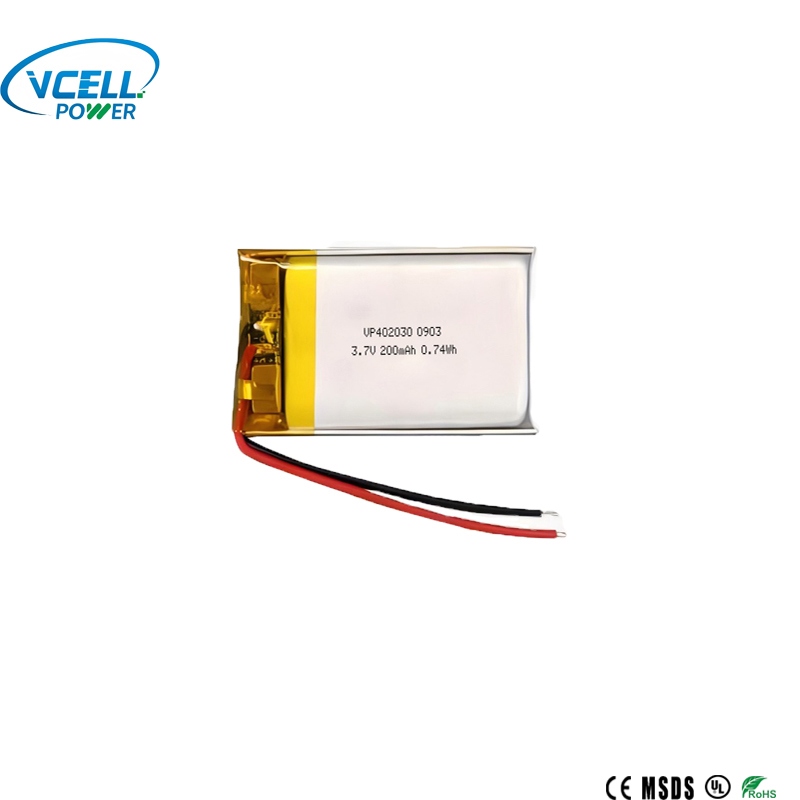
The Fundamental Difference: Form Factor and Chemistry
The most significant distinction lies in construction. Unlike liquid-filled alternatives, a Lithium Polymer Battery uses a gel-like or solid electrolyte. This allows manufacturers like VCELL POWER to encase the cell in a flexible, aluminum-plastic pouch rather than a rigid metal cylinder. This fundamental change leads to several critical advantages across various applications, from drones to medical devices.
To illustrate the technical distinctions clearly, here is a comparison of Lithium Polymer Battery specs against standard Lithium-Ion (Li-ion) and Nickel-Metal Hydride (NiMH) technologies:
| Feature | Lithium Polymer Battery (LiPo) | Cylindrical Lithium-Ion (Li-ion) | Nickel-Metal Hydride (NiMH) |
|---|---|---|---|
| Energy Density | High (140-200 Wh/kg) | High (150-260 Wh/kg) | Moderate (60-120 Wh/kg) |
| Form Factor | Flexible, prismatic, ultra-thin | Fixed, cylindrical (18650, 21700) | Fixed, cylindrical or prismatic |
| Weight | Lightweight | Heavier (steel casing) | Heavier |
| Safety | Good (less prone to leakage) | Good (requires protection circuit) | Excellent (very stable chemistry) |
| Typical Cost | Moderate | Low to Moderate | Moderate |
| Lifespan | 300-500 cycles | 500-1000+ cycles | 500-800 cycles |
Performance Metrics: Why Flexibility Matters
For designers, the mechanical flexibility of the Lithium Polymer Battery is a game-changer. Where a traditional cell forces a device to be round, a LiPo battery from VCELL POWER can be manufactured to fit into any nook of a casing, maximizing internal space utilization. This allows for slimmer laptops, thinner smartphones, and more aerodynamic drones.
Furthermore, Lithium Polymer cells typically exhibit a lower internal resistance than their canned counterparts. This characteristic enables them to deliver high bursts of current, which is essential for high-performance applications like RC vehicles and power tools. While standard Li-ion holds a slight edge in raw energy density for large-scale storage, the Lithium Polymer Battery offers the best balance of power delivery and compact design.
Addressing Common Safety and Usage Concerns
Safety is often the primary concern when selecting a battery chemistry. While all lithium-based chemistries require careful handling, modern Lithium Polymer cells are robust. They are less likely to rupture dramatically compared to liquid-electrolyte Li-ion cells if the casing is punctured, though they are still sensitive to overcharging. VCELL POWER integrates multiple safety layers, including Pressure Relief Valves and thermal switches, to ensure operational stability.
To further clarify the practical aspects of this technology, here are answers to frequently asked questions regarding Lithium Polymer Battery usage:
What is the main safety risk of a Lithium Polymer Battery?
The primary risk is mechanical damage leading to a short circuit or overcharging causing thermal runaway. If a Lithium Polymer Battery is punctured or charged with an incorrect voltage, it can swell and potentially catch fire. This is why using a smart charger and a Battery Management System (BMS) is non-negotiable. VCELL POWER designs all our LiPo packs with integrated protection to mitigate these risks.
How long does a Lithium Polymer Battery last before it degrades?
The lifespan is typically measured in charge cycles. A high-quality Lithium Polymer Battery generally lasts for 300 to 500 full charge cycles before its capacity drops to 80%. Factors like deep discharging below 3.0V per cell, exposure to high heat, and high-rate charging can significantly reduce this lifespan. Proper storage at a "storage voltage" (around 3.8V) is crucial for longevity.
Can I use a Lithium Polymer Battery for my solar power storage project?
While technically possible, it is usually not the most economical or practical choice. For solar storage, where space is abundant and cycle life is paramount, traditional Lithium Iron Phosphate (LiFePO4) or high-cycle Li-ion cells are generally preferred. However, for portable solar generators where weight and size are the limiting factors, a custom Lithium Polymer Battery pack from VCELL POWER can provide a lightweight, high-density solution.
Conclusion: Selecting the Right Partner for Power
When comparing Lithium Polymer Battery technology to other rechargeable options, the decision ultimately depends on your project's priorities. If you require a thin, lightweight, and customizable power source capable of high discharge rates, LiPo is the industry standard. For stationary applications where cost per kilowatt-hour is the only metric, other chemistries may prevail.
Navigating these technical choices requires a partner who understands the nuances of electrochemistry. At VCELL POWER, we provide not just cells, but complete engineering solutions tailored to your device's mechanical and electrical requirements.
Contact us today for a free consultation and custom quote to power your next innovation.