

How Do Ceramic Ferrite Magnets Compare to Neodymium Magnets in Terms of Performance and Cost
2026-03-05
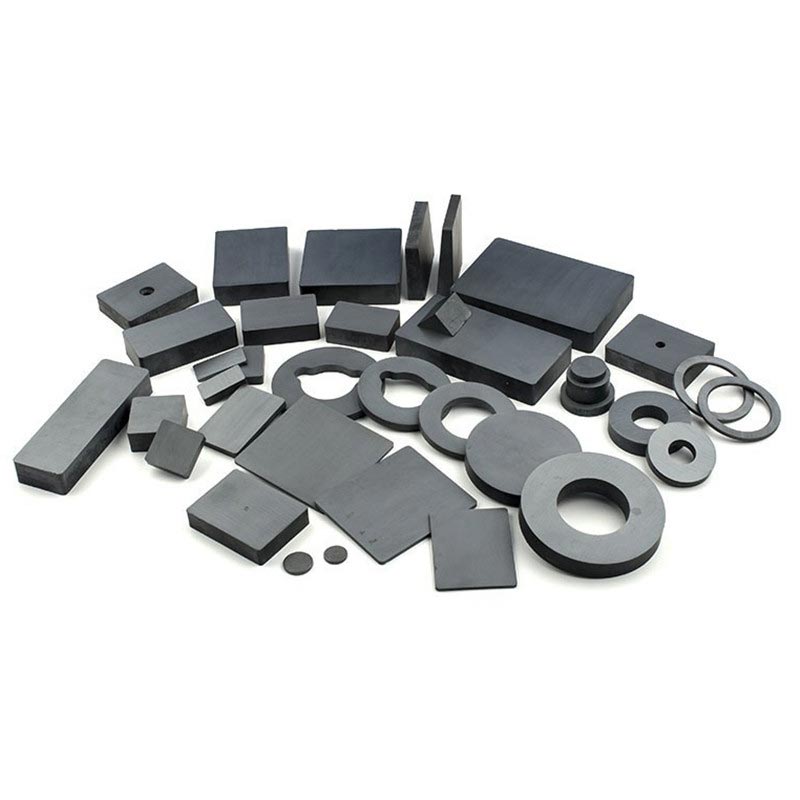
When selecting the right magnetic material for an engineering project or industrial application, the debate often comes down to two heavyweights: ceramic ferrite magnets and Neodymium magnets. Both are permanent magnets, but their chemical composition, physical properties, and price points place them in entirely different categories of utility. At Zhaobao, we specialize in manufacturing both types, giving us unique insight into how to balance performance metrics against budget constraints. Understanding the distinction between these two materials is critical for optimizing your product design and supply chain efficiency.
Performance Analysis: Magnetic Strength and Temperature Resistance
The most significant divergence between these materials lies in their raw power. Neodymium magnets (NdFeB) are part of the Rare Earth family and are renowned for possessing the highest magnetic energy product on the market. However, ceramic ferrite magnets offer a different kind of value that is often overlooked.
To illustrate the technical differences clearly, the table below breaks down the core performance indicators:
| Feature | Ceramic Ferrite Magnets (Hard Ferrite) | Neodymium Magnets (NdFeB) |
|---|---|---|
| Magnetic Strength | Moderate (Lower energy product) | Very High (Highest on the market) |
| Resistance to Demagnetization | Good | Excellent (High Coercivity) |
| Max Operating Temperature | High (Up to 300°C / 572°F) | Varies (Low grades start at 80°C) |
| Corrosion Resistance | Excellent (Naturally oxide layer) | Poor (Requires coating: Ni, Zn, Epoxy) |
| Cost Efficiency | Very Low (Cost-effective per unit) | High (Expensive raw materials) |
As the table demonstrates, while Neodymium wins the "strength" contest, ceramic ferrite magnets win the "stability" contest. They are inherently resistant to electrical conductivity and oxidation, meaning they do not require surface coatings to prevent rust. This makes them the go-to choice for applications involving moisture or high-frequency vibrations.
Cost Implications and Application Suitability
From a financial perspective, the choice is driven by the application's functional requirements. Neodymium magnets contain Neodymium, Iron, and Boron, with supply chains heavily dependent on mining in specific geopolitical regions. This makes their pricing volatile. In contrast, ceramic ferrite magnets are made primarily from Strontium Carbonate and Iron Oxide—cheap and abundant raw materials.
Here is why engineers often choose ceramic ferrite magnets over their Rare Earth counterparts:
-
Budget-Driven Projects: If the device does not require extreme magnetic pull (e.g., refrigerator magnets, craft projects), ferrite is the optimal choice.
-
High-Heat Environments: In automotive motors or sensors near brake systems, the high intrinsic coercivity of ferrite prevents failure where Neodymium might permanently demagnetize.
-
Weight Considerations: It is vital to note that ceramic ferrite magnets are heavier and bulkier. To achieve the same magnetic flux as a small Neodymium cap, a ferrite magnet must be physically larger.
Frequently Asked Questions
What are the main disadvantages of ceramic ferrite magnets compared to Neodymium?
The primary disadvantage of ceramic ferrite magnets is their lower magnetic energy product (BHmax). They are brittle and have a hard, ceramic-like structure that can crack or chip if subjected to mechanical shock or tensile stress. While Neodymium is also brittle, it can achieve the same magnetic force in a much smaller volume, which is essential for miniaturized electronics like headphones or hard disk drives. If space is at a premium in your design, Neodymium is usually the only option.
Why would an engineer choose ceramic ferrite magnets over Neodymium for a motor?
An engineer would choose ceramic ferrite magnets for a motor primarily due to cost and thermal stability. In applications like automotive starter motors or electric window lifts, the operating temperature can spike. While high-grade Neodymium can handle heat, it becomes exponentially more expensive. Ferrite magnets maintain stable magnetic properties up to high temperatures without a massive price increase. Additionally, because ferrite is electrically non-conductive, it helps prevent eddy current losses in high-frequency motor applications, improving overall efficiency despite the lower magnetic strength.
Are ceramic ferrite magnets weaker than Neodymium magnets in every way?
No, ceramic ferrite magnets are not weaker in every way. While they are significantly weaker in terms of pull force and overall magnetic field strength, they possess superior intrinsic coercivity (Hcj) at high temperatures compared to standard Neodymium grades. Furthermore, their corrosion resistance is vastly superior. Neodymium magnets will rust and corrode rapidly if their nickel or epoxy coating is damaged. Ferrite magnets can operate in humid or corrosive environments without any protective coating, offering longevity that Neodymium cannot match without expensive encapsulation.
Conclusion and Call to Action
Choosing between ceramic ferrite magnets and Neodymium is not about finding the "strongest" magnet, but finding the "right" magnet for your specific operational parameters. If your priority is cost containment, high-temperature resilience, and corrosion resistance without the need for miniaturization, ferrite is the superior engineering solution.
For over two decades, Zhaobao has provided tailored magnetic solutions to industries ranging from automotive sensors to renewable energy. We understand the nuances of magnetic circuitry and can help you balance the performance-to-cost ratio perfectly.
Contact us today for a free consultation and material grading report. Let our engineers help you select the optimal magnet for your next project.