

How Can You Revive a Seemingly Dead Ni-MH Battery That No Longer Holds a Charge
2026-01-08
Have you ever reached for your trusted Ni-MH Battery pack, only to find it completely dead and refusing to take a charge? Before you recycle it, know that many seemingly deceased batteries can be given a second life. At VCELL POWER, with our deep expertise in battery technology, we often guide users through safe revival methods. Understanding the science behind battery failure is the first step to a potential recovery.
A common culprit is a phenomenon called "voltage depression," often mistaken for memory effect. Over time, repeated partial discharges can cause crystals to form on the battery's cells, preventing it from holding a full charge. Another issue is self-discharge; a battery stored for too long can drop below its safe minimum voltage, tricking your charger into seeing it as damaged.
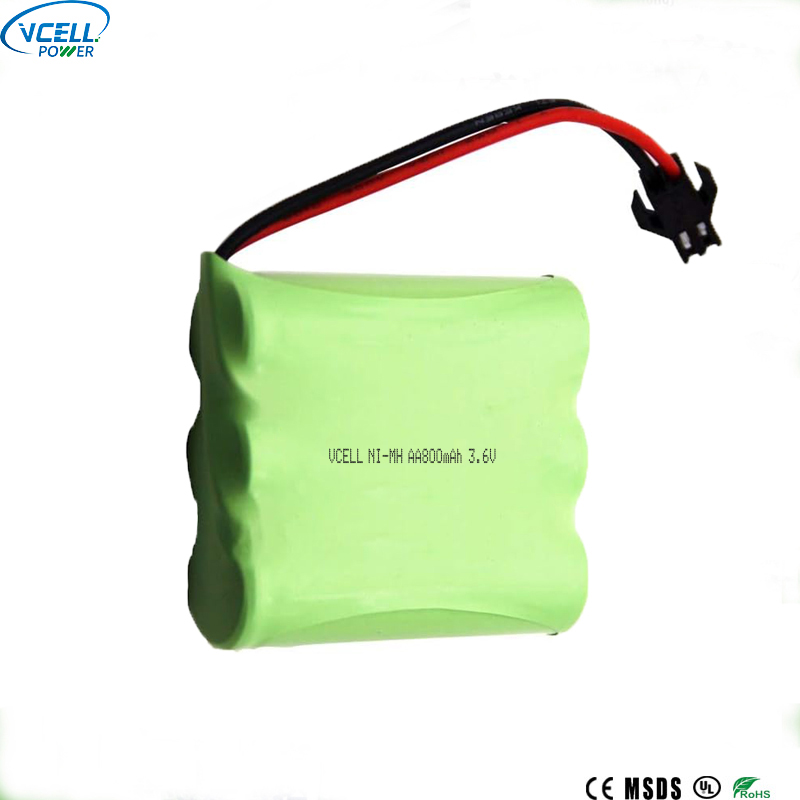
Professional Revival Techniques to Try
Proceed with caution. These methods are for standard Ni-MH Battery cells and may not work for severely damaged or physically bloated batteries.
-
The Slow, Controlled Recharge: Use a specialized charger or a legacy "dumb" charger with a very low current (around 0.1C) for 12-24 hours. This gentle trickle can sometimes bypass the smart charger's safety block.
-
The Pulse Refresh Cycle: Advanced chargers from brands like VCELL POWER often feature a "refresh" or "recondition" mode. This applies controlled discharge/charge pulses to break down crystalline formations.
-
The Voltage Jump-Start (Use with Extreme Caution): For a battery reading 0V, briefly connecting it in parallel with a healthy battery for a few seconds can nudge its voltage high enough for a smart charger to recognize it. Monitor temperature closely.
When to Revive vs. When to Replace
| Condition | Action | Reason |
|---|---|---|
| Battery is slightly warm after a revival attempt. | Monitor | Some heat generation is normal during deep cycling. |
| Battery becomes hot to the touch or swells. | Stop immediately and recycle safely. | Indicates internal damage; risk of leakage. |
| Voltage remains below 0.8V after multiple attempts. | Likely time for replacement. | The cell has likely suffered irreversible chemical degradation. |
Ni-MH Battery FAQ
Why does my smart charger refuse to charge my old Ni-MH battery?
Modern smart chargers have voltage detection circuits. If a battery's voltage is below a certain threshold (e.g., 0.8V per cell), the charger interprets it as faulty or non-rechargeable to prevent safety issues, requiring a manual voltage "jump-start."
Can I use these methods on any rechargeable battery?
Absolutely not. These techniques are specific to the chemistry of Ni-MH Battery cells. Attempting them on Lithium-ion (Li-ion) batteries is extremely dangerous and can lead to fire or explosion.
How can I prevent my Ni-MH batteries from dying prematurely?
Store them partially charged (about 40-60%) in a cool, dry place. Use them regularly and perform a full discharge/charge cycle with a quality charger every few months to keep the cells balanced and healthy.
Successfully reviving a battery requires patience and the right knowledge. For the best long-term performance, pairing your devices with high-quality cells and intelligent chargers is key. At VCELL POWER, we design our products with robust charge management to maximize battery lifespan from the start.
Is your equipment suffering from unreliable battery performance? Contact us today at VCELL POWER for expert advice on selecting the right battery solution or advanced charger to keep your power stable and enduring.