

How Can You Extend the Lifespan of a Lithium Polymer Battery in a Smartphone
2026-05-06
Smartphone users often notice declining battery performance after 12 to 18 months. The Lithium Polymer Battery inside your device is a sophisticated electrochemical system that requires proper care. At VCELL POWER, we have spent years analyzing battery behavior under real-world conditions. Understanding how to maintain your Lithium Polymer Battery can significantly delay capacity loss and keep your phone running longer between charges.
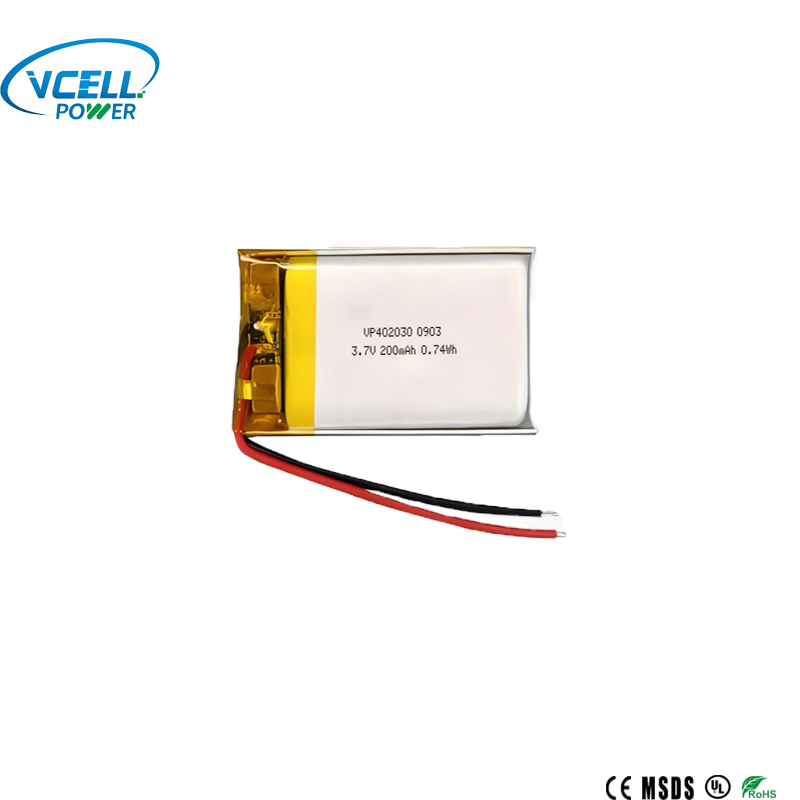
Key Factors That Affect a Lithium Polymer Battery Lifespan
| Factor | Impact on Lifespan | Recommended Practice |
|---|---|---|
| Heat exposure | High degradation above 35°C | Avoid direct sunlight and car dashboards |
| Charge cycles | 300-500 cycles to 80% capacity | Keep charge between 20% and 80% |
| Deep discharge | Permanent voltage drop | Recharge before battery falls below 15% |
| Storage voltage | Best at 3.7-3.8V per cell | Store phone at 40-60% charge if unused |
Practical Steps to Extend Your Lithium Polymer Battery Life
1. Avoid extreme temperatures. Heat is the primary enemy. Charging while gaming generates excess heat – remove the phone case during long charging sessions. Cold temperatures below 0°C temporarily reduce performance but do not cause permanent damage.
2. Optimize charging habits. Partial charges are better than full cycles. Instead of charging from 0% to 100% overnight, charge in short bursts throughout the day. VCELL POWER testing shows that keeping a Lithium Polymer Battery between 20% and 80% doubles cycle life compared to full 0-100% cycles.
3. Use the correct charger. Fast charging generates more heat. For overnight charging, use a standard 5W or 10W charger. Reserve fast charging for situations when you need a quick top-up.
4. Update your operating system. Manufacturers release power management optimizations that reduce unnecessary battery drain, meaning fewer charge cycles over the same usage period.
5. Reduce peak power demands. Bright screens, GPS, and background apps cause higher discharge rates. Each deep discharge to 0% stresses the Lithium Polymer Battery more than shallow discharges.
Lithium Polymer Battery FAQ
Question: How many charge cycles can I expect from a smartphone Lithium Polymer Battery before it needs replacement?
Answer: A typical Lithium Polymer Battery in a smartphone is rated for 300 to 500 full charge cycles (0% to 100%) before its usable capacity drops to 80% of the original. However, if you consistently charge between 20% and 80%, VCELL POWER tests indicate you can achieve 800 to 1000 partial cycles before noticeable degradation. After 500 full cycles, you may observe that the phone lasts only 70-80% as long as when new. Replacement is recommended when the battery health falls below 80% or when unexpected shutdowns occur.
Question: Is it bad to leave my phone plugged in overnight with a Lithium Polymer Battery?
Answer: Yes, consistently leaving a Lithium Polymer Battery at 100% charge for extended hours accelerates aging. When the battery reaches full charge, the charger stops, but the phone trickle-charges to maintain 100% as small amounts of power are used. This keeps the battery at maximum voltage (typically 4.2V or 4.4V per cell), which increases internal resistance and speeds up electrolyte breakdown. For occasional overnight charging, the damage is minimal. However, doing this every night for a year can reduce total lifespan by 20-30%. Using a smart plug on a timer or enabling optimized charging features (available on most modern smartphones) is highly recommended to limit time spent at 100%.
Question: Does fast charging permanently damage a Lithium Polymer Battery compared to slow charging?
Answer: Fast charging does cause more wear, but the difference is less dramatic than many believe. A Lithium Polymer Battery charged at 25W or higher experiences about 10-15% more capacity loss over 200 cycles compared to 5W charging, assuming similar temperature conditions. The primary issue is heat – fast charging circuits generate additional thermal stress. Using fast charging once per day is acceptable for most users. However, using fast charging multiple times per day in hot environments (such as summer outdoors) can significantly reduce lifespan. For maximum longevity, VCELL POWER recommends using slow charging overnight and reserving fast charging for midday top-ups when you need power quickly.
Contact Us
Understanding your Lithium Polymer Battery is the first step toward better performance. At VCELL POWER, we design reliable power solutions for smartphones and portable electronics. For technical inquiries or to explore our battery product line, contact us through our website or email your specifications to our engineering team.