

How Can IFM Industrial Sensor Solutions Improve Automation for Custom Vessel Projects?
2026-09-14
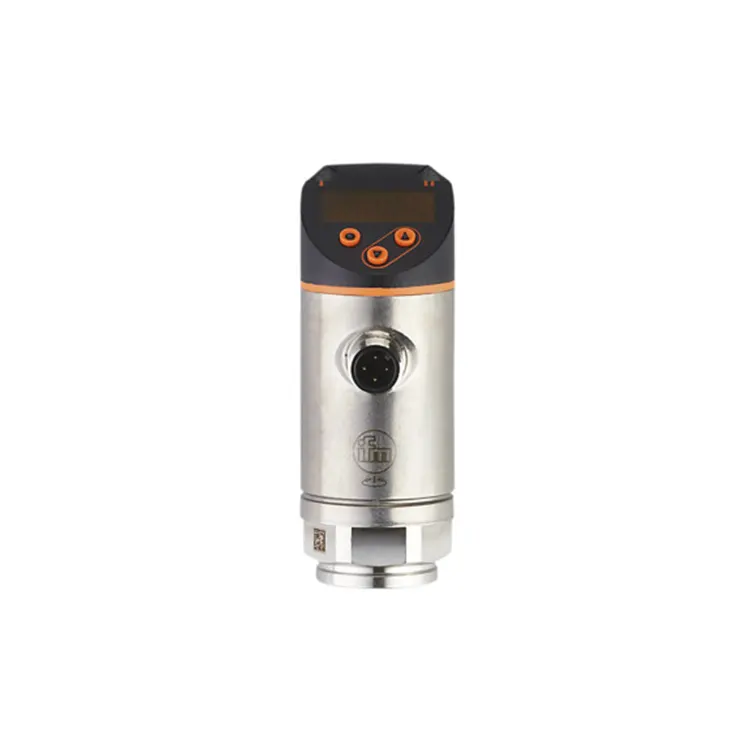
Floating Light Automation Trade Co.,Ltd. focuses on industrial automation components and customized solutions for demanding applications. In modern automation systems, reliable sensing is essential for accurate control, equipment protection, and stable operation. An IFM Industrial Sensor can support applications involving position, pressure, temperature, flow, level, motion, and condition monitoring. IFM's product portfolio covers multiple sensor categories and industrial automation applications, while its solutions are also designed for demanding environments.
For customers building automated equipment, marine systems, or customized vessels, choosing the right sensor is not simply about specifications. Installation space, environmental conditions, communication requirements, vibration, and control-system compatibility all need to be considered. This is where professional product selection and custom vessel support become important.
Why Is Sensor Selection Important for Industrial Automation?
Industrial sensors act as the information layer between physical equipment and the control system. They continuously detect changes and transmit useful data to PLCs, HMIs, controllers, or industrial networks.
A suitable IFM Industrial Sensor can help manufacturers achieve:
- More accurate position and process monitoring
- Faster detection of abnormal conditions
- Improved equipment safety
- Reduced manual inspection
- Better production consistency
- Lower maintenance and downtime risks
- Easier integration into automated systems
For example, industrial sensor applications can include temperature, pressure, flow, level, motion, vibration, and position monitoring.
Common Sensor Applications
| Application | Typical Sensor Function | Potential Benefit |
|---|---|---|
| Position Detection | Detect component position | Improve automation accuracy |
| Pressure Monitoring | Monitor hydraulic or pneumatic pressure | Protect equipment |
| Temperature Monitoring | Track operating temperature | Prevent overheating |
| Flow Measurement | Monitor liquid or gas flow | Improve process control |
| Level Detection | Detect tank or vessel level | Prevent overflow or dry running |
| Vibration Monitoring | Identify abnormal machine conditions | Support preventive maintenance |
What Makes IFM Industrial Sensor Technology Valuable?
The main value of an industrial sensor is not simply its ability to detect a signal. It needs to provide dependable information under real operating conditions.
IFM offers sensors for position detection, process measurement, motion control, condition monitoring, and IO-Link applications. Its portfolio includes inductive, photoelectric, capacitive, magnetic, ultrasonic, radar, pressure, level, flow, temperature, vibration, and inclination sensors.
For harsh environments, sensor selection becomes even more important. Certain IFM sensor solutions are designed for shock, vibration, moisture, temperature changes, and demanding industrial conditions. Mobile-machine sensor solutions, for example, emphasize robust housings, high protection ratings, wide temperature ranges, and resistance to shock and vibration.
This makes appropriate sensor selection particularly useful for customized machinery and vessel-based automation.
How Can Sensors Support Custom Vessel Automation?
One of the key advantages offered by Floating Light Automation Trade Co.,Ltd. is support for custom vessel projects.
Different vessels can have completely different layouts, operating environments, electrical systems, and automation requirements. A standard installation may not always be suitable.
For a customized vessel, sensors may be used to monitor:
- Hydraulic equipment and actuators
- Pump operating conditions
- Tank levels
- Fluid pressure
- Temperature changes
- Mechanical positioning
- Equipment status
- Access doors and safety positions
- Motion and inclination
- Auxiliary automation systems
IFM's mobile-machine sensor portfolio includes pressure, temperature, inclination, inductive, and other sensor technologies designed for demanding mobile applications.
Custom Vessel Support Process
1. Application Assessment
Understand the vessel type, equipment layout, operating conditions, and monitoring objectives.
2. Sensor Selection
Match sensing technology with the required measurement, installation space, target material, temperature, pressure, and environmental conditions.
3. System Integration
Consider connection methods, PLC compatibility, IO-Link, analogue signals, or other communication requirements.
4. Customized Installation
Adapt sensor positioning and installation according to the vessel structure and available space.
5. Testing and Optimization
Verify signal stability, detection accuracy, and system response before final deployment.
This customized approach can help customers avoid the problems caused by selecting sensors solely according to catalogue specifications.
What Effects Can the Right Sensor Solution Deliver?
The practical effect of sensor integration can be significant. Real-time sensing allows automated systems to respond to physical changes rather than relying exclusively on manual inspection.
For example, level sensors can help prevent overflow or dry-running conditions, while temperature sensors can provide important information about motors, gears, drives, cooling systems, and industrial processes.
In precision automation, distance and position sensors can also support accurate positioning, missing-part detection, dimension checking, and machine adjustment.
For Floating Light Automation Trade Co.,Ltd., the objective is therefore not simply to supply an IFM Industrial Sensor, but to help customers develop a practical sensing solution around their equipment and application.
Why Choose Floating Light Automation Trade Co.,Ltd.?
When purchasing industrial automation components for a customized project, customers often need more than product availability. They may need technical matching, application advice, installation considerations, and customized project support.
Floating Light Automation Trade Co.,Ltd. can position its service around:
- Industrial automation component sourcing
- Application-oriented sensor selection
- Customized vessel automation support
- Integration-oriented product recommendations
- Support for demanding operating environments
- Flexible solutions for different equipment structures
This is especially valuable when the project involves non-standard vessel layouts or customized automation equipment where installation conditions cannot be treated as a conventional factory environment.
FAQ
What is an IFM Industrial Sensor used for?
An IFM Industrial Sensor can be used for detecting or measuring parameters such as position, pressure, temperature, flow, level, motion, vibration, and inclination.
Can sensors be used in custom vessel projects?
Yes. Sensor selection can be adapted to vessel structure, installation space, operating environment, control requirements, and monitoring objectives. Mobile-machine sensor technologies are particularly relevant to applications exposed to vibration and demanding environmental conditions.
Why is customized sensor selection important?
Different applications require different sensing technologies. Correct selection can improve measurement reliability, integration, maintenance efficiency, and overall automation performance.
Does Floating Light Automation Trade Co.,Ltd. support custom vessel solutions?
Yes. Custom vessel support can be positioned as a key service advantage, allowing sensor selection and installation considerations to be adapted to specific vessel automation requirements.
Conclusion
A reliable sensor is the foundation of effective industrial automation. From position detection and process monitoring to pressure, temperature, flow, level, and condition monitoring, an IFM Industrial Sensor can provide valuable real-time information for automated equipment.
For customers developing customized vessels or specialized automation systems, Floating Light Automation Trade Co.,Ltd. combines industrial automation product sourcing with application-focused support and custom vessel solutions. If you are planning a new vessel automation project or need help matching sensors to your equipment, contact us to discuss your requirements and develop a practical solution.