

How can FPC line board impedance be controlled for high-speed signals
2026-01-21
In the realm of high-frequency electronics, signal integrity is paramount. When designing with FPC line boards for applications like 5G modules, advanced driver-assistance systems (ADAS), or high-speed data transmission, uncontrolled impedance can lead to signal reflection, distortion, and ultimately, system failure. At Akeson, with over two decades of expertise in flexible circuit solutions, we understand that precise impedance control is not an option—it's a necessity. This blog outlines the key strategies to achieve reliable impedance in your FPC line board designs.
Controlling impedance in a flexible circuit involves a meticulous balance of several design and material factors. The primary goal is to create a consistent transmission line environment.
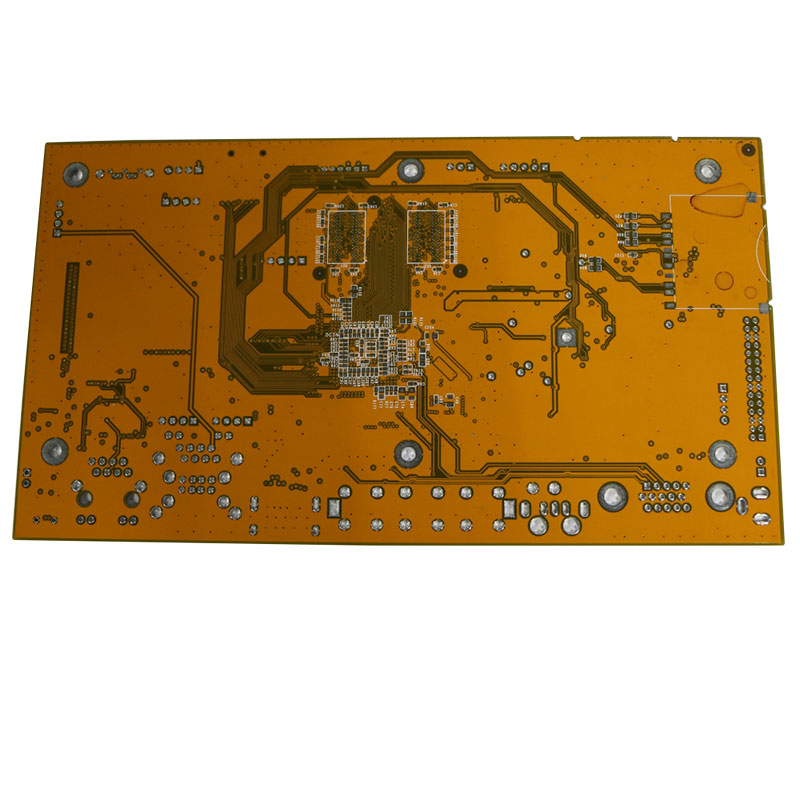
Key Control Parameters:
-
Dielectric Constant (Dk): Selecting a stable core material with a known and consistent Dk is the foundation. Variations here directly alter impedance.
-
Trace Geometry: This is the most critical variable. The width (W) and thickness (T) of the copper trace must be precisely designed and fabricated.
-
Dielectric Thickness (H): The distance between the signal trace and the reference plane must be tightly controlled during lamination.
-
Reference Planes: A solid, uninterrupted ground plane adjacent to the signal trace provides a clear return path and stabilizes impedance.
The relationship between these factors for a common microstrip configuration is summarized in the table below:
| Parameter | Effect on Impedance | Akeson's Control Method |
|---|---|---|
| Trace Width (W) | Increased width lowers impedance. | Utilizes laser direct imaging (LDI) for etch precision within ±10%. |
| Dielectric Thickness (H) | Increased thickness raises impedance. | Employs controlled lamination processes and precise polyimide layer selection. |
| Dielectric Constant (Dk) | A higher Dk lowers impedance. | Sources materials from certified partners with guaranteed Dk specifications. |
| Copper Thickness (T) | Increased thickness slightly lowers impedance. | Offers specified copper weights with tight tolerances (e.g., 1/2 oz ±10%). |
FPC line board FAQ
What is the biggest challenge in controlling FPC impedance?
The biggest challenge is maintaining consistency across bends and dynamic flexing areas. Variations in the dielectric spacing under flex can shift impedance. Akeson mitigates this through strategic layer stacking, using adhesive-less materials where possible, and providing clear bend-area design guidelines to keep the critical dielectric thickness stable.
Can we achieve impedance control in single-layer FPC line boards?
Yes, but it requires a co-planar ground reference structure. Instead of a full plane below, grounded traces are routed on the same layer parallel to the signal trace. While effective, this method requires careful calculation of the spacing (S) between signal and ground traces and is generally less robust than a stripline design for very high speeds.
How do you verify impedance on a finished FPC line board?
Simulation is only the first step. Akeson performs direct measurement on fabricated boards using a Time Domain Reflectometer (TDR). This instrument sends a fast edge signal down the trace and analyzes reflections to provide an actual impedance profile, confirming it meets the target specification (e.g., 50Ω ±10%).
Mastering FPC line board impedance is a blend of expert design, precise material selection, and rigorous process control. For your next high-speed flexible circuit project, partner with a team that builds this expertise into every layer. Contact us at Akeson today to discuss your impedance-controlled FPC line board requirements and ensure your high-speed signals remain clear and intact.