

How Can Flexible Copper Busbar Improve Power Connections in Demanding Electrical Systems?
2026-04-21
When I look at today’s electrical systems, I see the same challenge repeated across industries: engineers and buyers want higher current capacity, cleaner layouts, better vibration resistance, and easier installation without making the entire assembly bulky or difficult to maintain. That is exactly why I pay close attention to solutions like Flexible Copper Busbar. In many real-world projects, I have found that the right conductor design can make a major difference in system reliability and space efficiency. As I explored the capabilities offered by Zhejiang Dongjue Precision Technology Co.,Ltd., I saw a practical manufacturing approach that fits the needs of compact power equipment, industrial control assemblies, energy storage connections, and other applications where installation flexibility matters just as much as conductivity.
If you are comparing connection options for switchboards, battery packs, transformers, UPS systems, or power distribution units, I believe Flexible Copper Busbar deserves serious attention. It is not simply an alternative to traditional cable assemblies. In the right setting, it becomes a more efficient path for current transmission, mechanical stability, and streamlined assembly work.
Why Do So Many Electrical Projects Struggle With Traditional Connection Methods?
I often see engineers face the same frustrating problems when they rely on rigid bars or oversized cable assemblies:
- Installation paths become crowded in compact enclosures
- Cable bending radius creates layout limitations
- Terminal preparation adds labor time and extra cost
- Vibration can reduce long-term connection confidence
- Heat and current density requirements push older designs to their limits
- Maintenance teams need clearer identification and easier replacement planning
These issues are not theoretical. They directly affect production efficiency, project timelines, and after-sales reliability. When a connection solution takes too much space or requires extra hardware and rework, the full system becomes harder to build and more expensive to support.
What Makes Flexible Copper Busbar Different From Conventional Cable or Rigid Bar Options?
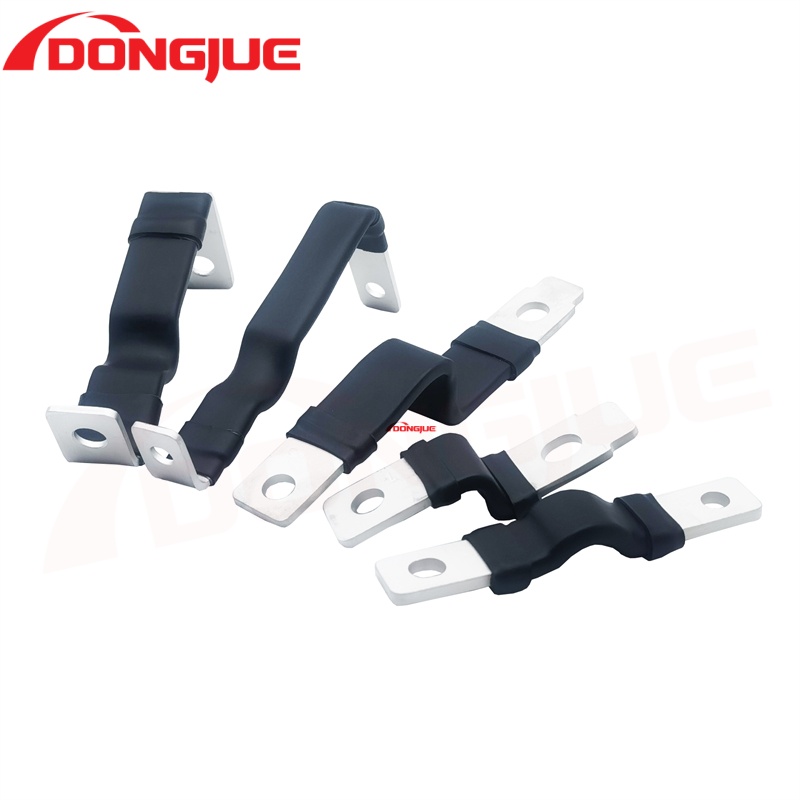
I like to evaluate conductor products based on both electrical and practical installation value. A well-designed Flexible Copper Busbar stands out because it combines layered copper conductivity with physical flexibility. That combination helps me solve two problems at once: I can carry substantial current while still adapting the connection path to the equipment layout.
Instead of forcing a design around a stiff conductor, I can shape the conductor around the design. That is especially helpful in equipment where available space is limited and where vibration, thermal movement, or service access must be considered from the beginning.
| Comparison Point | Traditional Cable or Rigid Bar | Flexible Copper Busbar |
| Installation flexibility | Often limited by bend radius or rigid geometry | Can adapt more easily to compact or irregular layouts |
| Space usage | May occupy more room in dense assemblies | Helps shorten connection paths and save installation space |
| Assembly steps | May require terminals and extra joining parts | Can simplify connection structure in many applications |
| Vibration performance | Varies depending on terminations and layout | Better suited for systems exposed to movement and vibration |
| Customization potential | Can require more adaptation work | Well suited for punched, bent, and size-specific designs |
How Does Flexible Copper Busbar Help Me Save Space Without Sacrificing Performance?
In power equipment design, every millimeter matters. I have seen many projects where engineers were forced to compromise because standard conductor options consumed too much room. This is where Flexible Copper Busbar becomes especially valuable. Because it can bend, fold, and follow a more efficient connection route, it supports tighter packaging inside electrical cabinets and compact assemblies.
That matters in practical terms. A shorter and more direct path can support cleaner internal architecture, reduce unnecessary routing complexity, and make the final product easier to service. For manufacturers working with battery systems, inverters, distribution panels, or control units, that spatial advantage can translate into real production benefits.
Which Product Advantages Matter Most to Buyers and Design Engineers?
When I assess a supplier’s offering, I focus on benefits that improve both purchasing confidence and field performance. The most useful product strengths usually include the following:
- Strong conductivity for efficient current transfer in demanding electrical applications
- Mechanical flexibility that supports bending, folding, and layout optimization
- Compact design value for systems where installation space is limited
- Stable connection potential in environments exposed to vibration
- Reduced assembly complexity when the conductor can be integrated more directly into the design
- Customization capability for project-specific shapes, sizes, punching patterns, and connection requirements
- Clear identification and traceability for maintenance management and production control
These are the details buyers care about when they move beyond price-only comparison. A low initial unit cost means very little if the final installation is harder to build, takes longer to assemble, or creates service issues later.
Why Does Customization Matter So Much for Flexible Copper Busbar Projects?
I rarely see two electrical systems that require exactly the same conductor layout. Hole positions, mounting distances, equipment spacing, insulation needs, current ratings, and enclosure shapes can vary from project to project. That is why customization is not a bonus in this field. In many cases, it is a requirement.
A supplier that can support punching, bending, sizing, and application-specific design adjustments gives me more confidence during procurement. I can match the conductor to the actual equipment instead of forcing the equipment to accommodate a standard part that was never designed for the job.
For OEMs, panel builders, energy equipment manufacturers, and industrial integrators, this means faster project alignment and fewer design compromises.
What Should I Look For When Choosing a Flexible Copper Busbar Supplier?
I always recommend evaluating suppliers with a broader checklist than just product photos or a short specification summary. A more reliable selection process should include technical, manufacturing, and service-related factors.
| Evaluation Area | What I Look For | Why It Matters |
| Material quality | Consistent copper construction and insulation quality | Supports conductivity, durability, and product stability |
| Manufacturing capability | Ability to handle punching, bending, sizing, and tailored production | Improves fit for real project requirements |
| Testing process | Clear inspection and electrical testing standards | Reduces procurement risk and supports confidence |
| Application knowledge | Understanding of panels, batteries, UPS, transformers, and industrial systems | Helps match the product to the use case |
| Documentation and traceability | Clear marking and manageable product identification | Supports maintenance and quality control |
| Communication efficiency | Fast technical response and practical project support | Helps avoid delays during sourcing and production |
How Can Flexible Copper Busbar Support Modern Industries With Higher Electrical Demands?
I see strong demand for this type of conductor in sectors where current loads are rising while equipment footprints are shrinking. These applications often need both power density and mechanical adaptability.
- Energy storage systems
- Electric vehicle power assemblies
- UPS units and backup power infrastructure
- Transformers and distribution systems
- Industrial control panels and switchboards
- Power conversion equipment and inverter connections
In these environments, Flexible Copper Busbar offers more than convenience. It provides a connection strategy that fits the design realities of modern equipment. When vibration, compactness, and current performance all matter at once, flexible conductor architecture becomes a practical engineering advantage.
Is It Possible to Reduce Installation Cost While Improving Connection Reliability?
Yes, and that is one of the reasons I consider this product category so useful. A conductor that can be integrated more directly into the assembly may reduce dependence on extra terminals, reduce routing difficulty, and shorten installation time. When that happens, the value is not only in the product itself but in the wider assembly process.
Over time, a well-chosen Flexible Copper Busbar can also support maintenance efficiency. Better traceability, clearer layout logic, and stronger suitability for demanding operating environments all contribute to a lower operational burden after installation.
That is the kind of long-term thinking buyers should apply. A smart purchase is not the cheapest line item. It is the component choice that supports smoother production, lower risk, and more dependable system performance.
What Is My Final View on Choosing Flexible Copper Busbar for Power Connection Projects?
If I am sourcing conductors for a modern electrical application, I want a solution that helps me balance conductivity, flexibility, installation efficiency, and project-specific adaptability. That is why I view Flexible Copper Busbar as a highly practical option for manufacturers and engineers who need better connection performance in real operating conditions.
From my perspective, the strongest value lies in its ability to fit compact systems, simplify routing, support customized production, and improve confidence in demanding electrical assemblies. For buyers who do not want to waste time on unsuitable standard parts, working with an experienced manufacturer makes the selection process much easier.
If you are planning a new project or comparing conductor options for your equipment, now is the right time to review your requirements in detail. If you want tailored support for product selection, customization, or technical matching, please contact us and leave your inquiry. The team at Zhejiang Dongjue Precision Technology Co.,Ltd. can help you discuss the right Flexible Copper Busbar solution for your application and move your project forward with greater confidence.