

How Can Contact Points Improve Electrical Reliability Without Raising Your Production Risk?
2026-04-22
When I evaluate electrical components for switches, relays, breakers, and control assemblies, I do not just look at conductivity on paper. I look at stability over time, contact consistency under repeated use, and the real manufacturing support behind the part. That is exactly where DONGGUAN INT METAL TECH CO.,LTD. gradually comes into the picture for me, because once I started comparing sourcing options more carefully, I saw how much practical value well-made Contact Points can bring to both product performance and purchasing efficiency.
In many projects, buyers are not struggling to find a supplier. They are struggling to find Contact Points that can hold up under real operating conditions, fit their assembly structure, and arrive with dependable dimensional consistency. A low-cost part that causes unstable switching, premature wear, or rework on the production line is never truly low cost. That is why I focus on material quality, contact performance, customization flexibility, and supply consistency before I make a decision.
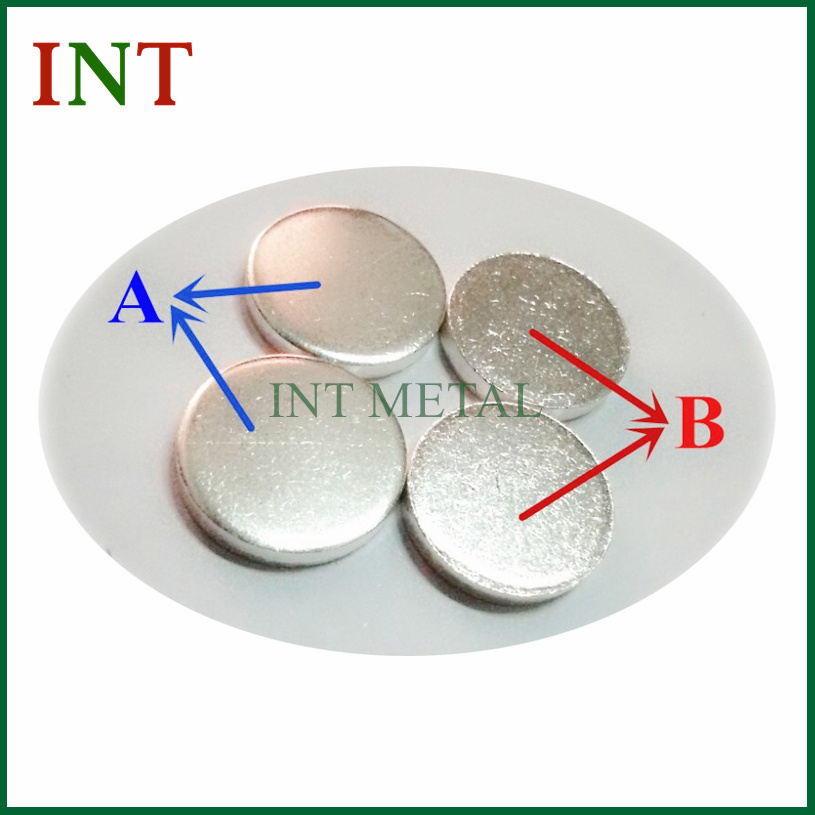
Why Do Contact Points Matter More Than Many Buyers Expect?
I have seen many purchasing decisions focus heavily on housings, springs, stampings, or overall assembly structure while the actual electrical interface gets less attention than it deserves. In practice, Contact Points sit at the center of circuit connection and interruption. If they are not selected correctly, the entire device may suffer from unstable conduction, excessive heat, contact welding, fast wear, or shortened service life.
What makes this component especially important is that it has to perform under repeated mechanical and electrical stress. It is not enough for the part to conduct electricity. It must also resist wear, maintain a reliable surface condition, and match the switching demands of the final application.
- I look for stable electrical performance across repeated operating cycles.
- I care about contact resistance because even small inconsistencies can affect long-term reliability.
- I pay close attention to dimensional precision, since poor tolerance control often creates assembly problems.
- I prefer suppliers that can support custom geometry instead of forcing me into a one-size-fits-all approach.
- I treat consistency between batches as a serious commercial issue, not just a technical detail.
What Problems Do Buyers Usually Face When Choosing Contact Points?
From my experience, the most common pain point is not identifying a product category. It is narrowing down which part is actually right for the application. On the surface, many contact components may look similar. In production, the differences become obvious very quickly.
One supplier may offer attractive pricing, but the contact surface may wear faster than expected. Another may deliver an acceptable sample, but large-volume batches may not maintain the same precision. In some cases, the material selection is not well aligned with the current load, switching frequency, or mechanical force of the device. That mismatch can create hidden risk long before failure becomes visible.
| Buyer Concern | What Usually Goes Wrong | What I Look For Instead |
| Inconsistent conductivity | Unstable current transfer during repeated switching | Reliable material design and controlled manufacturing quality |
| Fast wear | Surface degradation reduces service life | Balanced performance between conductivity and durability |
| Poor fit in assembly | Installation difficulty and secondary rework | Accurate dimensions and customization support |
| Unclear application matching | Wrong part selected for switching load or environment | Application-oriented technical communication |
| Supply uncertainty | Delivery delays disrupt production schedules | Stable production capacity and responsive service |
How Do I Judge Whether Contact Points Are Truly Suitable for My Application?
I never choose this type of component by appearance alone. I start by asking how the part will actually be used. Will it be installed in a relay, a switch, a breaker, or another electrical assembly? Will it handle frequent operation? Does the application demand a balance between conductivity, heat resistance, mechanical strength, and long service life?
These questions matter because the right Contact Points should match the electrical duty and structural design of the finished product. A supplier that understands this usually provides more than a catalog item. They help narrow the configuration based on real performance needs.
- I review the operating environment, including cycle frequency and load conditions.
- I compare whether the contact design supports reliable opening and closing behavior.
- I check whether the component can be adapted to the size and structure of my finished product.
- I ask whether the supplier can support sample validation before volume ordering.
- I value communication that solves engineering issues instead of just pushing inventory.
Which Product Advantages Make High-Quality Contact Points Worth the Investment?
For me, the value is not only in conductivity. The real advantage appears when a supplier can combine material understanding, manufacturing control, and customization support into one practical solution. That combination helps reduce trial-and-error during sourcing and lowers the chance of downstream production issues.
Well-made Contact Points can improve product reliability, reduce maintenance concerns, and support more stable switching behavior over time. They can also help manufacturers reduce scrap and improve assembly confidence, especially when part dimensions and contact performance remain consistent from batch to batch.
| Advantage | Why It Matters to Me | Business Impact |
| Stable electrical performance | Helps reduce risk of poor connection and erratic switching | Fewer field complaints and better product reputation |
| Wear resistance | Supports longer usable life under repeated operation | Lower replacement and maintenance pressure |
| Dimensional consistency | Makes assembly easier and more predictable | Reduced rework and improved production efficiency |
| Customization capability | Allows better fit for unique designs and applications | More flexibility in product development |
| Reliable supply support | Helps me plan purchasing with more confidence | Stronger production continuity |
What Should I Expect From a Supplier Instead of Just a Product Listing?
I do not want a supplier that simply repeats product names back to me. I want one that understands how the part will be used and can help me move from specification to dependable delivery. That matters even more when I am sourcing for industrial or high-volume electrical applications.
A good supplier relationship should make the buying process clearer, not more complicated. I expect responsive communication, realistic lead time discussions, support for technical confirmation, and the ability to adapt to project-specific requirements. When these points are handled well, purchasing becomes smoother and less risky.
- I expect practical communication, not vague sales language.
- I want design and specification discussions that reflect real application needs.
- I prefer a supplier that can support both standard demand and custom development.
- I value responsiveness because slow answers often delay engineering decisions.
- I pay attention to whether the supplier helps prevent problems before mass production starts.
How Can Better Contact Points Help Control Cost Beyond the Unit Price?
This is the part many buyers underestimate. Unit price matters, but total operating cost matters more. If lower-grade Contact Points create inconsistent performance, cause extra inspection work, increase scrap, or lead to warranty problems, then the apparent savings disappear very quickly.
When I choose a stronger component solution at the sourcing stage, I often gain cost control in other areas. I can reduce production interruptions, avoid repeated supplier changes, improve assembly yield, and lower the chance of performance-related complaints from the market.
That is why I look at value through a broader lens. I am not just buying a metal contact component. I am buying stability for my line, predictability for my schedule, and confidence in the finished product.
Why Does Customization Matter So Much for Modern Electrical Applications?
Not every project can rely on a standard off-the-shelf solution. In many cases, the form, size, material pairing, or performance target must align with a specific switch structure or device design. That is where customization becomes a major advantage rather than an optional extra.
When a supplier can adapt Contact Points to practical requirements, I gain more freedom in product design and fewer compromises during assembly. This is especially useful when I need to balance conductivity, durability, installation space, and overall device performance at the same time.
Customization also helps me move faster because it reduces the need to redesign surrounding components just to fit a poorly matched contact part. In other words, a better-fit component can improve not only performance but also development efficiency.
What Makes a Sourcing Decision Feel Safer and Smarter?
For me, a safe sourcing decision comes from clarity. I need to understand what the part does well, where it fits, how it can be adjusted, and whether the supplier can keep quality steady over time. Once those questions are answered clearly, the buying decision becomes much easier.
That is also why I pay attention to manufacturers such as DONGGUAN INT METAL TECH CO.,LTD. when evaluating Contact Points for electrical applications. I am not looking for empty promises. I am looking for a supplier that can support the practical needs behind switching components, including performance, manufacturability, and responsive service.
If you are also comparing sourcing options and trying to avoid costly mistakes, now is the right time to ask sharper questions about the Contact Points you are buying. A better component choice can improve reliability, simplify production, and protect long-term product value. If you want to discuss your application, request more product details, or explore a more suitable solution for your project, please contact us today and leave your inquiry. The right conversation now can save you a great deal of trouble later.