

How Can a Multi-Axis Tracking Controller Improve Solar Tracking Performance?
2026-08-27
As photovoltaic projects become more complex, accurate and reliable motion control is increasingly important for maximizing energy capture and maintaining stable system operation. A Multi-Axis Tracking Controller coordinates multiple movement directions, allowing solar tracking structures to respond precisely to calculated solar positions, sensor feedback, and changing environmental conditions. For projects that require flexible mechanical configurations, customized control strategies can also make a significant difference. Suzhou Ruitai Automation Technology Co., Ltd. focuses on intelligent photovoltaic tracking and control technologies, providing controller solutions designed around different project requirements, tracking structures, communication methods, and operating environments. Its customized approach is particularly valuable for customers requiring special structural configurations, including vessel-type customization and project-specific tracker designs.
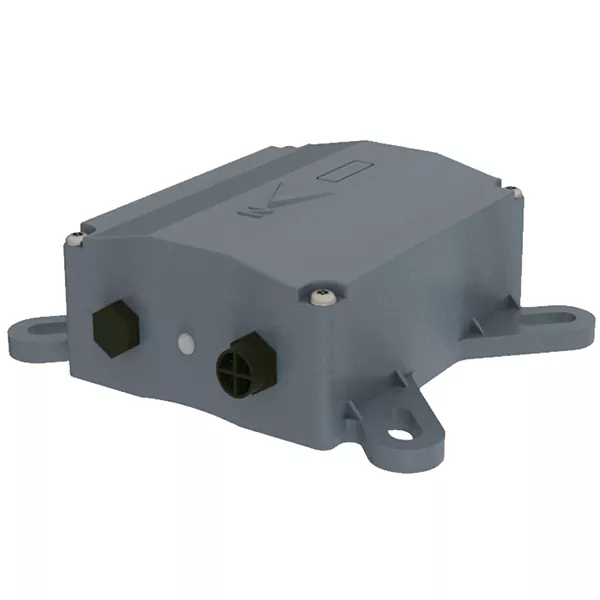
What Does a Multi-Axis Tracking Controller Do?
A Multi-Axis Tracking Controller acts as the control center of a solar tracking system. It combines solar-position calculations, motor control, position feedback, and protection functions to adjust the photovoltaic mounting structure toward an optimal operating angle.
Instead of relying on fixed positioning, the controller continuously coordinates the tracking mechanism. The general process includes:
-
Solar Position Calculation – Determines the sun's expected position according to time, date, latitude, longitude, and tracking algorithms.
-
Motion Command Generation – Converts the calculated position into control instructions.
-
Motor Adjustment – Drives slewing gearboxes or electric actuators to move the tracker.
-
Position Feedback – Uses sensors and limit switches to verify the actual position.
-
Correction and Protection – Compensates for deviations and activates safety functions when necessary.
-
Communication and Monitoring – Transfers operating information to higher-level systems such as NCU or SCADA.
This closed-loop approach helps improve positioning consistency while reducing unnecessary movement and supporting more efficient photovoltaic operation. Ruitai's controller combines astronomical algorithms with angle feedback and can support single-axis and dual-axis tracking configurations.
Why Is Multi-Axis Control Important?
A conventional fixed PV structure can only receive sunlight efficiently under certain conditions. A tracking structure, by contrast, can change its orientation throughout the day. When multiple axes are involved, independent movements must be coordinated accurately; otherwise, errors between axes can reduce overall tracking performance.
A properly designed Multi-Axis Tracking Controller can provide several practical benefits:
| Function | Practical Effect |
|---|---|
| Multi-axis coordination | Supports synchronized movement of different tracking directions |
| Solar-position algorithm | Provides automatic positioning according to the sun's trajectory |
| Angle feedback | Detects actual tracker position and helps correct deviations |
| Wind protection | Moves the structure into a safer position under strong wind conditions |
| Limit protection | Helps prevent excessive mechanical rotation |
| Remote communication | Supports system monitoring and operational management |
| Customized control | Allows parameters and configurations to match project requirements |
Ruitai's current controller specifications include adjustable tracking angles, high-wind protection, nighttime reset protection, rotation protection, and communication options such as LoRa, Zigbee, and RS485. The product architecture is also designed for demanding outdoor environments, with IP-rated protection and a broad operating-temperature range.
How Does Customization Make a Difference?
Not every solar project uses the same tracker structure. Terrain, module arrangement, motor selection, installation method, communication architecture, and environmental conditions can all influence controller requirements. A standard controller may work well for conventional installations, but customized control becomes more valuable when the mechanical or operational conditions are unusual.
One important advantage of Suzhou Ruitai Automation Technology Co., Ltd. is its project-oriented customization capability. The company states that its core tracking components, including TCU, NCU, and SCADA systems, can be customized according to project requirements and application environments.
Support for Vessel-Type and Special Structural Customization
For customers looking beyond conventional ground-mounted photovoltaic systems, vessel-type customization can be an important consideration. Where a tracker needs to be adapted to a vessel platform, special carrier structure, or other non-standard installation form, the controller strategy may need to account for the mechanical structure, movement limitations, operating environment, motor characteristics, and required tracking range.
This type of customization can help create a better match between the controller and the actual installation rather than forcing an existing control system into an unsuitable structure. For specialized projects, Ruitai can tailor TCU strategies, communication configurations, and related control solutions according to project requirements.
What Performance Can Users Expect?
The actual result depends on the tracker design, PV modules, climate, installation conditions, and system configuration. Nevertheless, accurate tracking can improve the amount of sunlight captured by photovoltaic modules and contribute to higher energy production.
Ruitai reports that its intelligent tracking solutions can achieve 15%–30% higher energy output through advanced tracking algorithms and coordinated control technologies. The company's Multi-Axis Tracking Controller also uses real-time feedback and automated correction to maintain the intended tracking position.
For project owners, the value extends beyond energy production. Stable control can also contribute to:
-
More consistent tracker operation
-
Better utilization of available solar radiation
-
Reduced unnecessary motor movement
-
Improved protection during severe weather
-
Easier centralized monitoring
-
Greater flexibility for customized tracker structures
Why Choose Suzhou Ruitai Automation Technology Co., Ltd.?
Suzhou Ruitai Automation Technology Co., Ltd. integrates R&D, production, sales, and service in the photovoltaic tracking-control field. Its product portfolio includes intelligent TCU controllers, NCU communication units, SCADA operation and maintenance platforms, and intelligent cleaning equipment.
For buyers searching for a reliable Multi-Axis Tracking Controller, Ruitai offers a combination of intelligent control, project customization, communication integration, and system-level support. More importantly, its customization approach allows the controller to be considered together with the actual tracker structure, including special or vessel-type configurations where project conditions demand a tailored solution.
A solar tracking system should not simply move; it should move accurately, safely, and intelligently. With the right controller, multiple axes can work together as one coordinated system, helping photovoltaic projects achieve more stable operation and better energy utilization.
Looking for a customized Multi-Axis Tracking Controller for your solar project, special tracker structure, or vessel-type application? Contact us at Suzhou Ruitai Automation Technology Co., Ltd. to discuss your requirements and develop a control solution matched to your project.