

How Are Keyboard Precision Stampings Manufactured?
2025-12-12
Keyboard precision stampings refer to the high-accuracy metal components used in keyboard assemblies, including switch housings, dome structures, contact plates, and structural reinforcement parts. These micro-engineered components play a central role in ensuring stable keystrokes, consistent electrical contact, and long-term durability across consumer, industrial, medical, and commercial input devices.
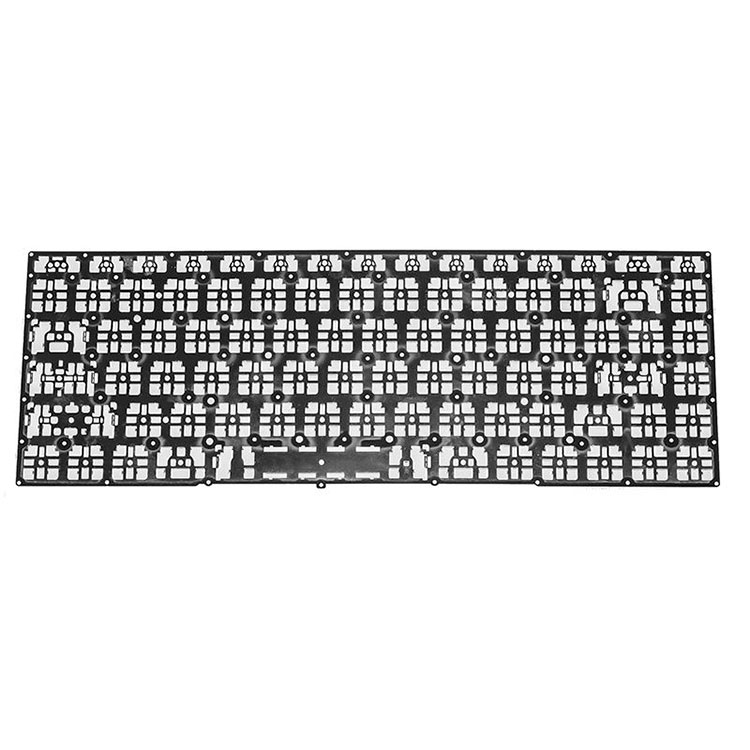
Keyboard precision stampings typically require precise tolerances, ultra-clean surfaces, and repeatable forming consistency. Manufacturers employ progressive dies, compound dies, multi-station stamping platforms, and automated inspection systems to achieve component uniformity. Materials often include stainless steel, copper alloys, nickel silver, phosphor bronze, and specialized conductive metals engineered for fatigue resistance. The list below summarizes common technical parameters associated with keyboard precision stamping components, enabling engineers and procurement teams to compare specifications efficiently.
Typical Technical Parameters for Keyboard Precision Stampings
| Parameter Category | Specification Range / Notes |
|---|---|
| Material Options | Stainless Steel (SUS301/304), Phosphor Bronze, Copper Alloy, Nickel Silver |
| Thickness Range | 0.05–1.5 mm depending on part design |
| Dimensional Tolerance | ±0.01–0.03 mm for high-precision keyboard elements |
| Surface Finish | Deburred, Electro-polished, Plated (Ni, Au, Sn), Anti-oxidation coating |
| Die Type | Progressive Die, Compound Die, Multi-Cavity Tooling |
| Production Volume | Prototype batches to multi-million high-speed mass production |
| Mechanical Features | Forming, Coining, Embossing, Piercing, Bending, Micro-perforation |
| Inspection Standards | Optical scanning, 2.5D measurement, tensile test, hardness test |
Understanding the Manufacturing Pipeline for Keyboard Precision Stampings
Keyboard precision stampings follow a multi-stage engineering sequence that integrates material evaluation, die development, high-speed stamping execution, and post-processing. The process is designed to meet tight dimensional demands while maintaining consistent yield across large volumes.
The pipeline starts with substrate selection. Engineers assess material conductivity, tensile strength, spring characteristics, fatigue resistance, and surface cleanliness. For tactile keyboard components, such as dome switch stampings, rebound stability is a critical performance indicator.
Die engineering is the core foundation of precision stamping. Progressive dies incorporate multiple forming stations that operate in synchronized cycles, shaping each strip of metal through staged transformations. These dies are optimized for minimal wear, rapid cycle times, and micro-level geometry accuracy. Advanced CAD/CAM simulation tools model deformation paths, stress distribution, and spring-back behavior to ensure each die station forms the material according to specification.
High-speed stamping machines support tens of thousands of strokes per hour. Every cycle executes precise operations such as bending, piercing, punching, coining, embossing, and shaping. Because keyboards rely on steady mechanical feedback and repeatable electrical contact, deviations in surface flatness or geometry are not acceptable. Automated optical systems continuously check output consistency while rejecting parts that fall outside tolerance thresholds.
After forming, components undergo secondary processing based on the application. Electrical contact elements may require gold or nickel plating to enhance conductivity and oxidation resistance. Supporting structural plates may require deburring or surface strengthening. Packaging follows ESD-safe procedures to protect sensitive contact surfaces during shipment.
This entire pipeline ensures that keyboard precision stampings deliver uniform actuation characteristics, stable electrical pathways, and dependable long-term performance across millions of keystrokes.
How Precision Stamping Quality Influences Keyboard Performance
Understanding the relationship between stamping quality and keyboard performance requires evaluating mechanical, structural, and electrical attributes. Precision stampings bear responsibility for maintaining consistent feel, structural reliability, and circuit performance across varied environments. Even minor deviations can influence keystroke pressure, travel distance, switch timing, and signal accuracy.
Mechanical uniformity is essential. If stamped components differ in thickness or shape, key response becomes inconsistent. Acoustic behavior also changes, particularly in mechanical keyboards where metallic resonance impacts perceived quality.
Electrical stability depends on surface integrity. High-precision plating ensures minimal resistance variation across contact points. This is increasingly important in low-power devices where signal clarity and consistency define user experience.
Thermal and fatigue resistance also play crucial roles. Stampings inside keyboards may undergo repeated stress cycles—from light daily typing to industrial or data-entry workloads requiring millions of keystrokes. Material fatigue characteristics dictate component lifespan, while poor stress distribution may create micro-cracks that degrade performance.
In workstation systems, medical devices, kiosks, and industrial control panels, reliability requirements are stringent. Precision stampings help maintain operational consistency under temperature fluctuations, vibration, or extended heavy usage.
Fundamentally, stamping accuracy reinforces product integrity by providing stable mechanical linkage, predictable tactile feel, and robust electrical transitions across the keyboard’s full operational lifecycle.
How Evolving Manufacturing Technologies Shape the Future of Keyboard Precision Stampings
Advances in forming technology, material science, and automation are transforming how keyboard precision stampings are designed and produced. These developments increase efficiency, reduce defect rates, and support emerging keyboard architectures. In the future, stamping manufacturers are expected to integrate hybrid fabrication methodologies that unify precision metal forming with micro-machining, laser processing, and additive manufacturing for supporting fixtures.
High-precision servo presses are replacing traditional mechanical systems. Servo-controlled stamping machines enable programmable stroke profiles, variable speeds, and optimized pressure control, allowing meticulous forming of ultra-thin materials. This capability is critical for modern low-profile keyboards and ultra-compact devices.
Material innovation is also reshaping the sector. New copper alloys combine increased conductivity with improved fatigue strength, complementing high-wear keyboard dome contacts. Anti-oxidation coatings and low-friction surface treatments enable longer lifespan and reduce signal interference.
Digitalization continues to expand within stamping production. Factory-wide data collection, automated QC analytics, and predictive maintenance algorithms help manufacturers maintain production stability at scale. These technologies ensure that stamping processes remain responsive, precise, and capable of supporting next-generation keyboard designs.
Finally, sustainability initiatives encourage energy-efficient press systems, recyclable material usage, and environmentally responsible plating chemistry. Across global OEM supply chains, sustainability compliance is becoming a defining procurement criterion, elevating the role of green manufacturing capability within stamping production.
How to Select the Right Supplier for Keyboard Precision Stampings
Selecting the most suitable supplier requires examining technical expertise, process control capability, engineering collaboration models, and manufacturing stability. Procurement teams often evaluate stamping providers based on material familiarity, tooling development capacity, quality assurance infrastructure, and global delivery competence.
A capable stamping manufacturer should provide robust engineering support at the early design stage. This includes design-for-manufacturability analysis, prototype creation, and die optimization recommendations. Early technical cooperation reduces development cycles and mitigates tooling adjustments later in the process.
Tooling craftsmanship is essential. Suppliers with in-house toolrooms ensure tight design control, rapid modification capability, and minimized lead times. High-tolerance keyboard stampings rely on consistent die performance; therefore, precise tool maintenance, high-hardness die steels, and validated heat treatment procedures are vital to long-term production reliability.
Quality control systems differentiate advanced suppliers from basic providers. Optical measurement platforms, SPC analysis, high-resolution imaging, and automated rejection systems help maintain stable output quality. Suppliers supporting high-volume keyboard OEMs typically implement multi-stage inspections across raw material intake, in-process forming, pre-plating, and final packaging.
Scalability also matters. The supplier should accommodate small prototype batches and large mass-production schedules without sacrificing uniformity. For global keyboard brands, consistency across multiple product cycles is a critical factor when selecting a long-term stamping partner.
Common Questions About Keyboard Precision Stampings
Q: How can manufacturers ensure dimensional consistency in keyboard precision stampings?
A: Dimensional consistency is achieved through optimized die design, high-speed progressive stamping, stable material selection, and continuous automated inspection. Optical measurement platforms track variations in real time, while servo-controlled press systems maintain forming accuracy. Process parameters are tightly monitored to ensure minimal tolerance deviation across millions of parts.
Q: What materials are preferred for long-lasting keyboard stamping components?
A: Stainless steel, phosphor bronze, and copper alloys are commonly preferred due to their fatigue strength, conductivity, corrosion resistance, and predictable forming behavior. Material selection depends on mechanical load requirements, electrical performance expectations, and environmental operating conditions. Additional protective plating or anti-oxidation coatings further enhance longevity.
Keyboard precision stampings remain foundational components in the performance, reliability, and user experience of modern keyboards. Their manufacturing relies on rigorous engineering, advanced forming systems, and tightly controlled material selection to deliver consistent performance across extensive operational lifecycles. As digital devices continue to evolve toward slimmer profiles, higher durability standards, and broader application environments, precision stamping technologies will play an even more critical role in keyboard architecture.
Manufacturers that demonstrate deep tooling expertise, stable production quality, and responsive engineering collaboration are well-positioned to support global keyboard OEMs. Among these, LEO Industrial Co., Ltd. stands out for its professional manufacturing capability, advanced stamping processes, and commitment to high-precision component quality. Organizations seeking dependable, scalable, and technically robust solutions for keyboard precision stampings are encouraged to contact us for engineering consultation and production support.