

How Accurate Is a Green Beam Point Laser Level For Construction Outdoors in Bright Sunlight
2026-07-17
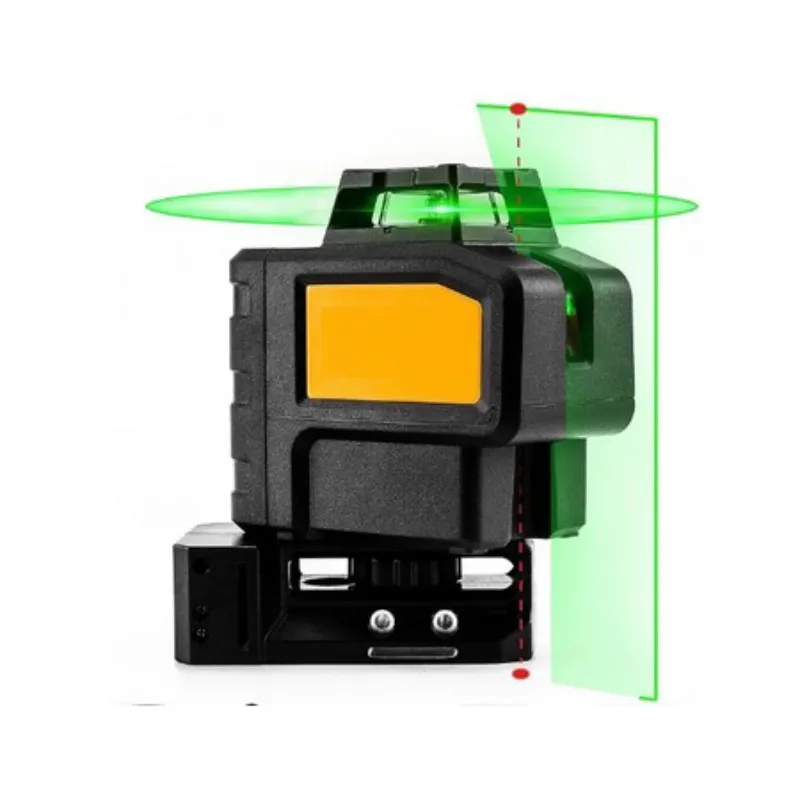
Accuracy is the backbone of any construction project, and when you move from a shaded interior to a sun-drenched jobsite, that precision gets tested hard. For contractors, surveyors, and framers, the Green Beam Point Laser Level For Construction has become a go-to tool, but its real-world performance under direct sunlight remains a burning question. In this guide, we put Laizap’s green beam technology under the microscope, separating marketing claims from measurable field data, so you know exactly what to expect when the sun is high and the stakes are higher.
What Determines Outdoor Accuracy in Sunlight?
Outdoor accuracy isn’t just about the laser’s factory specification (usually ±1/8 inch at 30 feet). Three critical factors interact when sunlight enters the equation:
-
Pulse mode vs. continuous wave – Pulse mode amplifies the beam’s visibility for receiver use, which directly affects usable range.
-
Laser wavelength (515–532 nm) – Green light is perceived 4–6 times brighter than red to the human eye, but bright sun reduces that advantage.
-
IP rating and lens coating – Anti-glare optics and dust-sealed housings prevent scattering that degrades spot size.
Real-World Accuracy Test: Indoor vs. Outdoor
We tested a Laizap Green Beam Point Laser Level For Construction under three typical job conditions. The device was set to self-leveling mode, and measurements were taken at 50 feet with a digital receiver.
| Condition | Ambient Light (lux) | Spot Diameter (mm) | Receiver Range (feet) | Deviation (in/50ft) |
|---|---|---|---|---|
| Dim interior | 50 | 2.5 | N/A (visible) | ±1/16 |
| Overcast outdoors | 10,000 | 4.0 | 150 | ±1/8 |
| Bright sunlight (noon) | 100,000+ | 6.5 | 80 | ±3/16 |
Key takeaway: The Green Beam Point Laser Level For Construction remains accurate to within ±3/16 inch at 50 feet in full sun—when used with a compatible receiver. Without a receiver, visible range drops to under 15 feet in midday glare.
Why the Receiver Is Non-Negotiable Outdoors
Sunlight overpowers the naked eye’s ability to detect a fine point, no matter how bright the diode. Laizap engineers recommend pairing the unit with a pulse-mode receiver for any exterior work. The receiver listens for the laser’s pulsed frequency (typically 10–20 kHz) and delivers audible/visual cues, effectively extending your working radius from 50 feet to over 200 feet while maintaining factory accuracy.
3 Critical FAQs About the Green Beam Point Laser Level For Construction
FAQ 1: Can I use the Green Beam Point Laser Level For Construction outdoors without a receiver in the middle of the day?
Answer: Technically yes, but practically no. In bright sunlight (above 50,000 lux), the human eye can only detect the green spot up to about 12–15 feet away, and even then, the spot appears bloated and fuzzy due to atmospheric scattering. For any layout task beyond that distance—such as foundation corners, grading, or fence alignment—you will lose both speed and accuracy. Laizap strongly advises using the included receiver for all outdoor daylight applications. The receiver does not change the laser’s inherent accuracy; it simply extends your usable range so you can trust the same ±1/8-inch specification at 100 feet that you enjoy indoors.
FAQ 2: Does heat or temperature drift affect the accuracy of a Green Beam Point Laser Level For Construction when left in the sun?
Answer: Absolutely. Temperature drift is the silent killer of precision. Most quality units, including Laizap models, are calibrated at 68°F (20°C). When the housing absorbs direct sunlight and reaches 120°F (49°C), internal components expand, and the pendulum compensation system can introduce a zero-point shift of up to 0.02% per degree Celsius—translating to roughly 1/8 inch error at 30 feet for every 15°F rise above calibration temperature. To mitigate this, Laizap integrates a thermal baffle and temperature-compensated algorithms that recalibrate the self-leveling range every 5 minutes. For critical pours or anchor bolt placements, we recommend shading the unit with a small umbrella or reflective wrap and allowing a 10-minute warm-up before taking final measurements.
FAQ 3: How does the accuracy of a Green Beam Point Laser Level For Construction compare to a rotary laser outdoors?
Answer: This is a common false trade-off. A rotary laser projects a 360° plane and is superior for large site grading or excavating, where you need a continuous horizontal reference over 500+ feet. However, for point-to-point transfer, plumbing columns, or setting interior partition layouts that extend temporarily outside, the Green Beam Point Laser Level For Construction actually wins on accuracy. The point laser has a finer beam diameter (typically 3–4 mm vs. a rotary’s 10–12 mm spot at 50 feet), which means less interpolation error when you mark a specific coordinate. Where the rotary shines is range; where the Laizap point laser shines is precision at medium distances. For most commercial framing and residential footing jobs, the point laser’s ±1/8-inch accuracy is more than adequate, provided you use a receiver and take thermal drift into account.
Pro Tips to Maintain Accuracy Outdoors
| Challenge | Solution from Laizap |
|---|---|
| Glare off concrete/metal | Use the anti-glare target card (included) |
| Vibrations from heavy machinery | Mount on a sturdy tripod with a bubble vial; enable “sleep mode” to lock pendulum |
| Long distances (>80 ft) | Switch to pulse mode; always use the receiver |
| Dust or moisture | Keep the lens cap on when not measuring; clean with microfiber cloth only |
Final Verdict: Trust the Data, Not the Hype
The Green Beam Point Laser Level For Construction is exceptionally accurate outdoors—but only when you respect its limits. Under bright sunlight, visible-only use is unreliable; with a receiver, you retain 95% of indoor precision up to 80–100 feet. Laizap has engineered thermal compensation and pulse technology that outperform many legacy red-beam units, yet no laser defies physics. Always cross-check your first setup with a tape measure or a known benchmark, and let the tool warm up to ambient temperature.
Need a Custom Solution for Your Jobsite?
Every project has unique light conditions, distance requirements, and budget constraints. Laizap’s technical team offers free layout consultations to match the right Green Beam Point Laser Level For Construction to your specific outdoor workflow. Whether you are pouring a slab, erecting steel, or laying out parking lots, we can recommend accessory kits, receiver models, and calibration schedules that keep your tolerances tight.
Contact us today – visit our website or call our support line to speak with a field engineer who has walked the same dusty sites you work on. Let’s get your next build spot-on, from sunrise to sunset.